Building brand awareness is the foundation of long-term brand growth. Before people can consider or buy from a company, they must first recognize it, remember it, and understand what it stands for.
At its core, building brand awareness increases how easily a target audience recognizes and recalls a brand. The more often people encounter consistent messaging, visuals, and experiences from a brand, the more likely they are to remember it later when making purchasing decisions.
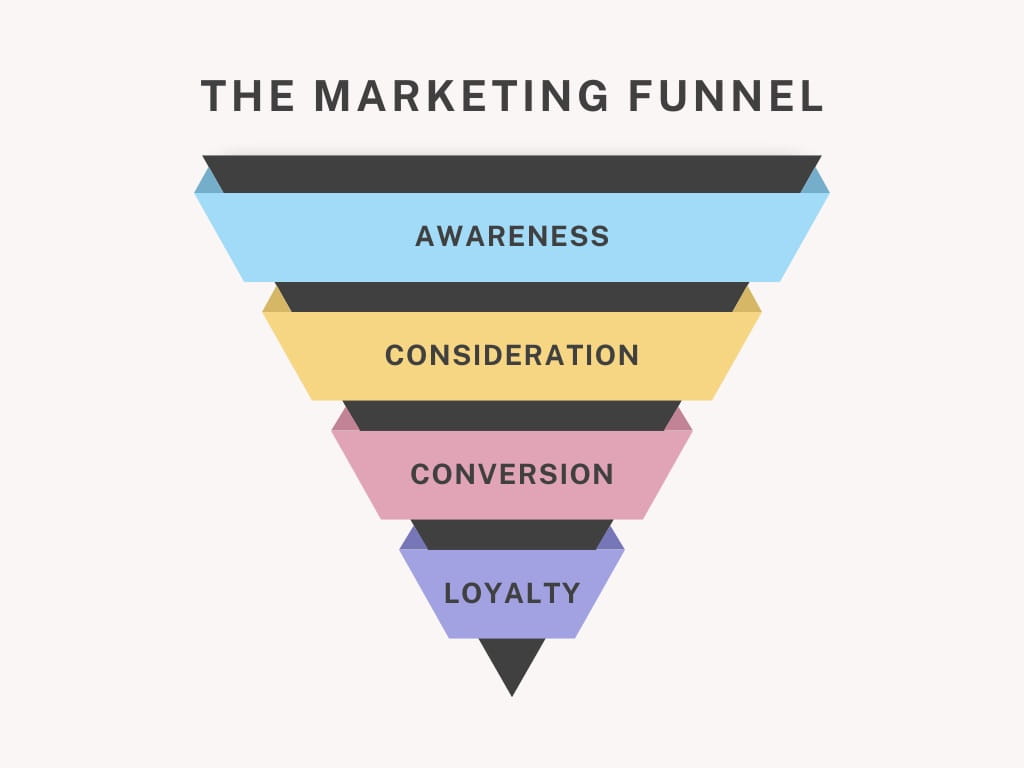
Brand awareness also sits at the very top of the marketing funnel. It represents the first step in the journey that moves audiences from initial exposure to consideration and eventually to purchase and loyalty. Without awareness, even the most effective sales strategies struggle to work because potential customers simply do not know the brand exists.
This article explains how companies can build brand awareness in competitive markets. It explores key strategies, marketing channels, campaign examples, and measurement approaches that help brands grow visibility and familiarity over time.
Complete guide to brand-building strategies and frameworks
What Is Brand Awareness in Marketing?
Brand awareness is the extent to which consumers can recognize or recall a brand within a product or service category.
In marketing terms, awareness reflects how easily people can identify a brand, remember its name, or associate it with a specific product or service. Strong brand awareness means a brand quickly comes to mind when consumers consider a purchase.
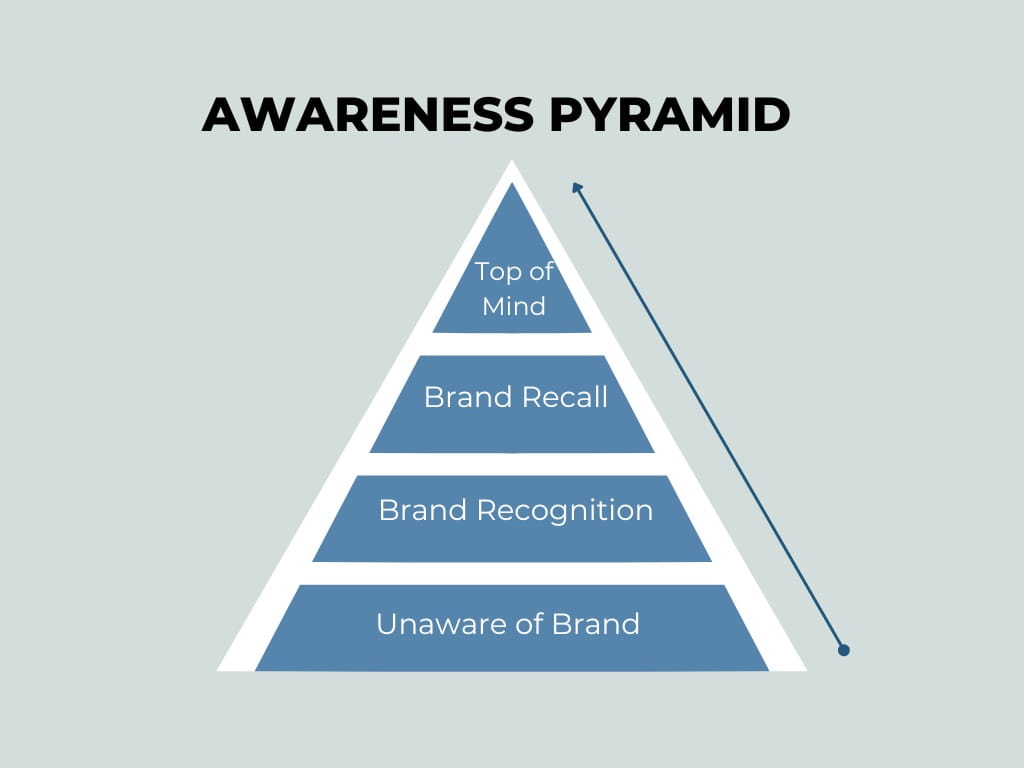
Brand awareness is divided into three types depending on how deeply a brand has embedded itself in consumers’ memories.
Brand recognition is a person’s ability to identify a brand when presented with visual or verbal cues, such as a logo, product packaging, or advertisement. Brand recall is when consumers can remember a brand without being prompted by cues. Top-of-mind awareness, when a brand is the first one consumers think of within a category.
Why Is Building Brand Awareness Important for Businesses?

Brand awareness is important in business growth because it establishes familiarity and trust between a brand and its audience. Extensive psychological research on the mere exposure effect shows that recognition and familiarity foster trust and, in the long run, increase preference.
Higher brand awareness also improves marketing efficiency. Advertising campaigns generate stronger engagement, higher click-through rates, and better conversion performance when audiences already know a brand.
Brand awareness contributes to brand equity over time, allowing companies to charge premium prices, retain customers more easily, and compete more effectively.
The five key benefits of strong brand awareness are outlined below.
- Increased trust and familiarity among potential customers
- Higher effectiveness of advertising and marketing campaigns
- Lower customer acquisition costs over time
- Stronger brand equity and emotional connection with audiences
- Greater visibility and recognition in competitive markets
- Improved long-term customer loyalty and retention
How strong brand performance results from sustained brand awareness
What Are the Different Levels of Brand Awareness?
Marketing research categorizes brand awareness into three stages based on how strongly a brand exists in consumers’ minds.
- Brand Recognition
Brand recognition is when consumers can identify a brand via cues such as logos, packaging, advertisements, or product displays. Recognition is the most basic level of awareness and is built through consistent visual identity systems, such as logos, color palettes, and distinctive brand assets.
- Brand Recall
Brand recall reflects a stronger level of awareness. Instead of relying on visual prompts, consumers can remember a brand when asked about a product category. Recall develops through repeated exposure to marketing messages, advertising campaigns, and customer experiences.
- Top-of-Mind Awareness
Top-of-mind awareness represents the strongest level of brand familiarity. At this stage, a brand becomes the first one consumers think of within its category. Brands that achieve this level often dominate consumer preference because they are the easiest option to remember.
What Are the Most Effective Strategies for Building Brand Awareness?
Building brand awareness requires deliberate, consistent marketing efforts designed to keep a brand visible to its target audience. Although awareness can grow naturally through word-of-mouth and customer experiences, implementing structured brand awareness strategies hastens the process.
Brand awareness grows through repeated exposure across multiple channels. The more customers see a brand across different channels, the more they recognize and remember the brand.
Still, exposure alone is not enough. Brands must aim to be memorable through creative and distinctive brand assets. Visual elements such as typography, logos, and colors help audiences identify the brand easily.
Using storytelling also captures attention and evokes emotion, further embedding the brand in the audience’s memory. Over time, memorable campaigns help reinforce the brand’s identity and increase the likelihood that consumers will recall it later.
In practice, building brand awareness usually involves combining several complementary strategies that work together to increase visibility and familiarity. The most effective brand awareness strategies are outlined below.
- Content marketing
- Social media marketing
- Digital advertising
- Influencer and partnership marketing
- Search engine optimization.
Each of these strategies uniquely contributes to awareness, strengthening recognition, recall, and long-term familiarity when used together.
How Does Content Marketing Help Build Brand Awareness?
Content marketing builds brand awareness by making a brand discoverable when people search for information, explore industry topics, or browse content on social platforms. Content marketing focuses on providing educational information that answers common questions or solves problems, using this as bait to reach new potential.
This strategy works well for brand awareness because it can be distributed across multiple channels in different formats. Blog posts may appear in search engine results, videos can reach audiences on platforms like YouTube or social media, and research reports can be shared by industry publications or influencers. This multi-channel visibility expands reach and reinforces brand exposure across different environments.
Another major advantage of content marketing is that it positions a company as a thought leader in its industry. When brands regularly publish insights, research, or expert commentary, audiences begin to associate the brand with expertise and credibility. Over time, this perceived authority increases trust and makes the brand more memorable when people think about the category.
The most effective content marketing strategies use a mix of formats to reach their audience at different stages of their journey. Some of the most common formats are outlined below.
- Blog articles and educational posts
- Industry research reports and white papers
- Video explainers and tutorials
- Long-form guides and ebooks
- Infographics and visual explainers
How Can Social Media Increase Brand Awareness?
With over 5.4 billion users worldwide in 2025, social media platforms are one of the most powerful tools for expanding brand reach and visibility. Platforms like Instagram, TikTok, LinkedIn, and Facebook are built around discovery and content sharing, allowing brands to share their content with large audiences quickly and repeatedly.
Their algorithm allows brands to consistently appear in front of new users who may not already follow them, making social media great for introducing a brand to new audiences. It also reinforces recognition in consumers who already know them through touchpoints like posts, stories, and comments. Over time, these repeated encounters help audiences become more familiar with the brand’s identity, voice, and messaging.
Several tactics can help maximize brand awareness on social platforms. Consistent posting ensures that the brand appears regularly in audience feeds, keeping it top of mind. Storytelling formats, such as short-form videos, behind-the-scenes content, or customer stories, help create emotional connections that make the brand more memorable.
Furthermore, community engagement, including responding to comments, participating in conversations, and interacting with followers, encourages stronger relationships and increases visibility through platform algorithms.
Creating shareable content, i.e., posts that are emotionally engaging, entertaining, or informative, is also a major driver of organic exposure. Each share introduces your brand to an entirely new audience, expanding your brand's organic reach and strengthening recognition and recall.
How Can Digital Advertising Drive Brand Awareness?
Digital advertising accelerates exposure to new audiences by allowing companies to place their message directly in front of targeted audiences at scale. Unlike organic marketing channels, which often grow gradually, paid media can immediately reach thousands or even millions of potential customers.
The four most common and effective ad formats are display ads, video ads, native advertising, and connected TV.
- Display ads appear on websites and apps and are designed to capture attention through visuals and branding.
- Video advertising allows brands to tell more engaging stories through motion, sound, and narrative, making it effective for building emotional connections.
- Native advertising integrates promotional content into editorial environments, making the brand message feel more natural within the user’s browsing experience.
- Connected TV (CTV) advertising places video ads on streaming platforms, enabling brands to reach large audiences in a television-like viewing environment with more precise targeting.
For awareness campaigns to succeed, the creative elements of the advertisement must be memorable. Employ distinctive brand assets like recognizable colors, logos, or taglines. Also, leverage storytelling to appeal to the audience's emotions and improve memorability.
How brand advertising campaigns increase brand awareness and recall
How Do Partnerships and Influencer Marketing Increase Brand Visibility?

Partnerships and collaborations help brands expand their reach by introducing them to audiences they would not be able to access on their own.
When brands partner with other brands or creators, they gain exposure to the influencers' followers. This visibility can significantly accelerate brand awareness because people are more likely to pay attention to brands that are recommended or featured by voices they already trust.
This can happen through influencer partnerships, co-marketing campaigns, and brand collaborations.
- Influencer Partnerships
Influencers have established relationships with their followers; hence, their recommendations often feel more authentic than traditional advertising.
When influencers showcase a product or review it for their audience, the brand is introduced in a way that feels natural and relatable. This kind of exposure can quickly expand brand recognition among highly engaged communities. For example, Morphe’s collaboration with James Charles to release the Morphe x James Charles Artistry Palette
- Co-Marketing Campaigns
In co-marketing campaigns, brands collaborate on a shared marketing initiative such as a joint promotion or co-branded launches. Combining resources and audiences gives both brands increased exposure and greater campaign reach than they could have achieved independently.
A popular example is the partnership between Spotify and Starbucks. The collaboration allowed Starbucks customers to discover and save songs playing in stores through Spotify, while employees curated in-store playlists on the platform. This campaign helped both brands to reach each other’s audiences and increased engagement across their apps and physical locations.
- Brand Collaborations
Brands also collaborate on product partnerships or limited-edition releases, which can generate buzz and media attention. When two recognizable brands come together, the collaboration often attracts curiosity and conversation, leading to increased coverage across social media, news outlets, and influencer channels.
A perfect example is the collaboration between Nike and Apple on the Nike+iPod Sport Kit. The partnership allowed both companies to reach fitness enthusiasts interested in technology, therefore exposing each brand to the other’s audience.
How Can SEO and Organic Visibility Build Brand Awareness?
Search engine optimization (SEO) plays a major role in building brand awareness by helping brands appear when people search for information online.
Ranking for educational industry topics significantly increases brand exposure by positioning a company where audiences naturally search for answers. When brands publish helpful, informative content that ranks in search engines, they become a trusted source of knowledge within their field.
For example, a cybersecurity company that creates a guide about online safety or common security threats will constantly be exposed to people researching along those lines. Even if readers are not ready to buy a product, the company is registered in their minds. Over time, repeated exposure through search results helps strengthen recognition and recall.
Building topical authority through content clusters also increases brand exposure and discoverability. Topical authority involves covering a subject area comprehensively through multiple related content that are linked to each other, i.e., content clusters. Search engines reward this because they improve user experience and help the algorithm understand the site’s structure.
Consistently publishing content is vital to long-term growth. Brands that regularly produce high-quality educational content increase their search visibility, attract more organic traffic, and reinforce brand familiarity. Over time, this sustained visibility embeds the brand within its industry, making it easier for audiences to recognize and remember it.
Building brand authority through educational content and topical expertise
What Are Examples of Successful Brand Awareness Campaigns?
Studying successful brand awareness campaigns helps marketers understand what makes a campaign memorable and widely recognized. The most effective campaigns combine a strong creative idea with distribution across multiple channels with the goal of making the brand memorable.
- Spotify’s “Wrapped”

Spotify’s “Wrapped” campaign turns user listening data into personalized annual summaries that show listeners their most-played songs, artists, and genres.
The campaign is distributed through the Spotify app, social media sharing tools, and digital marketing channels. Users are encouraged to share their personalized results across platforms such as Instagram and X.
Because the content is personalized and shareable, millions of users post their results each year, effectively turning them into brand advocates. This organic sharing has made Spotify Wrapped one of the most recognizable digital marketing campaigns in recent years.
- Nike’s “Just Do It”

Nike’s “Just Do It” campaign is one of the most iconic brand awareness campaigns in marketing history. Rather than focusing on specific products, the campaign centered on a motivational message encouraging people to push beyond their limits.
The campaign, which was distributed across television, print advertising, digital platforms, social media, and major sporting events, used athlete stories and inspirational narratives to reinforce the message.
Over decades, this consistent storytelling helped Nike build strong emotional associations with athletic performance and determination. The slogan became deeply embedded in popular culture, dramatically strengthening brand recognition and recall.
How Do You Measure Brand Awareness Effectively?
Measuring awareness helps marketers know whether their marketing efforts are increasing awareness among their target audience. Brand awareness is measured by combining research-based measurements, which involve surveys and brand lift studies, with behavioral indicators.
In brand awareness surveys, researchers ask participants questions to evaluate how well they recognize or recall brands within a category. These surveys provide direct insight into how strongly a brand is embedded in consumers’ memories.
Brand lift studies, on the other hand, compare the responses of two groups: one that has been exposed to a campaign and another that has not. Analyzing differences in brand recognition or recall between the two groups helps marketers determine whether the campaign successfully increased awareness.
Behavioral indicators measure brand awareness through observable behavior changes, like an increase in brand mentions or a rise in branded search demand. Other metrics like social media engagement and website traffic from branded keywords also provide strong evidence that brand visibility is increasing.
Brand tracking methods used to measure awareness and brand recall
What Metrics Indicate Strong Brand Awareness?
The key metrics that indicate strong brand awareness are brand recall, recognition, reach, impressions, brand search volume, and brand mentions.
- Brand Recall
Brand recall measures the percentage of people who can remember a brand within its product category without any prompts. High recall indicates that the brand has become embedded in consumers’ memories and is likely to be considered during purchasing decisions.
- Recognition
Brand recognition measures how many people can identify a brand when presented with cues such as a logo, product packaging, or slogan. Strong recognition suggests that audiences are familiar with the brand’s visual identity and messaging.
- Reach
Reach represents the number of individuals who have been exposed to a piece of marketing content or advertising campaign. Higher reach means more people have encountered the brand, which increases the potential for awareness growth.
- Impressions
Impressions measure how many times an advertisement or piece of content is displayed, regardless of whether the same person sees it multiple times. High impression counts indicate repeated exposure, which helps reinforce familiarity and brand memory.
- Brand Search Volume
Brand search volume refers to how often users search for a company’s name or branded terms in search engines. Increasing branded search demand indicates that more people are aware of the brand and actively seeking information about it.
- Brand Mentions
Brand mentions track how often a brand is referenced across social media, news articles, and other digital platforms. Frequent mentions suggest that the brand is being talked about, shared, and recognized within public conversations.
Together, these metrics provide a clearer picture of how well a brand is penetrating its target market and increasing in familiarity and recall.
How Can AI Tools Measure and Improve Brand Awareness in Advertising?
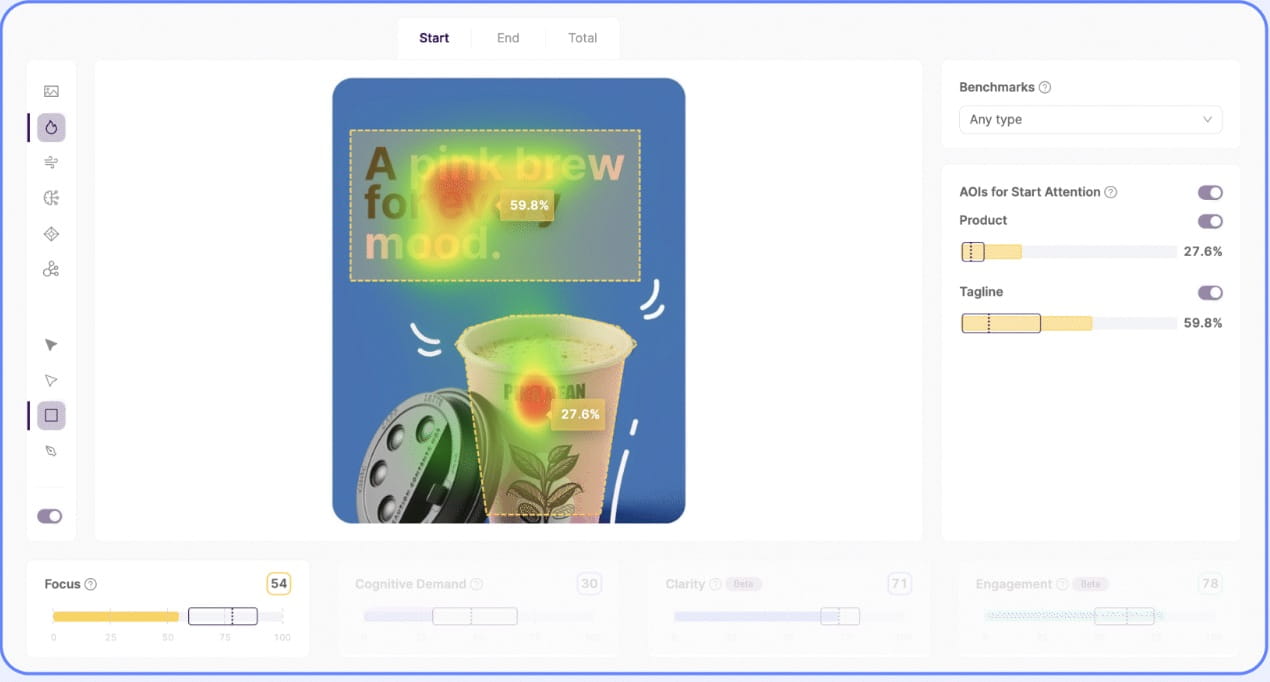
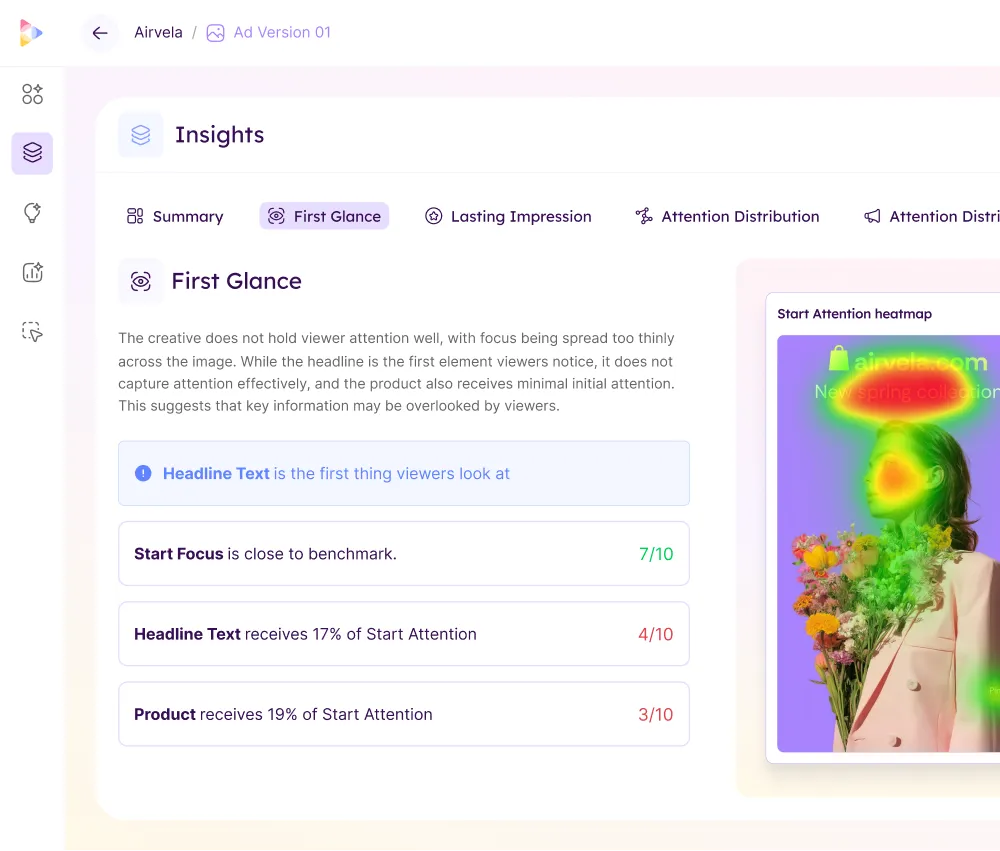
AI-driven advertising analysis helps marketers evaluate how effectively ads build brand awareness. Unlike traditional measurement, which happens after campaigns launch, AI tools allow brands to test and evaluate creatives before going live, helping predict whether an ad will capture attention and be remembered.
AI-powered advertising analysis can show how viewers visually interact with an ad. Through attention analysis, AI models estimate where people are most likely to look within an image, video, or digital ad. This helps marketers see whether key brand elements, such as logos, products, or messages, are noticeable enough to be remembered.
AI tools also use predictive models trained on large datasets to estimate how memorable an ad will be. They analyze factors like composition, contrast, and motion, helping marketers refine creatives before launching large-scale campaigns.
Common AI features used to measure and improve brand awareness in advertising are explained below.
- Attention heatmaps show where viewers are likely to focus during an advertisement
- Memory prediction models estimate how well viewers will remember the brand or message
- Creative recommendations suggest design adjustments to improve visibility and memorability.
Predict brand attention and advertising effectiveness with Neurons AI
How Long Does It Take to Build Brand Awareness?
Brand awareness grows gradually through repeated exposure to marketing messages, memorable campaigns, and consistent brand experiences. Each time consumers encounter a brand, it becomes more familiar, and over time, these repeated interactions strengthen recognition and recall.
The major factors that influence how quickly brand awareness develops are marketing budget, campaign reach, and creative effectiveness.
- Marketing budget affects the scale and consistency of exposure. Brands with larger budgets can run more campaigns for longer and invest in several advertising channels.
- Campaign reach determines how many unique people encounter the message. Campaigns distributed across several platforms will reach more people and will quickly become recognizable among their target audience.
- Creative effectiveness influences how well people remember the brand after encountering it. Visually distinctive and emotionally engaging ads are more likely to stand out and stick in people's minds.
Timelines can also vary depending on the stage of the brand. Startups typically take 6–18 months to build meaningful brand awareness through consistent marketing and repeated exposure. Established brands can increase recognition much faster, often in weeks to months, since audiences are already familiar.
What Are the Most Common Mistakes When Trying to Build Brand Awareness?

Some of the most common mistakes that limit brand awareness growth are explained below.
- Inconsistent Branding
Consistent use of logos, colors, typography, slogans, and brand voice helps reinforce memory. Without this consistency, each campaign may feel disconnected, making it harder for consumers to associate marketing messages with the same brand
- Focusing On Only Short-Term Performance Marketing
Prioritizing performance marketing drives short-term conversions but does little to build long-term brand familiarity. Brands must intentionally focus on brand-building efforts like storytelling campaigns and content marketing to stay top-of-mind.
- Weak Creative Assets
Strong creative assets are essential for building recognition and recall. Advertising that lacks distinctive visuals, memorable messaging, or emotional impact will not capture attention or remain in consumers’ memories.
- Lack of Measurement and Tracking
Without measurement, brands can't determine whether awareness is increasing or which marketing activities are most effective. Regular tracking helps marketers refine campaigns, improve creative assets, and allocate budget toward strategies that generate the greatest awareness impact.
Learn how to balance short-term ROI with long-term branding
What Are the Best Practices for Building Brand Awareness Today?
The best practices for building brand awareness are elaborated below.
- Maintain consistent branding across all channels for easy recognition
- Use memorable storytelling to capture attention and evoke emotions
- Adopt a multichannel marketing strategy to increase exposure, making your brand easier to recall
- Measure brand awareness regularly to evaluate the effects of your brand awareness strategy and discover where tweaks are needed.
- Test creatives before scaling campaigns to discover what formats generate the strongest recall, and then optimize your creatives for better performance and a larger audience.
Ultimately, building brand awareness requires patience and sustained effort. Brands that invest consistently in building brand awareness gradually become more recognizable and trusted by their audiences. Eventually, this familiarity compounds into stronger brand equity, improved marketing performance, and a lasting competitive advantage.
Test and optimize brand advertising creatives using Neurons AI insights