
Brand tracking is the ongoing measurement of how people notice, remember, and think about a brand over time.
In today’s digital environment, brands are shaped by many small exposures across different channels. People see ads briefly and often in crowded feeds, so brand perception is constantly changing based on factors like creative quality and competition.
This makes continuous brand tracking essential. Without it, brands rely on delayed reports that reflect past performance rather than current reality, causing them to miss opportunities or face avoidable problems.
Brand tracking supports long-term brand growth by monitoring memory, recall, awareness, and perception over time. It also helps improve advertising performance by revealing how creative and media choices affect attention and memory during campaign execution.
Most importantly, brand tracking links brand activity to business results. When attention and awareness improve, recall and consideration follow, supporting stronger marketing performance and sales growth.
Learn how brand tracking supports a broader brand strategy
How Does Brand Tracking Differ From Brand Measurement?

Brand measurement is assessing your brand’s performance at a specific point in time. It is campaign-based or event-driven and designed to answer questions like, "Did this campaign increase awareness?"
Brand tracking is ongoing. It creates a continuous data stream that shows how brand signals evolve over time.
Tracking brand efforts is essential for companies that advertise across multiple channels and regularly update their creative. It is especially important when decisions need to be made before campaigns go live.
Teams that rely on just brand measurement will find themselves constantly reacting to their brand’s performance. However, marketing teams that also implement brand tracking can manage brand performance in real time.
Explore how brand metrics are structured and measured.
What Are the Primary Brand Tracking Methods?
Modern brand tracking uses multiple methods because no single approach tells the whole story. The strongest systems combine predictive, behavioral, and survey data to show both what people say and what they actually notice and remember. The main brand tracking methods are outlined below.
- AI-Powered Attention and Memory Tracking Across Branded Advertising Assets
This method analyzes how people notice and process ads before and after exposure. Attention modeling shows what draws focus, while recall scores estimate how likely the brand is to be remembered. Neuroscience-based analysis goes a step further by indicating whether that exposure is likely to create lasting brand memory or be quickly forgotten.
- Traditional Survey-Based Brand Tracking
Surveys track self-reported awareness, recall, consideration, and sentiment over time. They are useful for comparing brand perception across periods, but they rely on what people say and can’t capture subconscious attention or memory.
- Panel-Based and Exposure-Based Tracking
These approaches compare people who saw the ads with those who didn’t. This makes it easier to link changes in brand metrics to the advertising itself rather than to external factors such as seasonality or market conditions.
- Social Listening and Search Monitoring
These methods track brand mentions, sentiment, and search activity. They show how interest and demand change in the real world, but they don’t explain the causes of those changes.
The strongest insights come from using predictive AI alongside traditional tracking. AI helps explain why an ad is likely to work before it runs, while surveys and panels show how perception actually changes. Together, they reduce risk and speed up learning.
Explore advanced brand tracking methodologies.
Which Brand Tracking KPIs Should You Monitor Continuously?
Brand tracking KPIs function as both leading indicators (early signals of future performance) and lagging indicators (confirmation of past impact).
The most critical KPIs are brand attention, recall, memory, awareness, consideration, and sentiment.
- Brand Attention
Brand attention measures cognitive engagement with advertising, indicating whether the brand is noticed within an ad.
- Brand Recall
Recall measures how well people remember the brand after exposure. Unlike awareness, recall reflects memory strength rather than simple recognition.
- Brand Memory
Brand memory shows how strongly a brand is stored in people’s minds. It helps explain why some campaigns continue to influence choice over time, while others are quickly forgotten.
- Brand Awareness
Awareness measures how well people recognize the brand. It is a foundational metric but insufficient on its own, as awareness without memory does not drive demand.
- Brand Consideration and Sentiment
These indicators support interpretation by showing whether people are inclined to choose the brand and how they feel about it emotionally.
Changes in these KPIs often signal brand growth or decline before sales move. Small drops in attention or memory are early warning signs of future issues.
Benchmarking matters too. Comparing KPIs against past results, competitors, and category averages helps teams distinguish normal variation from real changes that require action.
Learn more about brand KPIs and performance benchmarks.
How Do You Measure Brand Lift From Advertising?

Brand lift is the measurable change in brand metrics caused by advertising exposure.
It answers the question: Did people who saw the ads think differently about the brand than those who didn’t?
The most reliable way to measure brand lift is through holdout tests or A/B exposure experiments. These compare people who saw the ads with a control group that didn’t, making the campaign's impact clear.
Brand lift can be measured in two main ways.
- Pre-campaign measurement uses predictive AI tools such as Neurons AI to estimate attention and memory potential before ads go live.
- Post-campaign surveys rely on surveys and exposure data to track changes in awareness, recall, or consideration after people have seen the ads
In practice, this often works as a sequence. Before launch, AI predicts which creatives are most likely to drive recall and memory. After launch, surveys confirm whether those predictions turned into measurable brand lift in the market.
Attention and memory metrics provide crucial context by explaining why lift did or didn’t occur. A campaign may fail to increase awareness not because it lacked reach, but because the brand wasn’t noticed or remembered enough to make an impact.
Learn how brand lift experiments are designed and measured.
What Tools and Platforms Support Brand Tracking?
Brand tracking tools provide ongoing insight by automatically collecting and analyzing brand data.
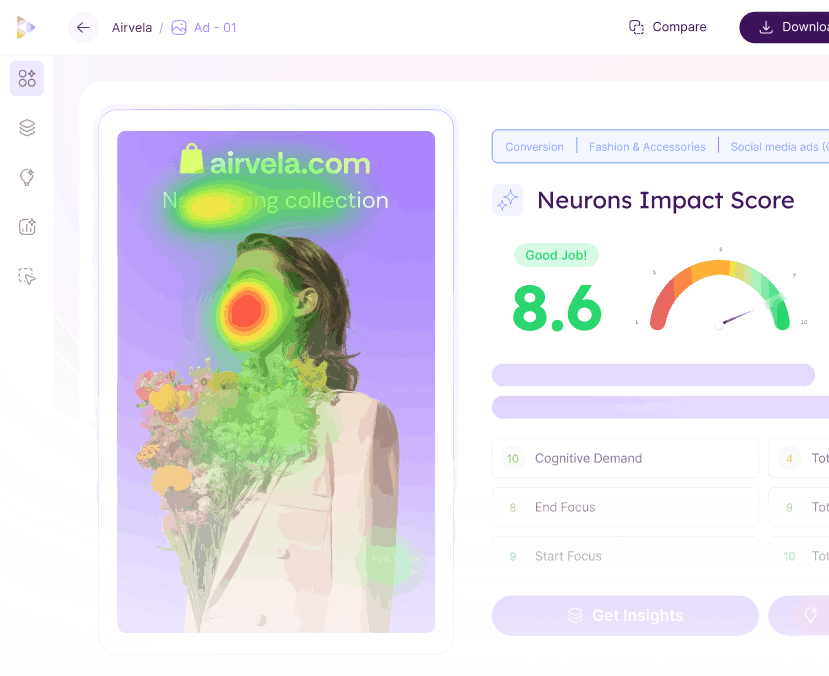
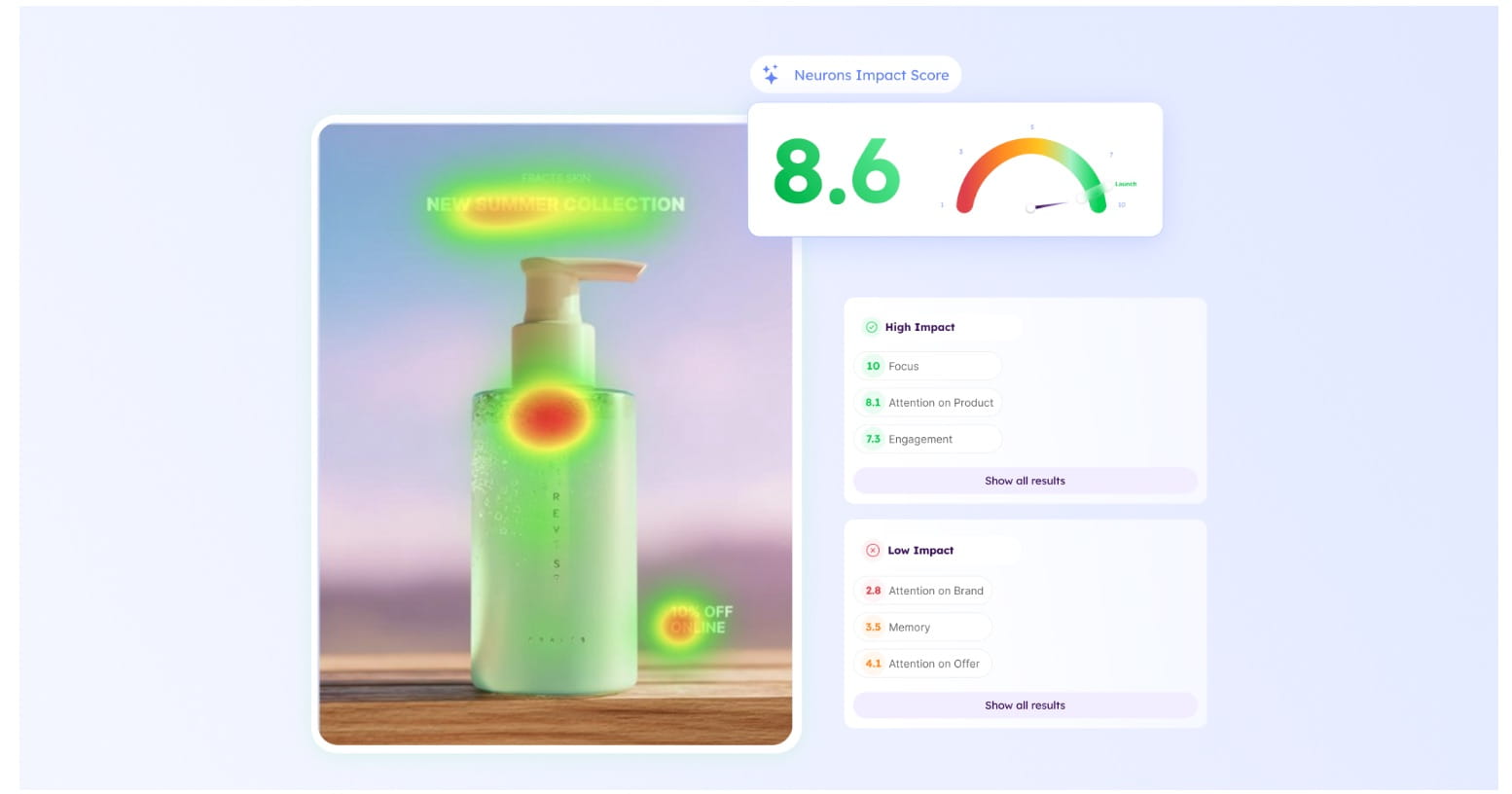
Neurons AI, for instance, supports brand tracking by measuring brand visibility, attention, and memory across ads. Its AI predicts recall and impact before campaigns launch, helping teams improve creative based on how people actually process ads.
- Survey-based tools like QuestionPro and Pollfish track awareness, sentiment, and perception over time. They are useful for benchmarking brand health across markets and periods.
- Social listening and search tools such as Brandwatch, Sprout Social, and Hootsuite monitor conversations, mentions, and search behavior to show how interest and demand evolve.
Brand tracking works best when these tools are used together. When attention, memory, survey data, and behavior align, insights are more reliable. As campaign volume and creative output grow, automated tools become essential to keep tracking efficiently and actionably.
Discover how Neurons AI tracks brand attention and memory.
What Features Matter Most in Modern Brand Tracking Software?
Modern brand tracking software should simplify obtaining insights and making decisions, rather than increasing reporting workload. The five most important features to look out for are outlined below.
- Attention-to-brand measurement assesses whether the brand is actually noticed in an ad, not just present on screen. This core feature helps teams quantify attention, giving them an early signal if exposure is meaningful or wasted.
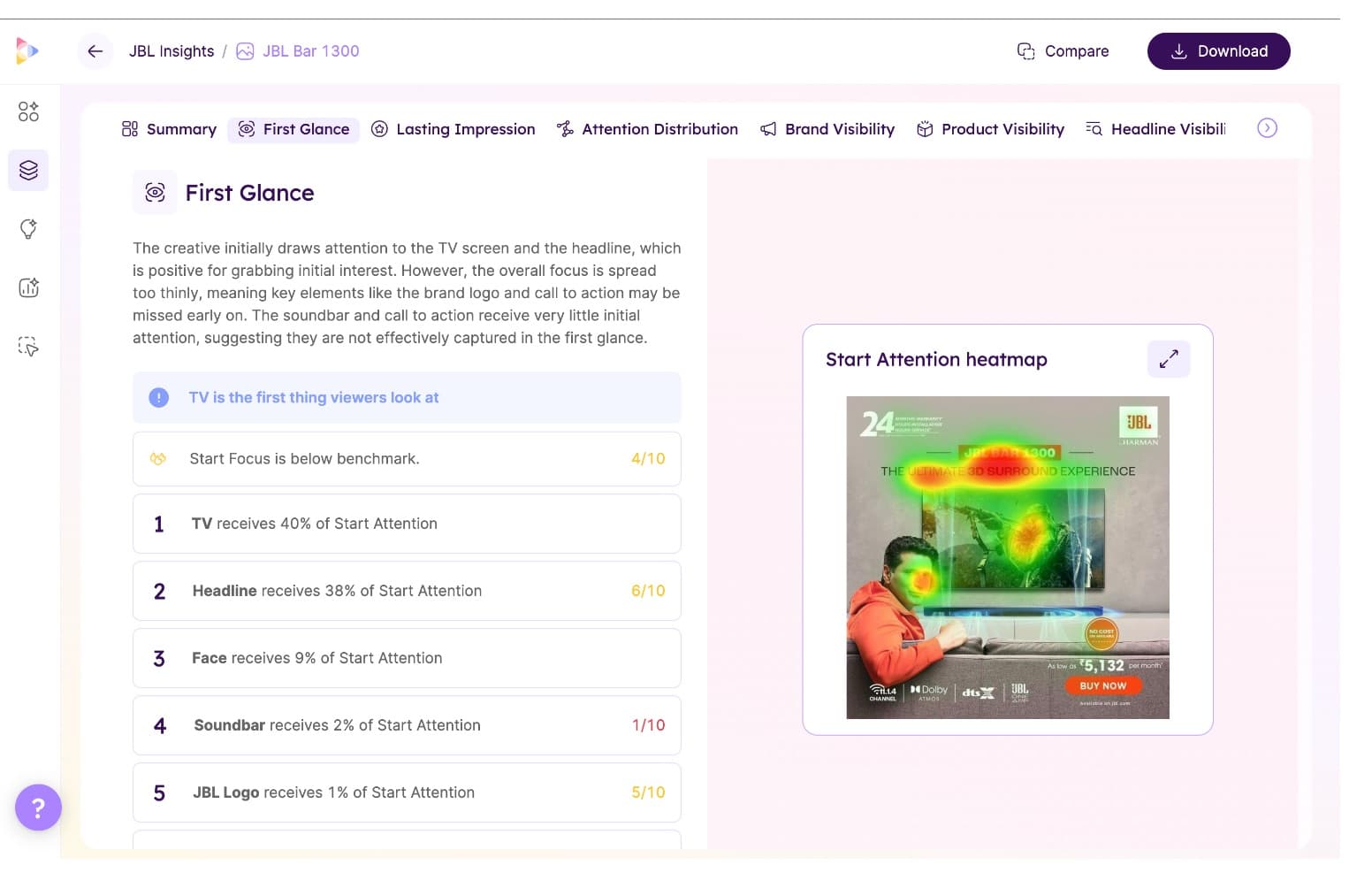
- AI-powered heatmaps visualize where attention concentrates across creative assets. By making attention patterns instantly visible, they reduce analysis time and help teams identify whether branding, products, or messages are being ignored.
- Visual recommendations turn attention and memory signals into clear, creative guidance, reducing trial and error testing and guesswork.
- Neuroscientific analysis predicts recall and memory formation by modeling how the brain interprets ads and identifies which creatives will generate long-term brand impact.
- Exposure-based tracking isolates the true impact of advertising, while automated dashboards replace spreadsheets and static reports. Together, they reduce manual workload and ensure brand performance is visible continuously across teams.
Together, these features shift brand tracking from analyzing past results to helping teams make smarter, more confident decisions.
Compare features of modern brand tracking software.
What Are Common Mistakes in Brand Tracking?
Even experienced teams can weaken brand tracking by missing the basics. These four common mistakes reduce insight quality, slow decision-making, and make data harder to trust.
- Infrequent Measurement
When brand health is checked too rarely, early drops in attention or memory are easy to miss. By the time awareness or consideration declines, fixing the problem often takes more time and budget.
Fix: Track brand metrics monthly or continuously.
- Inconsistent Methodology Over Time
Changing metrics, questions, or tools breaks continuity. When teams can’t tell if changes reflect real brand movement or measurement differences, tracking loses value.
Fix: Use the same metrics and methods consistently over time.
- Ignoring Attention and Memory Metrics
Awareness and sentiment alone don’t explain why brand performance changes. Without knowing whether ads were noticed or remembered, teams are left guessing.
Fix: Add attention and memory metrics alongside survey data.
- Siloed Reporting Across Teams
When brand, media, and creative data live in separate systems, insights are viewed in isolation. This slows action and weakens understanding of what’s driving results.
Fix: Align teams around shared dashboards and common KPIs.
Using consistent measurement methods and aligning teams ensures brand tracking supports real decisions, not just reporting.
Avoid common brand tracking and measurement mistakes.
How Can Teams Get Started With Brand Tracking?
Getting started with brand tracking doesn’t require a major overhaul. The key is to set a clear structure and build from there. Follow these 5 steps to kickstart your brand tracking efforts.
- Set clear brand objectives
- Select 3–5 core KPIs, including attention and recall
- Choose appropriate tracking methods
- Pilot measurement on one campaign
- Scale with automation and software support
With this approach, brand tracking becomes a practical system teams can act on, using regular reviews to iterate and continuously improve their brand-building efforts.
Neurons uses predictive AI to measure attention, memory, and brand impact before ads go live. This helps teams reduce risk, improve creativity, and make stronger brand decisions earlier. Start building a stronger brand foundation.