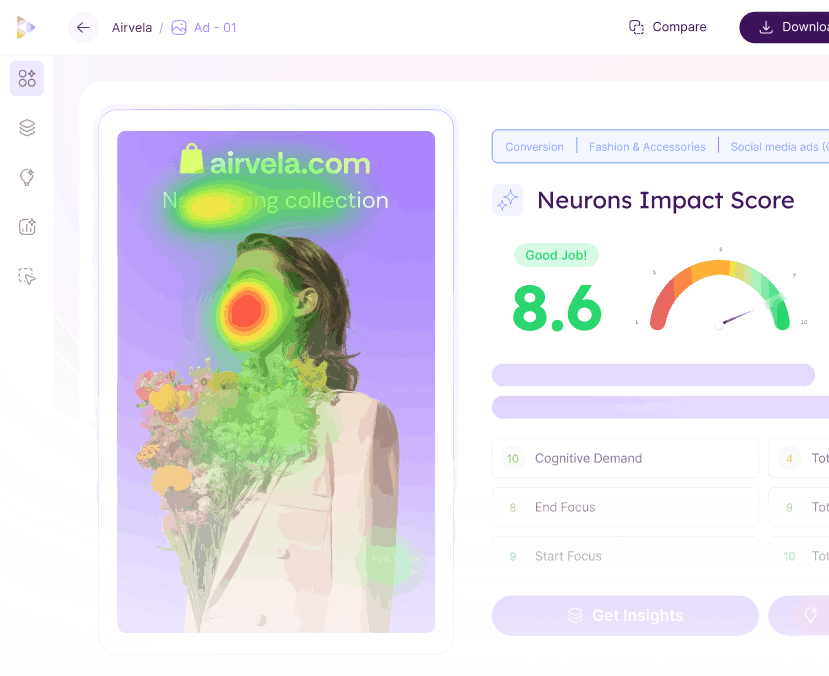
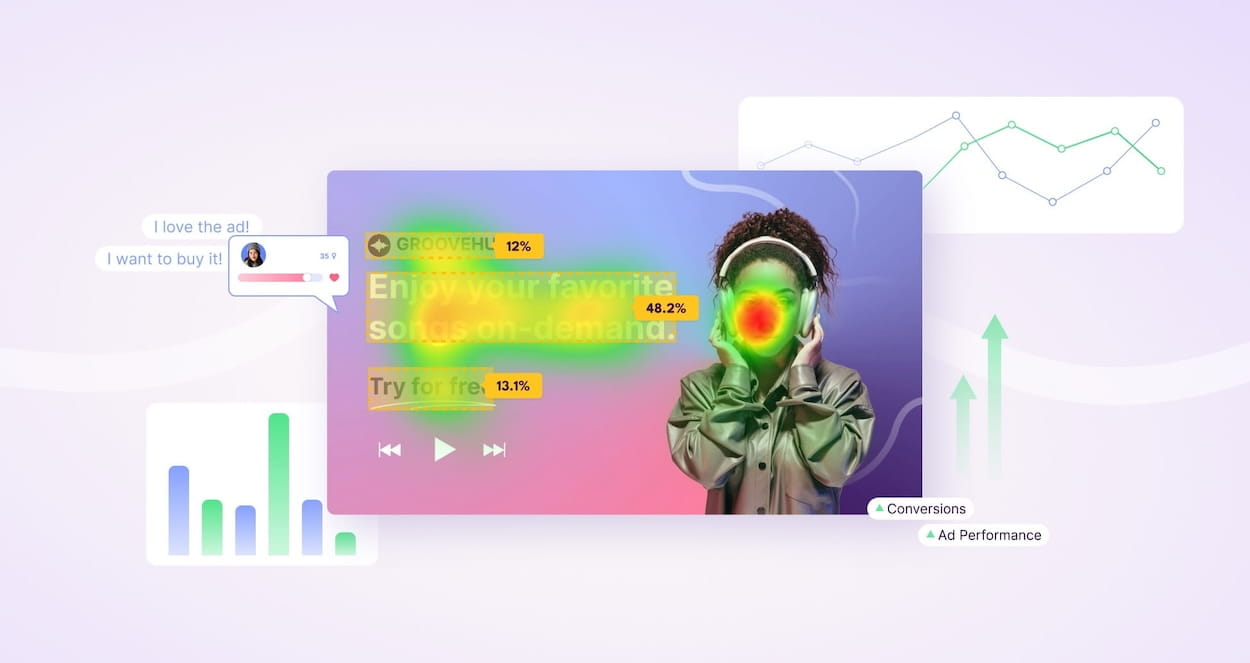
Brand building is the intentional process of shaping how people perceive, recognize, trust, and emotionally connect with a business. Effective brand building influences how a brand is remembered, how it makes people feel, and whom they choose when it’s time to buy.
In modern marketing, brand building goes beyond logos and slogans. Building a brand involves creating lasting mental and emotional impressions that shape preferences, loyalty, and behavior, even when a brand isn’t actively advertising.
.jpg)
In practice, brand building means defining a clear identity, positioning, voice, and value proposition, then expressing them consistently across all touchpoints. Touchpoints like advertising, product experience, and customer service work together to determine how easily a brand earns attention, stays memorable, and is perceived as trustworthy in decision-making moments.
Brand building matters because long-term growth isn’t driven by transactions alone. Relying only on performance marketing leads to rising costs, weaker conversions, and dependence on increasing spend.
Brand building can and should be measured. Tracking awareness, perception, and preference shows how brand investment influences choice over time. With modern ad platforms, analytics, and surveys, businesses can quantify brand impact and connect it directly to sustainable growth.
Learn how Neurons AI helps measure and optimize branded ad performance
How Do You Measure the Success of Brand Building?
Measuring brand building means assessing how a brand influences awareness, perception, preference, and future behavior over time. Unlike performance metrics, brand metrics focus on mental availability, how visible, familiar, and credible a brand is in customers’ minds.
In the past, brand building was hard to measure because its effects were indirect and took time to manifest. Measurement depended on surveys and periodic brand studies that were expensive, slow, and infrequent. This made brand performance feel subjective and disconnected from everyday marketing decisions, so brand efforts were often excluded from performance discussions.
Today, brand measurement is more practical and continuous. Digital platforms enable tracking of key brand metrics. Instead of asking whether brand building works, teams can now assess how well it works and where it contributes to growth.
Brand performance is typically measured across four core categories: brand awareness, brand perception, brand consideration, and brand lift.
- Brand awareness measures how familiar people are with a brand. It is the foundational metric. Without awareness, a brand cannot influence decisions.
- Brand perception measures what people believe about a brand and how they feel toward it, including trust and credibility.
- Brand consideration measures whether people would actively consider the brand when making a purchase decision.
- Brand lift measures changes in brand metrics driven by marketing exposure, showing whether brand activity had an impact.
What Brand-Building KPIs Actually Matter?
Brand-building KPIs are measurable indicators that show whether a brand is becoming more known, trusted, memorable, and preferred. Unlike performance KPIs, which track immediate actions, brand KPIs capture the psychological and behavioral shifts that happen before a purchase.
KPIs turn abstract brand concepts into signals that can be tracked and improved over time. Without them, brand building cannot be measured against business impact.
The five most important brand-building KPIs are brand awareness, brand recall, brand consideration, brand sentiment, and brand lift.
- Brand Awareness
Brand awareness measures how many people recognize or are familiar with the brand. This KPI is typically tracked through the signals below.
- Unaided awareness: Can people name the brand without prompts?
- Aided awareness: Do they recognize it when shown?
High awareness indicates that a brand has achieved a level of mental availability in the market. Mental availability is the probability that a customer will notice, recognize, and think of a brand in a buying situation.
High awareness does not mean customers will choose the brand; it simply means the brand has entered a competitive set in their minds.
- Brand Recall
Brand recall measures how easily people remember a brand when thinking about a need or product category. This KPI measures memory strength in the same vein that awareness measures recognition.
Recall is commercially critical because many decisions are made under time pressure, where people default to the brands that come to mind first.
- Brand Consideration
Brand consideration measures whether people would actively consider a brand when making a purchase. It reflects how well a brand competes within its category and signals relevance, credibility, and perceived value. Rising consideration is a strong predictor of future revenue because it improves conversion efficiency and sales outcomes.
- Brand Sentiment
Brand sentiment measures how people feel about a brand, capturing emotions such as trust, confidence, and skepticism. Sentiment is shaped by advertising, product experience, customer service, social presence, and reputation. It builds up slowly but is fragile and erodes quickly.
As a KPI, sentiment reflects emotional brand health and trust-related risk. Positive sentiment reinforces other brand metrics by making customers more receptive to messaging, more forgiving of mistakes, and more likely to recommend and advocate for the brand.
- Brand Lift
Brand lift directly links brand activity to outcomes. It measures the change in awareness, recall, or consideration caused by marketing exposure by comparing exposed and unexposed audiences. Brand lift provides accountability by showing whether campaigns, creatives, or channels drive measurable change, helping marketers analyze their messages and formats to allocate budgets effectively.
How Do Brand Awareness, Recall, and Consideration Differ?
Brand awareness measures recognition. It answers whether people know that the brand exists. Without awareness, no other brand outcome is possible.
Brand recall measures memory. It answers whether the brand comes to mind when someone thinks about the category. Recall matters most in competitive markets where many brands are known, but only a few are remembered at the point of decision.
Brand consideration measures preference. It answers whether someone would seriously consider the brand as an option. Consideration signals that awareness and recall have translated into relevance and credibility.
The metrics stated above are sequential, not interchangeable. Awareness shows reach, recall shows message effectiveness, and consideration is the closest brand metric to revenue. Together, they track progression from being known, to being remembered, to being chosen
How Do Brand Metrics Connect to Revenue and Growth?
Brand metrics drive revenue by shaping customer behavior before purchase. While they don’t usually trigger immediate sales, they influence how efficiently revenue is generated.
The indirect impact of brand metrics shows up in marketing and sales efficiency. Strong awareness and recall reduce hesitation, while positive perception and sentiment build trust. This lowers acquisition costs, shortens sales cycles, and improves conversion rates. Over time, these effects increase customer lifetime value and improve revenue quality.
Brand metrics can also directly affect revenue through recall and consideration. In competitive or time-pressed situations, buyers choose the first brand they remember or see as viable. An increase in consideration expands the buyer pool, resulting in higher branded search demand, stronger inbound interest, and better close rates.
To link brand metrics to long-term growth, companies track trends over time, comparing changes in awareness, perception, or consideration with shifts in sales, retention, and cost efficiency. Brand lift studies and controlled experiments help confirm which brand investments are driving real impact.
Why Is Advertising Data Essential for Brand Measurement?
Advertising data is essential for brand measurement because it provides controlled exposure, which is necessary to understand cause-and-effect in brand building.
Unlike organic interactions, advertising shows exactly who saw a message, how often, and in what context. This enables comparison between exposed and unexposed audiences and isolates the impact of brand activity.
Ad exposure data is particularly valuable for the four actions listed below:
- Measuring awareness, recall, and perception shifts
- Running brand lift studies
- Testing creative and messaging effectiveness
- Understanding frequency and saturation effects
Without advertising data, brand measurement relies on correlation and assumption. With it, brand impact can be evaluated experimentally.
Advertising data also supports ongoing optimization by linking creative decisions to brand lift results, helping teams refine messaging and improve overall brand effectiveness.
What Are the Key Components of Brand Building?
The key components of brand building determine how a brand is recognized, understood, trusted, and chosen over time. Together, they shape a brand’s position in the market and its strength in customers’ minds.
The five core components of brand building are awareness, perception, consistency, trust, and differentiation.
- Brand Awareness
Brand awareness is the foundation of brand building. It represents the degree to which people recognize or are familiar with a brand. Awareness answers the basic question: “Does the market know you exist?”
- Brand Perception
Brand perception reflects how people interpret and evaluate a brand based on experience and exposure. It includes beliefs about quality, reliability, values, and emotional appeal.
- Brand Consistency
Brand consistency is the discipline of delivering the same core identity and message across all touchpoints. Consistency reinforces meaning and prevents confusion.
- Brand Trust
Brand trust is the confidence customers have that a brand will deliver on its promises. This component is built through consistent experiences, clear communication, and reliable performance over time. High brand trust reduces decision-making risk, making customers more likely to choose and stay with the brand.
- Brand Differentiation
Brand differentiation is what sets a brand apart. This is the component that answers why someone should choose this brand over another. Differentiation may come from benefits, values, positioning, or experience, but clarity is critical.
When a brand isn’t clearly different, it becomes interchangeable, and interchangeable brands compete on price.
Learn how to build a memorable brand with our in-depth guide.
How Does Brand Awareness Contribute to Brand Building?

Brand awareness is a brand’s visibility and recognition in the market. Without it, even a strong value proposition can’t drive demand. People can’t consider, trust, or choose a brand they don’t recognize.
Awareness is built through consistent, repeated exposure in relevant contexts, supported by clear and recognizable brand signals. It develops over time, not through a single campaign. Strong awareness makes a brand feel familiar, reducing friction when a buying need arises.
How Does Brand Perception Influence Customer Decisions?
Brand perception defines what a brand represents to customers: the attributes, values, and associations they connect with it. It affects whether claims are believed, prices feel justified, and the brand aligns with personal values.
Perception is shaped by repeated signals: messaging, tone, design, customer experience, reviews, endorsements, and pricing. A premium tone and pricing suggest luxury. Consistently strong service builds trust. Over time, these cues influence preference, making customers more likely to choose one brand over another, even when options are similar.
Why Is Brand Consistency Important for Performance?
Brand consistency strengthens awareness and perception over time by reinforcing a consistent identity, values, and positioning across every touchpoint. Consistent presentation makes a brand easier to recognize and remember.
Consistency matters because memory depends on repetition. When visuals, tone, or positioning change unpredictably, the brand becomes harder to recall and trust. Inconsistency creates uncertainty, increasing hesitation at decision moments.
Over time, inconsistent branding also weakens positioning. Without a clear, repeated message, differentiation fades, and the brand becomes easier to replace with competitors.
Trust erodes quietly as well. Brands that present themselves inconsistently are perceived as unreliable or unclear, reducing confidence.
From a performance standpoint, inconsistency increases costs. Each campaign must rebuild recognition rather than build on prior exposure, breaking the compounding effect that makes brand building efficient.
See how our software optimizes your ads based on your brand kit.
How Does Brand Building Work Through Advertising Channels?
Advertising builds brands by increasing mental availability. Each impression reinforces brand cues, including name, visuals, tone, and value proposition. Over time, repeated exposure creates familiarity and trust.
Advertising also makes brand building intentional and measurable. Unlike organic touchpoints, ads give brands control over who sees the message, how often, and in what context. This control makes advertising especially effective for shaping perception.

Different channels serve different brand goals. Video and display drive awareness, social and native formats shape relevance, and search and retargeting reinforce credibility at high-intent moments. Together, they strengthen brand memory across the customer journey.
Impact is measured by comparing exposed and unexposed audiences and tracking changes in awareness, recall, consideration, and sentiment. This shows brand contribution beyond immediate sales
How Do Paid Ads Contribute to Brand Building?
Paid ads increase brand exposure by placing messages consistently in front of defined audiences. This exposure is targeted, timed, and repeated, allowing brands to appear before consumers actively show intent.
Repeated exposure strengthens memory. Brands that show up consistently feel more familiar and trustworthy, and familiarity increases the likelihood of being chosen at decision time.
In brand building, paid ads play three key roles.
- They help people discover the brand faster than organic channels would
- They reinforce what the brand stands for through consistent messaging
- They support sales-focused campaigns by warming up the audience before they encounter the sales campaign
What Ad Formats Are Best for Increasing Brand Recall?
Ad format matters because memory depends on attention, emotion, and repetition. Different formats affect how well a message is remembered.
Video ads are the strongest driver of brand recall. They combine visuals, sound, and storytelling, making them especially effective for introducing a brand or explaining differentiation.
Static formats, such as images and banners, reinforce visual cues, like logos and colors. While less emotional, repeated exposure builds recognition.
Short social videos also perform well due to frequent exposure. Even brief impressions can strengthen recall when the brand is consistently visible.
The most effective approach involves combining formats, using the right formats on the right platforms to maximize brand recall. Video creates memory, while static and social placements reinforce it through repetition.
How Do You Optimize Ads for Brand Perception?
Optimizing ads for brand perception means shaping how people feel about your brand, not just whether they remember seeing it.
The process involves testing different messages and visuals and seeing how they affect emotional and mental responses. A brand might compare a warm, emotional message with a more direct, benefit-focused one to understand which feels more trustworthy or relatable. Even small changes in wording, imagery, or tone can noticeably shift perception.
Results are judged by how people respond after exposure. Do they feel more positive about the brand? Do they trust it more? Does the message feel relevant to their needs?
Over time, ads are refined based on what resonates. The goal is steady improvement in brand perception, not perfection in a single campaign.
Learn how Neurons AI optimizes advertising for brand perception.
How Do You Balance Brand Campaigns With Performance Campaigns?
Brand and performance campaigns serve different purposes. Brand campaigns drive long-term growth by building recognition, memory, and trust. Performance campaigns drive short-term results, such as leads or purchases, by targeting people who already show intent.
Balancing both matters because performance campaigns weaken without brand support. When people don’t recognize or trust a brand, hesitation increases even if the offer is strong. With time, ads become more expensive and less effective.
Most teams maintain this balance by running brand campaigns consistently while adjusting performance spend based on short-term goals. Others shift emphasis by growth stage, prioritizing brand campaigns early to build awareness, then increasing performance investment once demand exists.

Measurement helps keep this balance on track. Brand campaigns are evaluated using awareness, recall, and consideration, while performance campaigns are measured by conversions and revenue. Rather than comparing them directly, successful teams examine how improvements in brand metrics translate into stronger performance over time.
What Are the Steps in the Brand Building Process?
The brand-building process is a structured, ongoing system for shaping and sustaining how a brand is perceived. It ensures brand decisions are intentional, consistent, and aligned with long-term business goals.
The five major steps in brand building are listed below.
- Research and diagnosis
- Positioning and strategy definition
- Execution across channels
- Measurement and evaluation
- Iteration and refinement
Research and Diagnosis
Brand building starts with understanding the current reality. Research establishes how the brand is perceived, where it sits in the market, and how it compares to competitors.
Teams analyze awareness, perception, and sentiment using surveys, market research, customer feedback, behavioral data, and social listening. The goal is to identify gaps between intended positioning and actual perception.
The diagnostic step replaces guesswork with evidence, setting the foundation for smarter, more confident strategic decisions.
Positioning and Strategy Definition
Once insights are gathered, the next step is positioning. Positioning clarifies what the brand stands for, who it’s for, and why it’s different.
This step defines the brand’s core promise, value proposition, tone, personality, and key message, as well as the associations to build or avoid.
Strong positioning turns research into direction, creating clear guardrails for creative, messaging, and channel choices. Without it, brand activity becomes scattered and reactive.
Brand Execution Across Channels
Execution is where strategy shows up in the real world. Brand positioning is expressed through advertising, content, product experience, customer interactions, and digital platforms.
Consistency plays a critical role in effective execution. Visuals, tone, messaging, and experience design must reinforce the same core idea across every touchpoint.
Brand execution also extends beyond marketing. Sales materials, onboarding flows, and internal communications all shape how the brand is perceived.
Brand Measurement and Performance Evaluation
Brand measurement makes brand building accountable and open to improvement by evaluating whether brand activities deliver the desired outcomes.
Teams track awareness, recall, consideration, sentiment, and brand lift, focusing on trends over time rather than single data points.
This step answers whether brand activity is working and influencing future demand. By connecting execution to outcomes, teams move brand building from intuition-led decisions to data-informed action.
Iteration, Optimization, and Evolution
The final step closes the loop by using measurement insights to inform next steps. The strategy is refined, execution improves, and the brand adapts to changing market conditions.
Evolution doesn’t mean reinvention. Strong brands adapt carefully while preserving what makes them recognizable. Over time, this iterative process compounds brand equity, making the brand clearer, stronger, and more resilient in competitive markets.
How Do You Research Brand Perception Using Data?
To research brand perception using data, start by defining the perception dimensions that matter most to the business, such as trust, relevance, or credibility. These become the focus of measurement.
Use a mix of quantitative and qualitative data. Surveys provide a direct view of how audiences perceive the brand relative to competitors. Behavioral signals such as engagement, repeat purchases, and branded search provide evidence of how perception manifests in action. Social listening and reviews add depth by revealing how people describe the brand in their own words, often uncovering emotions and associations surveys miss.
Analysis should focus on patterns, not individual data points. Look for recurring themes, sentiment shifts, and gaps between intended positioning and actual perception. When combined, these signals show which associations are strong, which are weak, and which may be limiting the brand’s growth.
How Do You Validate Brand Positioning With Advertising Experiments?
Validating brand positioning with advertising experiments means testing whether a proposed message resonates with the target audience before scaling it.
The process involves exposing different audience groups to different positioning messages. One group sees the proposed positioning, while another sees an alternative message or no message at all. This creates a clear comparison.
After exposure, measure brand-focused signals such as recall, sentiment, and consideration. These results show which message people remember, feel most positive about, and are more likely to choose, providing clear evidence for which positioning to scale.
How Do You Maintain Brand Consistency Across Campaigns?
To maintain brand consistency, you need clear brand guidelines that define your brand’s non-negotiable elements, such as tone of voice, visual identity, and key values. When your team understands what must remain consistent, they can adapt creatively without drifting off-brand.
Simple review habits reinforce consistency. Before campaigns launch, check assets against brand standards to prevent mixed signals that weaken recognition.
Maintaining consistency by monitoring campaign performance is important as well. Brand metrics and audience feedback quickly show when messaging becomes fragmented. Catching these shifts early helps keep the brand clear, consistent, and recognizable across every touchpoint.
How Do You Iterate Brand Strategy Over Time?
Brands need to adapt as audiences, markets, and competition change, but without losing what makes them recognizable. Iteration makes that possible.
To iterate brand strategy, start with regular reviews of brand performance. Track trends in awareness, recall, and perception to see whether the brand is gaining strength or losing clarity.
Use data and customer feedback to guide small, deliberate changes. This might mean refining a message or adjusting how the brand shows up on specific channels. The goal isn’t reinvention, but steady improvement that keeps the brand relevant, consistent, and effective over time.
What Tools and Platforms Support Brand Tracking and Optimization?
Brand tracking tools help teams understand how a brand performs over time in ways clicks and conversions can’t show. Their purpose is to measure whether people recognize, remember, and perceive the brand as intended.
Brand tracking tools fall into four broad categories: brand measurement tools, social listening tools, brand performance and analytic platforms, and AI-driven predictive platforms.
- Brand measurement tools track changes in awareness, recall, consideration, and sentiment, usually through surveys. They show whether brand perception is moving in the right direction.
- Social listening tools monitor how people talk about a brand across social platforms, reviews, and search behavior. They help detect shifts in perception early, before those shifts affect revenue.
- Brand performance and analytic platforms bring brand metrics into dashboards and trend reports. They allow teams to compare campaigns, audiences, and messages to understand what’s working and what isn’t.
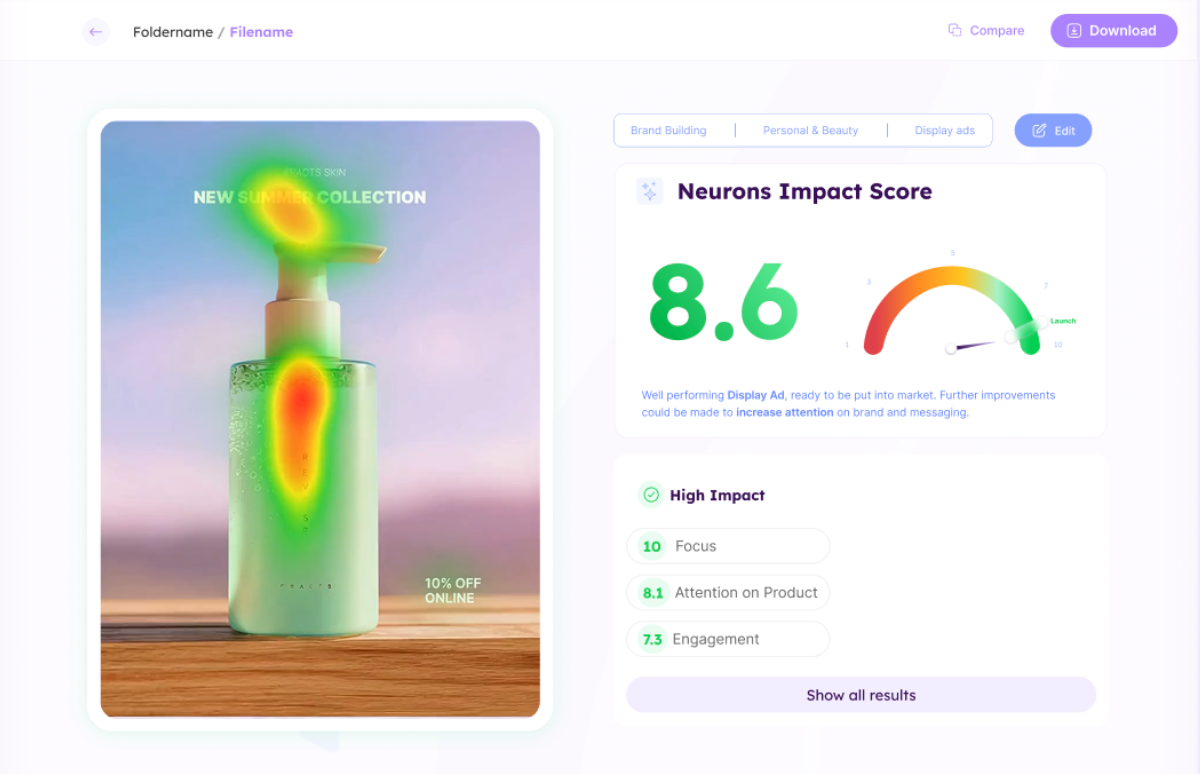
- AI-driven predictive platforms use machine learning to explain why brand metrics change and to forecast future outcomes. Neurons AI, for instance, can predict how a creative will perform before it goes live. It also doubles as a measurement tool, helping brands track brand attention, memorability, engagement, and more.
Brand tracking and optimization tools matter because brand building happens gradually. Without consistent tracking, progress is easy to miss, and decisions are taken based on assumptions. Brand tracking platforms provide visibility into what’s changing and why, allowing teams to refine messaging, creative, and media decisions over time.
What Tools Measure Brand Awareness and Brand Lift?

Brand awareness is typically measured through surveys that ask whether people recognize or are familiar with a brand. These track aided awareness (recognition when prompted) and unaided awareness (spontaneous recall). When run consistently, they show whether awareness is increasing, flat, or declining.
Brand lift tools measure the impact of advertising by comparing people who saw an ad with those who didn’t. The difference between these groups reveals whether exposure changed awareness, recall, consideration, or sentiment.
Together, these approaches provide a complete view. Brand tracking shows how awareness evolves over time, while brand lift studies show whether specific campaigns caused measurable change. Many ad platforms support lift testing, while survey tools add broader market context. Neurons AI supports both
How Do Brand Tracking Tools Work With Advertising Platforms?
Brand tracking tools connect directly to advertising platforms such as Google Ads and Meta Ads to access real-time exposure data. This ties brand measurement to actual ad delivery rather than estimated reach.
When ads run, data such as impressions, frequency, and audience segments is captured. Brand tracking tools use this information to separate exposed and unexposed audiences and compare how each group responds.
Results are shown in dashboards that highlight brand lift, trends over time, and differences across creatives, audiences, or channels. This makes it clear which campaigns are strengthening the brand and which are not.
What Features Matter Most in Brand Performance Software?
Brand performance software helps teams understand brand strength and whether it’s improving over time. Instead of scattered reports or one-off studies, these tools centralize brand data so teams can see what’s working, what isn’t, and where to focus next.
The six most important features to look out for in brand performance software are listed below:
- A single place to track brand metrics
- Brand lift and experiment tracking
- Trend tracking over time
- Audience and channel breakdowns
- Integration with ad platforms
- Clear, simple reporting
A Single Place to Track Brand Metrics
Great tools bring awareness, recall, consideration, and sentiment into one dashboard, making progress and trends easy to spot.
Brand Lift and Experiment Tracking
Lift measurement and experimental tracking show whether advertising is actually changing how people think about the brand, rather than assuming impact.
Trend Tracking Over Time
Trends matter more than snapshots. This feature shows whether brand health is improving or declining over time.
Audience and Channel Breakdowns
Breakdowns reveal where the brand is strong or weak, helping teams focus optimization efforts where they matter most.
Integration With Ad Platforms
Ad platform integration links brand results to campaigns and creatives, showing which messages are driving brand performance.
Clear and Simple Reporting
Brand data needs to be easy to explain. Clear reporting helps teams align stakeholders and justify brand investment without complexity.
How Do Teams Choose the Right Brand Measurement Solution?
To choose the right brand measurement solution, teams first need to be clear about what they want to learn about their brand. Once that’s established, teams usually evaluate options by examining how the data is collected and how reliable the results are.
From there, most teams assess solutions across the 5 key areas highlighted below.
- Measurement Coverage: Does the solution measure the brand outcomes that matter most, such as awareness, recall, perception, and consideration?
- Integration Capabilities: Can it connect with existing advertising platforms, analytics tools, or reporting systems?
- Scalability and Flexibility: Can the solution support multiple campaigns, markets, or brands as the business grows?
- Ease of Use: Will teams actually use it? Solutions that are too complex often fail to deliver value despite strong methodology.
- Cost and Resource Requirements: Does the investment match the organization’s budget and internal capabilities?
The final decision is shaped by both strategic goals and real-world constraints, including budget, team expertise, and leadership expectations.
What Brand Building Examples Show Measurable Advertising Impact?
Brand building feels abstract because its effects don’t always show up as immediate sales. Strong examples make the impact visible by showing how advertising changes awareness, memory, and behavior.
Strong brand-building examples have the three characteristics listed below:
- The brand had a clear objective.
- Advertising was used intentionally, not randomly.
- The results were measured against a baseline or control group, making the impact visible.
Across industries, the outcomes are consistent: higher awareness, stronger recall, and increased demand over time. The following examples show how this works in practice.
How Do Brands Use Advertising To Increase Brand Awareness?
Case Study: CO-RO
CO-RO, an established multinational food and beverage company behind brands like Sun Lolly and Sun Top, wanted to strengthen brand awareness as it expanded into competitive retail markets.
To solve this, CO-RO partnered with Neurons to optimize its creative before campaigns went live. Using Neurons' predictive AI, CO-RO tested different creatives to understand which designs were most likely to capture attention and make the brand recognizable within the first moments of exposure.

These insights were then applied to CO-RO’s video advertising for market entry, strengthening brand cues and reducing the risk of running ineffective creatives.
Results
- A 20% lift in brand awareness following the launch of Neurons-optimized advertising in a new market.
The results showed that well-optimized creatives can significantly improve brand awareness. With the help of Neurons, CO-RO turned brand building into a measurable, predictable process. By optimizing creative for attention and branding upfront, CO-RO increased awareness while reducing media spend.
What Experiments Demonstrated Measurable Brand Lift?
Case Study: Sunrun
Sunrun, a residential solar energy company, wanted to understand whether its video advertising was making an impression or simply adding impressions without impact.
To answer this, Sunrun ran a YouTube TrueView campaign and conducted a brand lift experiment, comparing exposed and unexposed audiences.
This experimental setup is important because it isolates the effect of advertising. Instead of guessing whether the ads worked, Sunrun could clearly see the difference.
Results
- A 101% lift in ad recall among people who saw the ads
- Over 1.8 million video views
- A 215% increase in site visits within the target market
The dramatic lift in ad recall showed that the ads weren’t just seen; they were remembered. The spike in site visits suggested that this memory translated into curiosity and intent.
This Sunrun case study demonstrates that brand lift experiments can make brand impact tangible. Rather than debating whether video “works,” Sunrun had concrete evidence that advertising changed what people remembered and how they behaved.
How Does Ad Optimization Improve Brand Performance Over Time?
Case Study: The Warehouse (New Zealand)
The Warehouse, a major New Zealand retailer, treated brand building as an ongoing system, not a one-off campaign. The team ran repeated brand lift studies on YouTube to test creatives, messages, and audiences.
With each study, they refined their approach, adjusting messaging, strengthening brand cues, and intensifying what resonated.
Results
- Average 35% lift in ad recall
- 16% lift in consideration
- 82% lift in brand interest, measured through brand search behavior
- 32% year-over-year growth in e-commerce sales during the period studied
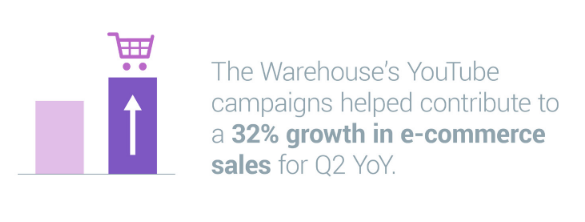
This example shows that brand building compounds. Each improvement builds on the last, strengthening memory and preference over time.
The Warehouse case study reveals that advertising performs best when it’s treated as a system, not a one-off campaign. Measurement enables brands to learn, optimize, and grow stronger with every iteration.
How Does Brand Building Measurement Differ in B2B vs. B2C Advertising?
Brand building follows the same principles in B2B and B2C, but measurement differs because buying behavior differs.
In B2C, brand building focuses on mental availability at scale. Brands aim to be recognized and remembered by large audiences, making fast, individual decisions. Measurement emphasizes reach, frequency, awareness, recall, and short-term brand lift, with impact often appearing quickly in conversions or sales.
In B2B, brand building centers on credibility and trust. Buying decisions take longer, involve multiple stakeholders, and carry higher risk. Measurement focuses on reputation, authority, consideration, and long-term preference, with impact showing up gradually through inbound demand, pipeline strength, and win rates.
As a result, B2C measurement is faster and higher-volume, while B2B measurement is slower and more directional. Both are measurable, but each requires different timelines and success metrics.
What Are the Biggest Mistakes in Brand Building Measurement?
Brand measurement usually fails not because it’s flawed, but because it’s approached with the wrong expectations. The eight biggest mistakes made in brand-building measurement are listed below.
- Treating brand like a short-term channel
- Judging brand success with a single metric
- Relying on last-click or conversion-only attribution
- Measuring brand too infrequently
- Changing measurement methods too often
- Separating brand and performance measurement
- Ignoring context and external factors
- Expecting brand measurement to prove ROI instantly
These mistakes happen because brand outcomes don’t behave like performance metrics. Performance data is immediate and transactional, while brand data is gradual and directional. Brand impact builds over time and must be measured accordingly.
Why Does Last-Click Attribution Undervalue Brand Building?
Last-click attribution gives all the credit for a conversion to the final interaction before purchase. While it’s easy to use, it doesn’t reflect how brand building actually works.
Brand influence begins much earlier. Awareness, familiarity, and trust are built through repeated exposure. These factors reduce hesitation and shape preference, making the final conversion more likely.
Last-click attribution ignores this buildup and credits only the final touchpoint, even though that interaction often succeeds because earlier brand activity prepared the audience. This makes brand channels look ineffective and overvalues lower-funnel tactics.
A better approach focuses on incremental contribution. Instead of asking what caused the conversion, brand-aware measurement asks what made the brand recognizable, credible, and easy to choose. This mindset recognizes that brand building doesn’t compete with performance marketing; it enhances performance marketing.
What Happens When Brand Measurement Is Too Infrequent?
Measuring brand too infrequently turns brand building into a lagging indicator instead of a manageable system. When brand metrics are reviewed only quarterly or annually, teams lose sight of how everyday decisions shape perception over time.
The biggest risk is delayed awareness. Drops in trust, relevance, or favorability can go unnoticed for months, making recovery slower and more expensive. At the same time, effective brand efforts may be underfunded simply because their impact isn’t visible quickly enough.
Infrequent measurement also makes optimization difficult. Without regular feedback, teams can’t tell which campaigns strengthened the brand and which simply consumed budget. Strategy becomes reactive, guided by opinions rather than evidence.
More frequent measurement changes that. It allows teams to spot trends early, link brand movement to specific campaigns, and adjust creative or media while work is still live.
How Do Siloed Teams Distort Brand Performance Insights?
Organizational silos form when brand, performance, media, and analytics teams operate with separate goals and disconnected metrics.
In siloed setups, brand teams may see improvements in awareness or perception without knowing whether those gains are helping performance. Performance teams might optimize hard for conversions and efficiency, without realizing the long-term brand damage caused by overly aggressive tactics. Media teams may focus on cost metrics that quietly undermine consistency or message quality.
Each team sees only part of the picture. Decisions are made with incomplete information, which can lead to brand-building being either overstated or dismissed entirely, depending on which data is prioritized.
Cross-team alignment solves this problem. When teams share goals and measurement frameworks, brand and performance data reinforce each other, giving leadership a clearer view of how marketing drives long-term growth.

When Should You Rebrand and How Do You Measure Its Impact?
Rebranding is a strategic reset to restore alignment between who a business is, who it serves, and how it’s perceived.
Companies typically consider rebranding when expanding into new markets, launching new offerings, or evolving their mission.
Sometimes they outgrow their old positioning; other times pressure comes from outside, in the form of intensified competition or shifting customer expectations. Rebranding is also common after mergers, acquisitions, or major internal shifts, when clarity and cohesion become critical.
Measuring the impact of a rebrand requires establishing a clear baseline before the rebrand. Without it, it’s hard to know whether changes are driven by the rebrand or by other factors.
After launch, measurement focuses on whether the brand is easier to understand, more memorable, and more relevant to the target audience. Early signals come from awareness, recall, perception, and consideration. Longer-term validation shows up in engagement quality, inbound demand, and marketing efficiency.
What Risks and Considerations Affect Brand Performance Measurement?
Brand metrics don’t shift overnight, and progress often shows up gradually. Compared with performance metrics that provide instant feedback, this can make brand-building feel slow or uncertain. Brand data also reflects trends rather than clean cause-and-effect relationships, so results need to be interpreted with context.
Additionally, factors such as survey bias, privacy constraints, and changes in data availability affect the reliability of brand performance measurements. Bias affects survey-based research results, while privacy concerns and data availability limit the level of detail available to teams. Small sample sizes, inconsistent methods, or external factors such as seasonality, economic changes, or competitor activity can also affect brand metrics independent of your efforts.
These challenges don’t make brand measurement useless; they just mean it should be handled thoughtfully. Brand metrics work best as directional signals, not absolute truths. When teams keep that in mind and look at trends alongside business context, brand data becomes far more useful for making smart, balanced decisions.
Watch our webinar on brand building in a performance-driven world.
How Can Teams Start Measuring and Optimizing Brand Building Today?
Getting started with brand measurement starts with alignment. Teams need to agree that brand performance matters, what they’re trying to achieve, and which signals indicate progress. Once that’s clear, even basic measurement can be useful.
The next step is establishing a baseline. This can come from existing campaign data, simple surveys, or platform tools. The priority isn’t precision; it’s consistency. A clear starting point makes future changes measurable.
As tracking continues, consistency matters more than sophistication. Measuring the same signals over time reveals direction and momentum, even when individual results vary. Patterns show what messaging works, which audiences respond to, and where perception is shifting.
Optimization follows naturally. Insights guide changes to creative, channels, and consistency. Brand building becomes a continuous loop in which execution informs measurement and measurement drives improvement.
Neurons helps teams track their advertising impact through neuroscience-backed AI. With our suite of tools, you can effectively track and optimize your brand-building creatives to drive better results.
Ready to level up your brand-building efforts? Try Neurons today