A brand-building strategy is a long-term plan for shaping how people perceive, recognize, and remember a brand over time.
In today’s market, companies invest in branding and marketing separately without a clear plan connecting them. A brand-building strategy closes that gap by guiding both in the same direction.
Branding is an ongoing process that defines how the brand looks and feels across all touchpoints, while marketing promotes the brand through ads and campaigns. A branding strategy connects both so that the brand is presented and promoted with a consistent message.
This alignment supports long-term growth by making the brand easier to understand and recognize, and improving how the brand is perceived.
The key benefits of a brand-building strategy are trust, differentiation, and pricing power.
- Trust
A clear and consistent brand improves credibility and makes the brand easier to rely on.
- Differentiation
A defined strategy helps a brand stand out in a competitive market instead of blending in with competitors.
- Pricing Power
A strong brand improves perceived value with audiences and allows brands to confidently command higher prices.
Learn how brand building drives long-term business growth
What Is Brand Strategy in Marketing?
Brand strategy in marketing is a plan that defines how a brand positions and presents itself in line with its marketing goals.
In the context of marketing, a brand strategy ensures that every campaign, content, and messaging presents a clear and consistent idea of the brand across channels.
At a broader level, a business strategy focuses on the long-term goals of a company relating to revenue, expansion, and positioning. A brand strategy defines how the brand wants to be communicated to its audience. A marketing strategy focuses on promoting the brand through channels and campaigns.
These three concepts work hand in hand but are not interchangeable. To understand better, a business strategy sets the destination, while a brand strategy determines how the brand shows up along the journey. A marketing strategy, on the other hand, determines the routes taken to get there.
Another related concept is advertising. However, the difference becomes clearer when each concept is broken down.
- Brand strategy defines who the brand is, what it stands for, and how it wants to be presented publicly.
- Marketing strategy focuses on how the brand is promoted and converts its target audience across channels.
- Advertising executes specific campaigns within a defined marketing strategy.
What Is the Difference Between Brand Strategy and Marketing Strategy?
Brand strategy and marketing strategy differ in purpose and timeline. A brand strategy focuses on how a brand is communicated and understood by its audience. A marketing strategy focuses on how a brand is promoted to drive clicks, conversions, and revenue.
A brand strategy is a long-term plan. By contrast, a marketing strategy is shorter-term and changes with trends and performance.
The table below shows how these differences extend across other key areas.
A practical example shows how both strategies work together in real use.
Nike’s brand strategy is built around performance, motivation, and achievement. The marketing strategy promotes this through athlete campaigns, social media content, and product launches that drive engagement and sales.
What Are the Core Elements of a Successful Brand Strategy?
The core elements of a successful brand strategy are brand positioning, target audience, brand identity, and brand messaging.
A successful branding strategy is built on the fundamental building blocks listed below.
- Brand positioning: The space a brand occupies in the market relative to its competitors.
- Target audience: This defines who a brand is for, including their needs, behaviors, and decision-making patterns.
- Brand identity: The visual and verbal representation of a brand.
- Brand messaging: How a brand speaks and communicates.
- Brand purpose: This represents why a brand exists beyond making money.
What Is Brand Positioning and How Do You Define It?
Brand positioning is the specific space a brand occupies in the minds of its audience, especially when compared to its competitors.
This element is the foundation of brand strategy, because every other element, including identity and messaging, depends on it.
Without a clear positioning, a brand will struggle to stand out in a competitive market. Messaging becomes inconsistent, and audiences will find it difficult to understand the brand.
Brand positioning can be defined using this simple framework: "For [audience], [brand] is the [category] that delivers [benefit] because [reason]."
The framework instantly reveals who the brand is for, what category it competes in, what unique benefit it has to offer, and why.
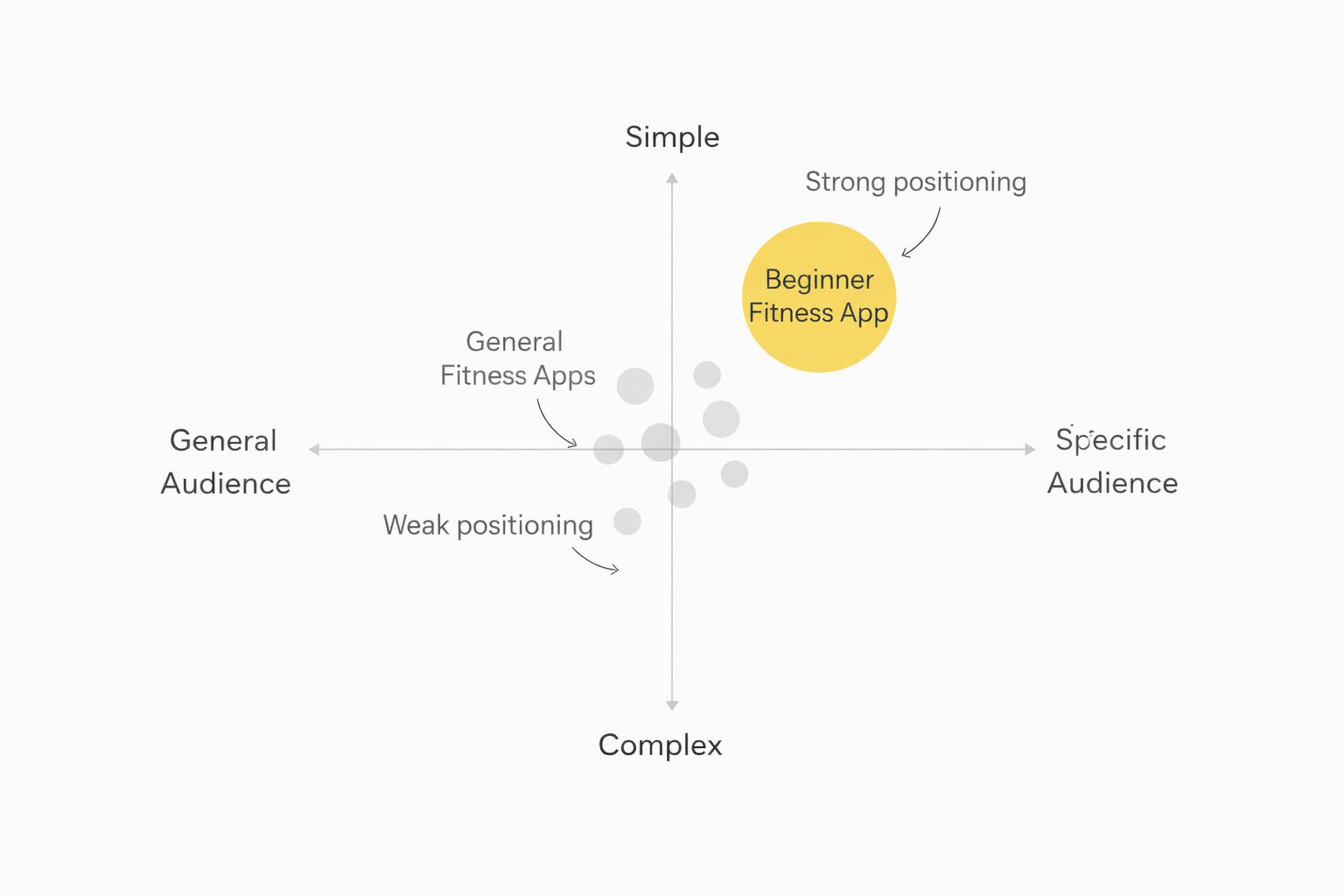
The difference between strong and weak positioning is clarity. Strong positioning is clear about who the brand is for and why. Weak positioning is generic and blends in easily with competitors.
For example, a fitness app that states clearly that it is designed for beginners who want simple, guided workouts at home is strongly positioned. A weak positioning would describe the app as a general fitness solution without a unique offering.
How Do You Identify and Understand Your Target Audience?
To identify and understand your target audience, focus on who they are, what they need, where they are located, and how they think.
An audience-first approach ensures that brand decisions are made with real people in mind, and not based on assumptions. This creates messaging, positioning, and experiences that connect and convert.
The process starts by breaking down the audience into key segments, which are outlined below.
- Demographics cover basic traits such as age, gender, income, location, and education.
- Psychographics reflect internal traits such as interest, values, beliefs, motivations, and lifestyle.
- Behaviors describe how people interact with products, including buying habits and usage patterns.
From here, brands can follow this simple process to define their audience more clearly.
Step 1: Conduct Research
Gather relevant insights from surveys, interviews, market research, and competitor analysis.
Step 2: Review Available Data
Analyze any existing data, such as website analytics, social insights, or early users, if available.
Step 3: Identify Patterns
Group people who share similar traits to form clear segments and predict behavior.
Step 4: Define Key Segments
Focus on the most relevant group based on business goals.
Step 5: Build Audience Personas
Create simple profiles that mirror real people to represent each segment and guide messaging.
Step 6: Validate and Refine
Test insights through real feedback and adjust based on results.
Below are examples of how personas look in practice.
- James is a 34-year-old small business owner looking for simple, cost-effective tools to grow without needing advanced technical skills.
- Anna is a 28-year-old marketing manager at a mid-size firm, focused on delivering ROI-driven campaigns and measurable brand growth.
What Is Brand Identity and How Is It Built?
A brand identity is the set of visual and verbal components that define how a brand looks, sounds, and is recognized. Each component works together to create a clear and consistent message.
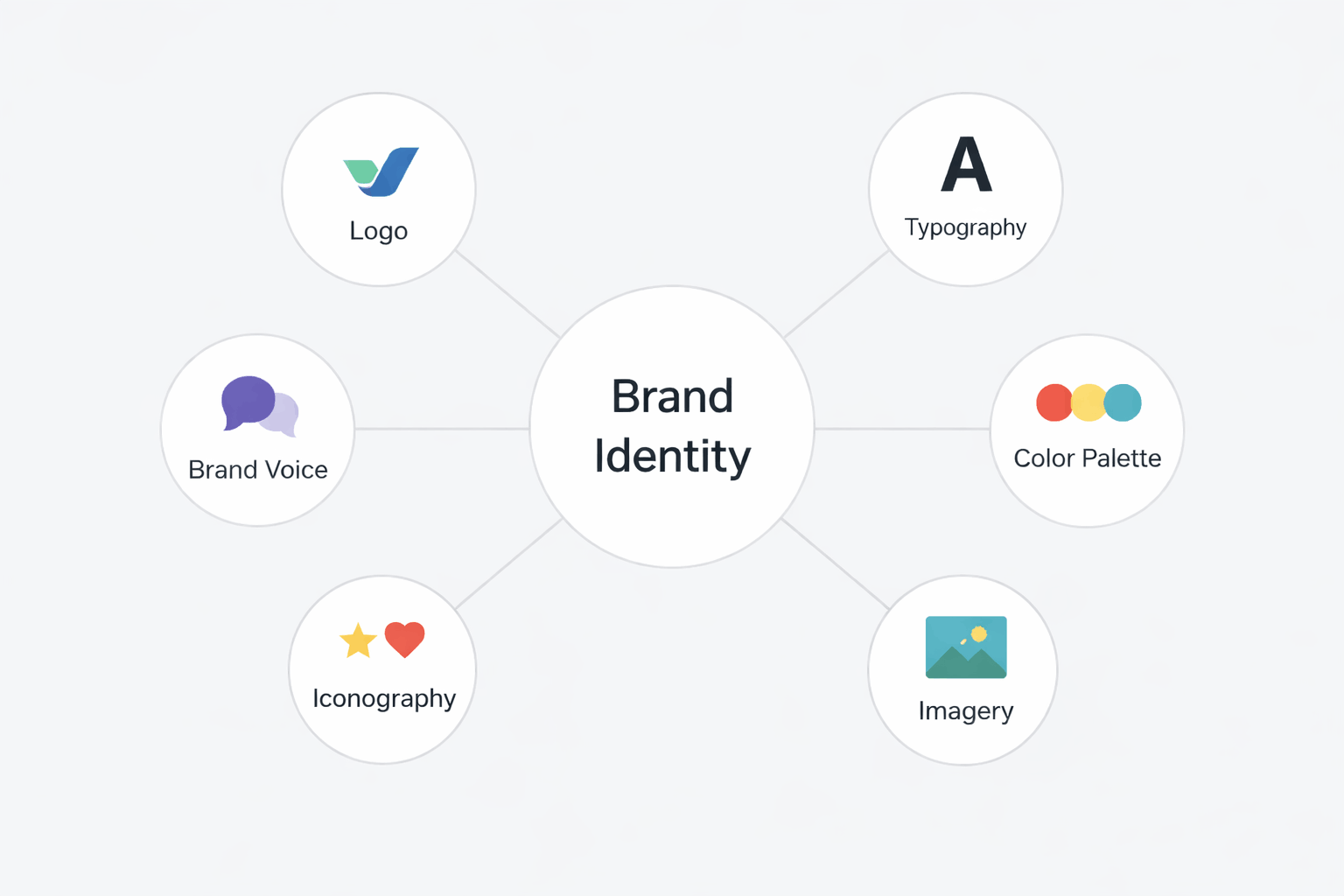
A brand identity system typically includes the core components listed below.
- Logo
A visual symbol that represents the brand across platforms
- Color palette
A set of colors that reflects the brand’s personality and supports recognition
- Typography
The fonts and styles used to shape how the brand communicates visually
- Imagery
The visuals used by the brand, including photography and illustrations
- Brand voice
The tone and language style used in communication
- Iconography
Symbols used to support communication and guide users
When used consistently, these components shape how the brand is perceived and remembered over time.
Learn how to build a strong and consistent brand identity
What Is a Brand Messaging Strategy and Why Is It Important?
A brand messaging strategy is a structured plan that defines what a brand says, how it says it, and how those messages stay consistent. This element ensures that communication is clear, relevant, and in tune with the brand’s positioning.
A brand messaging strategy is built from three core elements, which are outlined below.
- Value proposition is the main benefit the brand offers and why it matters.
- Tone of voice is the style and personality a brand communicates with.
- Key messages are the central ideas that the brand consistently communicates across channels.
Together, these components form a simple messaging framework built around a clear value proposition, supporting message pillars, and proof.
Strong messaging is clear and focused. This can be seen in a food delivery brand that emphasizes fast and reliable delivery. This same idea is repeated across channels.
How Do You Build a Brand-Building Strategy Step by Step?
To build a brand-building strategy, follow a structured process that is built on research and moves through various stages until execution. This approach goes beyond surface-level lists, showing you how every decision connects to building a consistent brand.
The nine steps to follow are listed below.
- Define your brand purpose and business goals.
- Research your market and competitors.
- Develop a strong brand positioning.
- Create a clear brand messaging strategy.
- Design your brand identity and assets.
- Build brand awareness and visibility.
- Ensure brand consistency across channels.
- Measure and improve brand performance.
- Measure and optimize brand attention across marketing materials.
With this framework, organizations can build a brand that is consistent, distinct, and continuously improving.
Step 1: Define Your Brand Purpose and Business Goals
Brand purpose and business goals define why the brand exists and what it aims to achieve. A clear purpose guides what the brand stands for, which in turn influences how the brand attracts customers, builds trust, and drives revenue.
To define brand purpose and business goals, start by answering the questions below.
- Why does this brand exist beyond making money?
- Who is the brand built for?
- What specific need does it meet in their lives?
- What does success look like in the next 1, 2, or 5 years?
- What outcomes matter most: revenue, growth, and retention?
Answering these questions creates a clear and strong brand purpose that aligns with measurable business outcomes.
Google serves as a good example of a brand with a strong purpose. The purpose, which is “to organize the world’s information and make it universally accessible,” is reflected in every product and market the brand enters.
Download the guide to building a memorable brand
Step 2: Research Your Market and Competitors
Research usually comes off as a tedious process; however, skipping it is a terribly expensive mistake. Research reveals what the audience needs, how the competitors position themselves, and where opportunities exist.

Without research, decisions are built on assumptions, and wrong assumptions are costlier to fix than research is to run.
The three main research methods are outlined below.
- Competitor Analysis
Competitor analysis shows how competitors position themselves, what they communicate, and how they present their brand.
- Customer Research
Customer research gathers insights through surveys, interviews, reviews, and behavioral data.
- Market Analysis
Market analysis gives a clearer picture of trends, demand, and shifts within the industry.
Research typically draws from the inputs listed below.
- Customer feedback and reviews
- Website and social media data
- Competitor websites and campaigns
- Industry reports and trends
- Search behavior and keywords
The research process helps reveal gaps competitors miss, such as underserved audiences, unclear messaging, or weak positioning. These gaps present a clear positioning opportunity.
Step 3: Develop a Strong Brand Positioning
A strong brand positioning is built through a clear and repeatable process, which is outlined below.
- Define who the brand is for
- Identify the category it competes in
- Clarify the main problem it solves
- Determine what makes it different
- Support that difference with proof
When these elements are clear, positioning becomes focused and easy to apply across messaging and strategy. It can then be expressed using a simple statement format.
For [target audience], [brand] is the [category] that [key benefit], because [reason to believe].
Step 4: Create a Clear Brand Messaging Strategy

A messaging strategy translates what the brand stands for into clear and usable messages and content.
A clear brand messaging framework is structured in three parts.
- Value Proposition
A value proposition defines what the brand offers, who it is for, and why it matters.
- Message Pillars
Message pillars are 3-5 core themes that reflect a brand’s identity.
- Proof
Proof provides specific data points and evidence to back up every claim the brand makes.
Aligning messaging across all channels means the same core ideas appear everywhere. Although channels have different formats and contexts, the message remains the same.
For example, a brand focused on simplicity uses short and clear language on a website. The same brand uses visual storytelling on social media while maintaining the same core idea.
This alignment ensures that no matter where the brand appears, the message stays consistent and easy to recognize.
Step 5: Design Your Brand Identity and Assets
A brand identity is the visual and verbal representation of a brand strategy in a form people can see and recognize.
A brand strategy shapes what the brand communicates, while brand identity shows how that communication appears in the real world.
The four core brand identity assets are listed below.
- Logo
- Color palette
- Typography
- Imagery
Coca-Cola shows how strategy can be translated into visual and verbal elements. Coca-Cola’s red color palette, classic typography, and consistent imagery have built instant global recognition for over a century.
Consistency across all channels is what separates recognizable brands from forgettable ones. Audiences need repeated exposure to form a strong memory of a brand.
Step 6: Build Brand Awareness and Visibility
Brand awareness grows when a brand repeatedly shows up where its audience already spends time. This typically happens across key channels such as content, social media, paid advertising, and search.

Each channel uses different tactics to reach people and stay visible. These tactics are outlined below.
- Content marketing, such as blogs, videos, and guides
- Social media marketing across platforms where the audience is active
- Paid advertising through search and social campaigns
- Search engine optimization to improve visibility in search results
- Partnerships and collaborations to expand reach
These tactics are often supported by targeting highly searched terms like “how to,” “best,” and “guide,” which help attract new audiences.
All of these efforts work hand in hand to increase awareness and visibility across channels. For example, Red Bull combines content, social, events, and SEO into one seamless brand experience.
See how brand awareness strategies increase visibility and recall
Step 7: Ensure Brand Consistency Across Channels
Brand consistency ensures that the brand is presented in the same way across every channel and touchpoint. Brands that look, sound, and feel consistent are easier to recognize and recall.
Use the checklist below to maintain consistency across channels.
- A brand guidelines document that defines visual asset usage and messaging rules
- Approved asset library with on-brand templates and design files for all teams
- Tone of voice guide with clear examples of on-brand and off-brand language
- Channel audit schedule to regularly review messaging and visual alignment
- Content approval process to ensure every asset meets brand standards before publishing
- Team brand training to keep everyone aligned as the brand evolves
Tools such as Frontify, Canva for Teams, and Notion can help maintain consistency across growing teams.
Step 8: Measure and Improve Brand Performance
Measuring brand performance reveals whether branding efforts are working and where improvements are needed.

Many companies track clicks and conversions, but fewer track how the brand is recognized, remembered, and perceived over time. The difference shows up in long-term growth.
The 4 key brand performance metrics are listed below.
- Brand awareness measures how many people recognize the brand within a target audience.
- Brand recall measures how many people remember the brand without cues
- Brand perception reflects how people feel about the brand
- Brand consistency measures how aligned the brand looks, sounds, and feels across channels
Common KPIs used to track brand performance include share of voice, branded search volume, and social sentiment. These metrics connect brand activity to measurable outcomes.
The steps below show how to continuously improve brand performance.
- Measure performance against clear benchmarks
- Identify the weak areas across the performance metrics
- Refine specific messaging, positioning, or identity elements
- Re-measure performance after a defined period
Learn how to measure and improve brand performance effectively
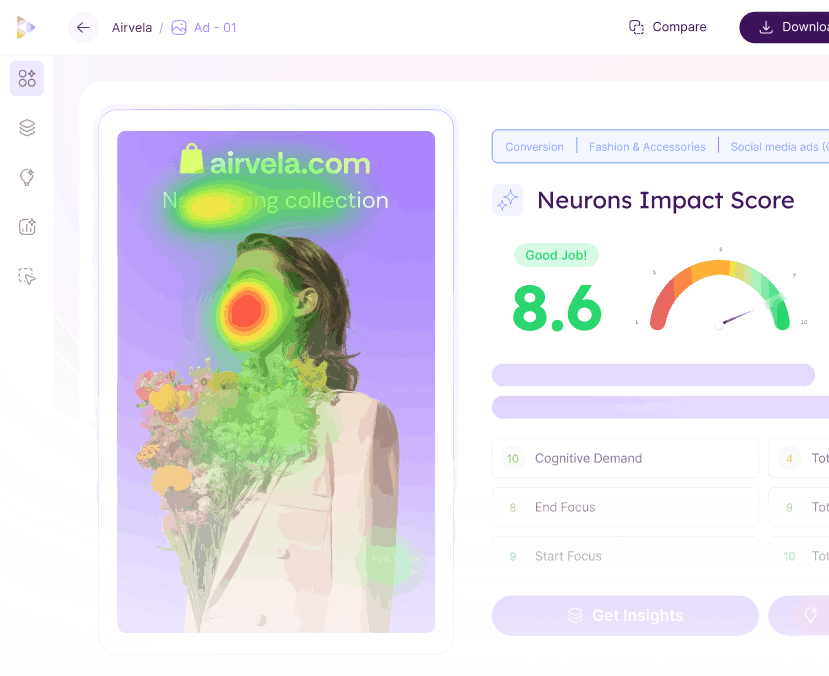
Step 9: Measure and Optimize Brand Attention Across Marketing Materials
Attention is one of the most overlooked layers in brand strategy. Without attention, even well-positioned brands go unnoticed.
Attention directly influences brand impact and recall. When people notice and engage with a message, they are likely to remember the brand at a later time.
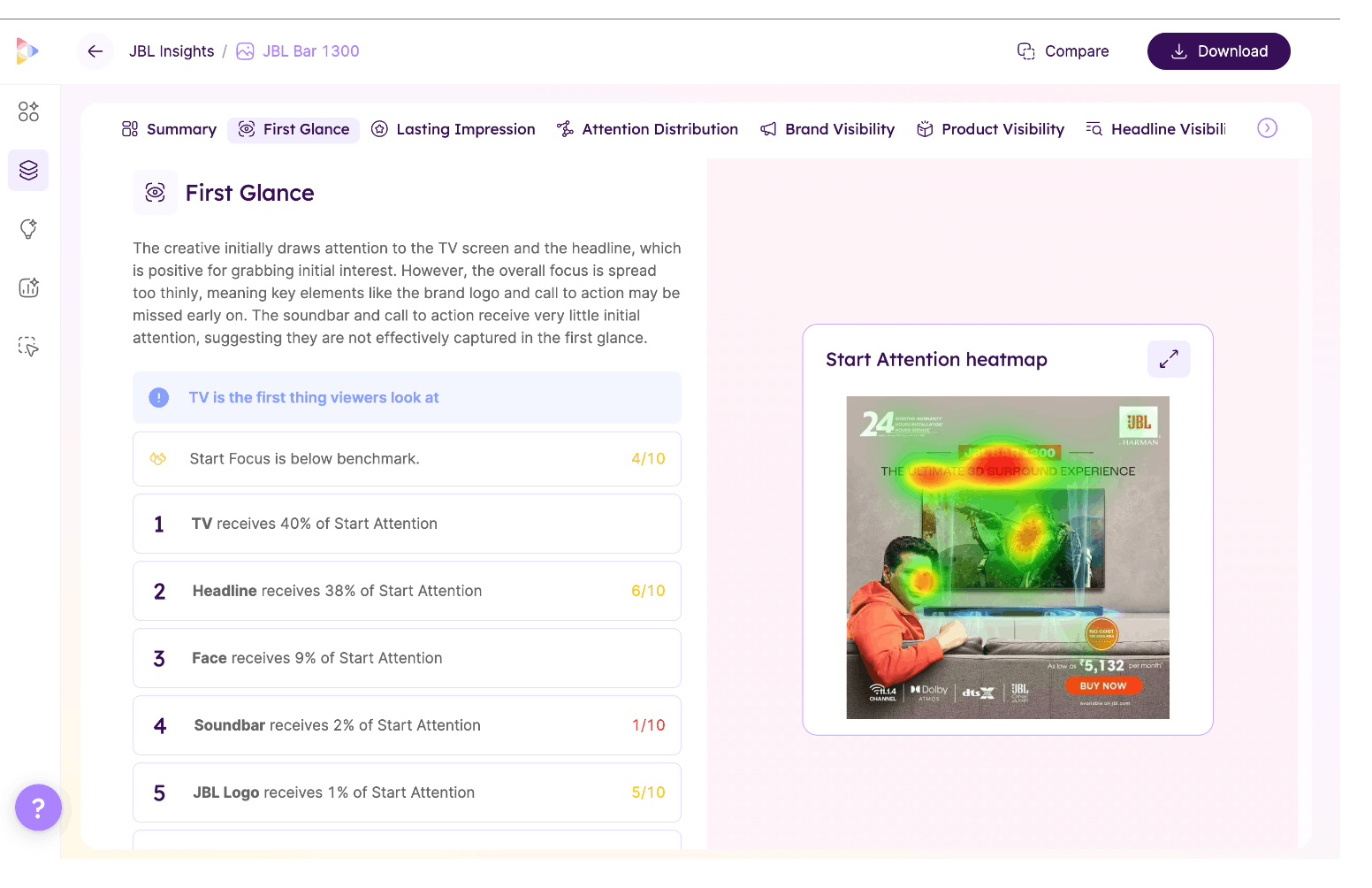
Testing creatives before launch helps identify what captures attention early. This can be done through concept testing, visual hierarchy checks, and comparing different versions of the same asset.
Attention is measured across different marketing materials such as ads, landing pages, and videos. Here, small changes in design or messaging can significantly affect performance.
AI tools make this process faster and more accurate by predicting how audiences will view and respond to creative assets. Tools like Neurons AI help measure attention patterns, identify high-performing elements, and optimize creatives before launch.
Attention data allows brands to refine visuals, improve clarity, and increase the effectiveness of every marketing asset.
Measure attention and optimize creative performance using AI-powered insights
What Are the Most Effective Brand Building Strategies Today?
Brand building today goes beyond basic identity and messaging. The most effective strategies focus on standing out clearly and reaching the right people consistently.
- Audience-first positioning centers around an identified group with clear needs and priorities. A brand that focuses on pregnant women instead of everyone grows faster because the message is sharper and more relevant.
- A clear differentiation strategy separates a brand from its competitors. A brand that owns a specific angle, such as speed or affordability, is easier to choose and remember.
- Consistent multi-channel presence keeps the brand visible across content, social media, and search. Brands that repeat the same core message across channels build recognition and trust over time.
- Attention-focused creative is designed to capture and hold attention quickly through strong visuals and a clear structure. Brands that win attention early are likely to be remembered later.
- AI-powered testing and insights help predict performance and improve creative decisions before launch. Brands using AI tools like Neurons AI test creatives faster and reduce guesswork.
Learn how to build brands in a performance-driven world
How Do You Build Brand Awareness in a Competitive Market?

To build brand awareness in a competitive market, focus on standing out clearly and showing up consistently where attention already exists.
Competitive markets are saturated with similar messages, so brands that are not distinct or repeatedly visible are forgotten.
To avoid this, follow the steps outlined below.
- Define a clear point of difference so the brand is easy to recognize and remember.
- Show up consistently across channels, including content, social media, ads, and search.
- Create useful content such as guides and videos that attract and educate.
- Use storytelling to make the brand more memorable through relatable scenarios.
- Design creatives that capture attention quickly through strong visuals and clear structure.
- Maintain consistency so the brand looks and sounds the same everywhere.
Brands that combine clarity, consistency, and repeated visibility are more likely to break through and stay top of mind.
How Can Brands Stand Out and Differentiate Effectively?
To stand out and differentiate effectively, focus on owning a clear position that competitors cannot easily copy.
Most markets are crowded with similar products and messaging. Brands that win do not compete on everything; they choose a specific space and dominate it.
To achieve this, use frameworks like category creation, emotional branding, niche positioning, unique value, and consistent identity.
- Category creation focuses on defining a new space instead of competing in an existing one.
- Emotional branding builds connection beyond features and pricing.
- Niche positioning targets a specific audience instead of everyone.
- Unique value focus highlights one core strength instead of many weak claims.
- Consistent identity and messaging reinforce differentiation over time.
Brands that differentiate clearly are easier to notice, easier to understand, and harder to replace.
A brand like Airbnb shows how differentiation works through category creation by focusing on unique stays and local experiences instead of traditional hotels.
How Is AI Changing Brand Strategy and Visibility?
AI is changing brand strategy and visibility by shifting how people discover and interact with brands.
Search is moving toward zero-click behavior as users now get direct answers from AI tools instead of visiting multiple websites. This reduces traffic but increases the importance of being mentioned in those answers.
Brands appear in AI overviews when their content is clear, structured, and aligned with real user intent. Information that directly answers questions is likely to be selected and summarized by AI systems.
AI is also changing how brand assets are evaluated. Tools like Neurons AI help predict how people will engage with visuals and messaging before launch, allowing brands to improve performance early.
To adapt to these changes, brands can apply the actions outlined below.
- Create clear, structured content that directly answers common questions
- Focus on high-intent topics such as how-to, best, and comparison queries
- Build authority through consistent and reliable messaging
- Design visuals that are easy to process and understand quickly
- Test creative assets before launch to improve attention and clarity
- Optimize content for both search engines and AI-generated summaries
Brands that adapt to AI-driven discovery are likely to stay visible as traditional search behavior evolves.
Understand how AI-driven insights improve brand visibility and creative performance
What Are Common Mistakes in Brand Strategy?
Common mistakes in brand strategy include unclear positioning, inconsistent messaging, weak differentiation, and a lack of audience focus.
- Lack of clear positioning makes the brand blend in with competitors. Define a specific audience and a distinct value to stand out.
- Inconsistent messaging and visuals confuse audiences and reduce trust. Use clear brand guidelines and apply them across all channels.
- Ignoring research and audience insights leads to assumptions that miss the mark. Use real data and feedback to guide decisions.
- Focusing only on short-term marketing metrics limits long-term growth. Track brand awareness, recall, and perception alongside conversions.
- Overlooking differentiation makes the brand easily forgettable. Clearly define what makes the brand unique and communicate it across every touchpoint.
Avoiding these mistakes helps build a brand that is clear, consistent, and easier to recognize over time.
What Does a Successful Brand Strategy Look Like in Practice?
A successful brand strategy in practice is one where clear positioning, consistent execution, and measurable results all align.
The example below shows how this works in a real-world scenario.
A direct-to-consumer skincare brand identifies busy professionals with sensitive skin as its core audience. The brand then positions itself around simplicity and reliability, focusing on a small product range that solves specific problems without complicating things.
The messaging emphasizes how easy it is to use, while the visual identity uses clean layouts, neutral colors, and minimal design to reflect that promise.
Execution focuses on consistent visibility across key channels. The brand publishes short educational videos explaining skincare routines, shares customer experiences on social media, and targets search queries related to sensitive skin solutions.
Over time, the brand repeats the same message and visual style across every touchpoint, reinforcing recognition and trust.
This process leads to a measurable impact. Brand search volume increases, customer retention improves, and more customers return directly before being prompted.
A strong brand strategy works when positioning is clear, execution is consistent, and results can be tracked and improved over time.