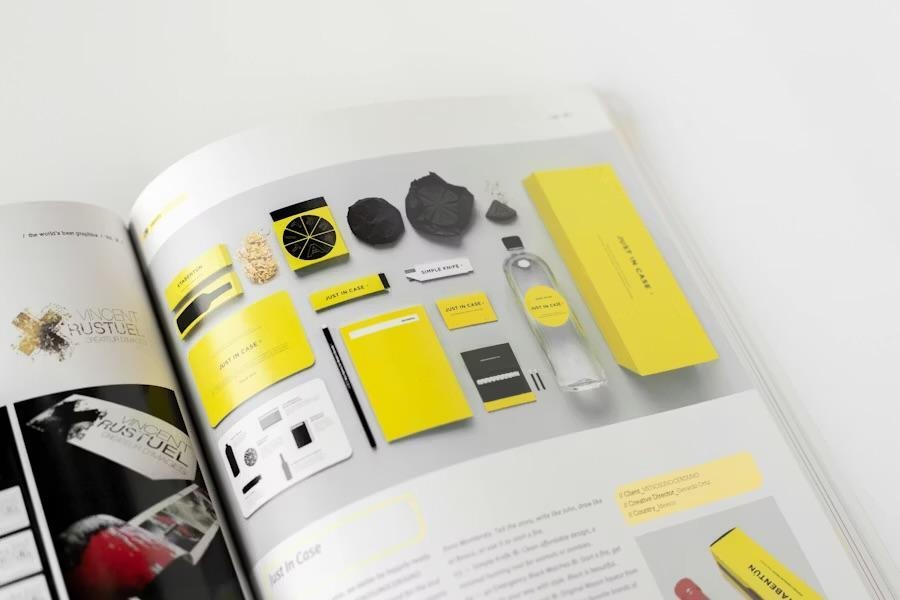
Brand identity is the intentional creation of visual, verbal, and experiential elements that shape how audiences perceive and remember a brand.
Brand identity differs from brand image, which is the perception audiences form independently based on brand interactions. Branding, on the other hand, is the active process of influencing that perception over time.
A strong brand identity establishes consistency across visual systems, communication, and brand experience. This consistency builds recognition, and recognition builds trust.
Learn how brand building drives long-term growth
Why Is Brand Identity a Critical Part of Brand Building?
Brand identity is a critical part of brand building because it functions as a guiding framework for how a brand is presented across channels and markets. A well-defined identity makes a brand easier to recognize and remember.
Brand identity drives business outcomes across the areas listed below.
- Recognition
Consistent visual elements make the brand easier to recognize. A study by Reboot shows that a signature color alone increases brand recognition by 80%.
- Trust
A clearly communicated brand identity builds credibility and reduces audience confusion. Trust makes a brand easier to choose and supports repeat engagement.
- Differentiation
A distinct identity differentiates brands from competitors. In crowded markets, differentiation draws attention faster and strengthens brand positioning.
Beyond shaping perception, brand identity also serves as a growth driver, enabling brands to scale and expand with clarity.
Watch how brand building works in a performance-driven world
What Are the Core Elements of a Brand Identity?
A brand identity is a system of interconnected visual and verbal elements. Each element reinforces the system, creating an easily recognizable and unified brand experience.
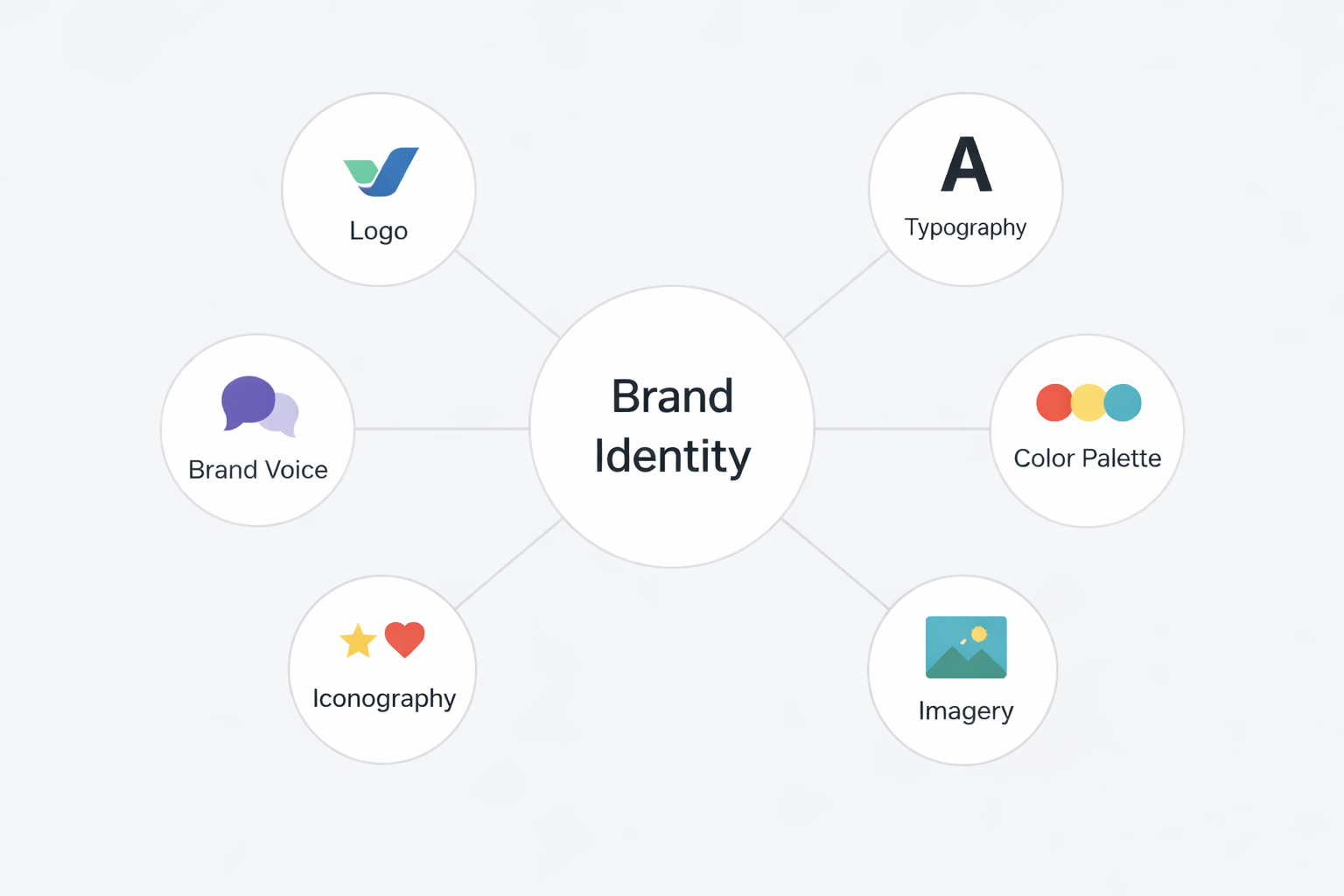
Brand identity systems typically include the core elements outlined below.
- Logo
A primary visual symbol that represents a brand across platforms.
- Color Palette
A defined set of colors (primary, secondary, and neutral) that reflects a brand’s personality and ensures instant recognition.
- Typography
A system of typefaces and the specific rules for their arrangement that reflect brand tone.
- Imagery
A collection of visual elements, including photography, illustrations, and videos, that anchor a brand’s presentation.
- Brand Voice
The verbal personality of a brand is depicted in the tone and language style used in communication.
- Iconography
A set of symbols used to simplify complex ideas and guide navigation across brand interfaces and materials.
Explore how to build a memorable brand identity system
What Is the Difference Between Brand Identity, Brand Image, and Branding?
Brand identity, brand image, and branding differ in their definitions, purposes, and executions. Although frequently interchanged, these concepts represent the "what," the "how," and the "result” of brand building.
Brand identity is the collection of elements, including logo, typography, and color palette, that a brand creates to present and express itself.
In contrast, brand image is the perception a brand holds in its audience's minds, shaped by their interactions. This image exists outside the company and is formed by the audience, but consistent branding influences how it develops over time.
Branding is the active and ongoing process of shaping a brand and communicating its identity across all touchpoints. The goal of branding is to align brand identity and brand image through a consistent strategy and execution.
Simply put, brand identity is the input, branding is the process, and brand image is the output.
The real-world example below shows how these concepts work in practice.
Nike creates a strong brand identity through its Swoosh logo, bold typography, and “Just Do It” messaging. This identity is consistently expressed through advertising campaigns, athlete endorsements, and retail experiences. As a result, customers form a brand image of Nike as a performance-driven and motivational sports brand.
What Is Brand Identity Building?
Brand identity building is the ongoing process of creating, developing, and maintaining a brand’s identity.
Brand identity building goes beyond one-time design tasks, such as a logo refresh or visual updates. The process involves continuous refinement and maintenance across channels and brand materials.
Brand identity building is guided by two core principles: consistency and iteration. Consistency keeps every brand interaction anchored to the same perception.
Iteration, on the other hand, tweaks brand identity over time based on real audience feedback, business evolution, and market changes.
These principles are applied through a structured sequence of steps that guide brand identity building from planning to execution.
Learn the full process of building a memorable brand
How Do You Build a Brand Identity Step by Step?
To build a brand identity, follow a structured strategy-first process that starts with research and moves through definition, design, and implementation. The steps involved in brand identity building are outlined below.
Step 1: Research Audience and Competitors
Study audience needs and behaviors, then map competitor positioning to find gaps the brand can own.
Step 2: Define Brand Strategy and Positioning
Define brand purpose, values, and mission in alignment with research findings to establish a clear value proposition and positioning.
Step 3: Create Brand Identity Elements
Develop the logo, color palette, and other visual and verbal elements to reflect the defined strategy and direction.
Step 4: Build Brand Guidelines
Document rules guiding the use of these visual and verbal elements to ensure consistency across all brand materials.
Step 5: Apply Identity Across Channels
Implement the developed brand identity across websites, product design, advertising, packaging, and social media.
Step 6: Test and Refine
Evaluate performance from time to time and refine identity based on audience feedback and market cycle.
What Research Is Needed Before Building a Brand Identity?

Brand identity building requires 3 types of research: audience research, competitor research, and market research. Each type of research gives different insights, which, when combined, build a well-defined brand identity.
Audience research gathers data on consumer needs, preferences, psychology, and pain points. This research reveals how people prefer to communicate, their visual preferences, and what ultimately drives them to buy. Insights from this research are used to shape brand voice and messaging to resonate with the audience.
Competitor research evaluates competitor positioning, messaging, and visual identity. The findings highlight gaps and overlaps and help brands find a unique positioning.
Market research gives a clear and broader picture of industry trends, category expectations, and emerging opportunities. Key patterns observed include shifts in consumer behavior, cultural patterns, and market saturation. Brands use this insight to determine strategic direction.
The brand research checklist below outlines the key areas to cover before building a brand identity.
- Define 2–3 main audience segments, including demographics, interests, and buying reasons.
- Conduct 8–10 interviews or surveys to understand audience needs and preferences.
- Analyze how the audience prefers to communicate and what they expect visually.
- Audit 5–10 direct and indirect competitors across positioning, messaging, and visual identity.
- Map competitors on a 2×2 matrix to find gaps and opportunities.
- Identify 3–5 key market trends shaping audience behavior and expectations.
- Review category norms and emerging patterns to guide direction.
Completing this checklist provides the insights needed to make informed identity decisions. These insights shape brand voice, visual direction, and positioning, ensuring that identity choices align with audience expectations and market context.
How Do You Define Brand Strategy and Positioning for Identity Building?
To define brand strategy and positioning for identity building, start by establishing the brand's purpose, core values, and market positioning. These three foundational decisions guide every subsequent identity decision, from visual design to brand tone.
Brand purpose answers the question of why the brand exists beyond making money. For example, Patagonia, an outdoor clothing brand, exists to protect the planet, and that purpose shows up in everything from its packaging to its campaigns.
Brand values define the principles that guide how the brand behaves, communicates, and makes decisions. Common brand values include sustainability, innovation, transparency, and customer focus.
Brand positioning reflects how a brand is perceived in the market relative to its competitors. A premium skincare brand, for instance, may position itself around science-backed formulas and visible results to stand apart from natural or budget-friendly alternatives.
A simple positioning framework shows how this works in practice: "For [audience], [brand] is the [category] that delivers [benefit] because [reason]."
Skipping this step often results in brand identities that look generic and fall flat in competitive markets. Strong positioning produces strong, distinctive brand identities.
Learn how to define a strong brand positioning strategy
How Do You Design a Visual Brand Identity System?

To design a visual brand identity system, develop each visual component to align with the brand strategy defined earlier. A visual identity system typically includes a logo, typography, imagery, and iconography.
The logo is the primary visual symbol that represents the brand across all platforms. The color palette supports recognition and sets the visual tone. Typography communicates brand tone, whether friendly, bold, or serious. Imagery defines visual style, and iconography supports communication.
All these elements work together as a system and not as separate design decisions. A logo without a color palette, for instance, leads to inconsistency across channels.
Consistency across all channels is what turns individual design assets into a recognizable and cohesive brand identity. Hence, all visual elements should reflect the same purpose, values, and positioning.
How Do You Create Brand Identity Guidelines and Systems?
To create brand identity guidelines and systems, document how every visual and verbal element should be used, so the brand stays consistent as it grows.
Brand guidelines act as a scalable system and not just a document. The system ensures that every design and communication follows the same rules, no matter who creates it, when it is created, and where it appears.
Comprehensive brand identity guidelines cover the elements listed below.
- Logo Usage
Define how the logo should appear, including variations, sizing, spacing, and incorrect uses.
- Color Palette
List the chosen primary and secondary colors with their exact values for print and digital use.
- Typography
Specify the fonts, sizes, styles, and rules for heading, body, and hierarchy.
- Imagery Style
Define the look and feel of photos, illustrations, or graphics.
- Brand Voice and Tone
Establish the tone, verbal personality, writing style, and examples of off-brand and on-brand writing.
- Layout and Composition
Show how the elements should be arranged across different formats and brand materials.
These guidelines ensure consistency across channels as the brand expands across websites, print, ads, and social media.
See how brand kits help maintain identity consistency across assets
How Do You Implement Brand Identity Across Channels?
To implement brand identity across channels, apply the same visual and verbal system consistently across every platform the brand appears. This implementation should be carried out in accordance with the established guidelines.
Although channels may vary in format, the brand identity must remain the same. Brands must consistently apply the same logo and visual elements across websites, ads, social media, products, and packaging.
Maintaining this consistency requires clear governance using brand guidelines that define how elements are used and who is responsible for maintaining them.
A common challenge brands face is the inconsistent interpretation of the brand identity across teams and channels. Marketing, product, and social teams often apply the brand differently, leading to variations in logo usage, color application, typography, and tone of voice.
Teams across these departments need access to shared assets and clear rules to ensure uniformity and alignment in their deliverables.
Effective implementation also requires continuous review and monitoring to ensure that the brand identity used across channels aligns. Even small inconsistencies, when repeated, reduce recognition and weaken trust.
The brand identity implementation checklist below covers the core steps for a consistent rollout.
- Apply the same logo, color palette, typography, and imagery across all channels
- Maintain a consistent tone of voice in all communication
- Use shared brand assets and templates across teams
- Define clear rules for adapting identity to different formats
- Assign responsibility for brand governance and approval
- Review identity usage regularly across campaigns and platforms
How Do You Measure and Optimize Brand Identity Performance?
Brand identity performance is measured by how effectively the brand is recognized, understood, and influences audience action across different channels. Regularly tracking these metrics reveals whether the brand is building equity or losing ground to its competitors.
The core brand identity performance metrics are outlined below.
- Brand Recognition
Recognition measures how easily a brand can be identified from visual and verbal cues alone. This metric is tracked through awareness studies or direct website traffic.
- Brand Engagement
Engagement shows how audiences interact with brand content across both owned and paid channels. It signifies emotional resonance with the audience and is revealed through likes, comments, reshares, and time spent.
- Conversion Lift
Conversion lift measures the extent to which the brand identity influences audiences to take action. This metric is tracked through click-through and conversion rates, as well as customer acquisition.
- Brand Recall
Brand recall measures how easily a brand is remembered relative to competing brands or similar products. It is assessed through recall surveys and brand lift studies, which reveal how strongly the brand stays in memory.
These metrics show how the brand is performing, but they don't explain why some elements work better than others. Fortunately, testing provides this information through two main approaches: A/B testing and creative testing.
A/B testing compares two versions of a brand element, such as layout or messaging, to determine which performs better.
Creative testing goes deeper by analyzing how individual elements within a design influence attention and response. When implemented post-launch, it explains why certain elements perform better than others.
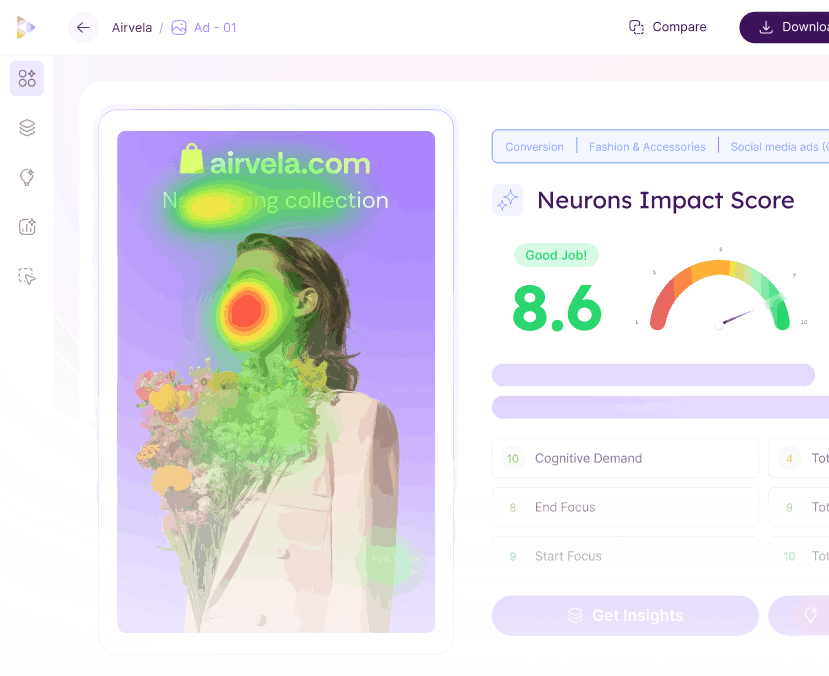
Before launch, creative testing is a powerful predictive tool. Using platforms like Neurons AI, brands can determine what elements will yield the best results before spending large budgets on ads.
Once performance has been measured and tested, the next step is optimization. Marketing teams use insights from both approaches to refine visuals, adjust messaging, and improve guidelines. These changes are then applied and tested again, creating a continuous feedback loop.
Learn how to test and optimize brand assets with AI
What Makes a Strong Brand Identity?
A strong brand identity is distinctive, consistent, memorable, and relevant. These traits determine whether a brand identity stands out or blends into the background in a competitive market.
- Distinctive
A strong brand identity stands out from its competitors through unique and clearly differentiated visual and verbal elements. Distinctiveness is what makes a brand easily recognizable, even before seeing the logo.
- Consistent
Consistency ensures that the brand looks, sounds, and feels the same across channels and over time. Repeated exposure to consistent brand elements strengthens familiarity and builds trust.
- Memorable
A memorable brand identity uses simple verbal and visual cues that leave a lasting impression on the audience after interaction. Memorability makes brand recall easier and also supports repeated engagement.
- Relevant
Relevance ensures that the brand identity does not come off abstract but resonates deeply with the audience’s values, expectations, and market context. 77% of consumers buy from brands that share similar values to them.
Strong brand identity does not stop at perception. The same clarity carries into performance marketing. Clear visuals and messaging make ads easier to understand, thereby improving click-through rates and engagement.
Over time, this shows up in results. Audiences respond faster, and creatives start to feel more cohesive. Scaling across channels becomes easier, and customer acquisition cost reduces.
What Are the Best Brand Identity Examples and What Can You Learn From Them?
The best brand identity examples share one defining quality: every visual and visual element traces back to a clearly defined strategy and positioning. Clear positioning shapes the identity, while consistent application makes it effective.
The four brand identity examples below show how strategy and execution are combined to build brands that are instantly recognizable and also commercially powerful.
- Apple

Apple’s identity rests on the principles of simplicity, innovation, and premium quality. From packaging to design to neutral colors and clean typography, Apple’s minimalist approach removes distractions and directs attention to the product.
Even their retail stores apply the same identity principles: open spaces and product-forward designs.
Apple's brand voice also carries the same minimalist philosophy into language. Short and confident sentences replace technical specifications across product pages and campaigns.
Emotionally, Apple does not sell just hardware. Apple sells the feeling of being creative, forward-thinking, and different from the mainstream. That emotional and premium positioning is what allows Apple to command higher prices than competitors offering comparable specifications.
What to Learn
- A strong and emotionally resonant brand identity drives premium pricing and shifts competition away from just features.
- Brand identity becomes more effective when every touchpoint reinforces the same positioning. Apple applies simplicity across design, retail, and language, creating a unified experience.
- Strong brands are memorable, and memorability favors simplicity. Apple's identity avoids complexity at every level, from single-word product names like iPad and Mac to a logo with no text. The simpler the identity, the faster audiences recognize and recall it.
- Nike

Nike’s brand identity is built around performance and athletic aspiration, expressed through a focused visual and verbal system. The swoosh logo, designed to signify motion, and the "Just Do It” tagline establish a consistent motivational voice across campaigns.
The identity scales across products, markets, and campaigns because every element reinforces the same values: motion, effort, discipline, and persistence. The logo, typography, imagery, and messaging all work together as a system, without any visual or verbal conflict.
Beyond marketing, athletic partnerships extend the brand’s identity. Figures such as Michael Jordan and Serena Williams reflect the same focus on performance, resilience, and pushing limits.
What to Learn
- Brand identity can be expressed through people and not just design. Nike uses athletes as living proof of its values, making the identity more visible and relatable.
- Identity becomes stronger when it is shown through action. Nike focuses on performance and effort in its visuals and messaging, rather than explaining features or benefits.
- Verbal identity carries equal weight to visual identity. The "Just Do It" tagline contributes as much to Nike's recognition as the famous Swoosh logo.
- Airbnb

Airbnb’s brand identity is centered around a singular promise of belonging. with the Bélo symbol representing people, places, and love.
Airbnb competes in a competitive market where price and convenience usually win. Yet people consistently choose Airbnb over cheaper alternatives because the brand delivers an emotional promise, something transactional platforms do not.
That emotional promise runs through every part of the brand, from the tone of a listing description to the way hosts are portrayed in campaigns.
Airbnb's brand tone is warm and human. The same tone applies whether someone is reading a booking confirmation email, browsing the app, or watching a campaign film.
Photography guidelines further strengthen this, prioritizing real people in real spaces over polished stock imagery. Every visual choice is designed to make belonging feel achievable, not aspirational.
What to Learn
- In commoditized markets, emotional positioning wins. Airbnb competes on belonging, not price, and every identity decision makes that positioning tangible rather than abstract.
- Brand identity only works when the product delivers on the promise. Airbnb's warm, community-driven identity holds up because hosts and guests actually experience belonging through the platform.
- Beyond aesthetics, the best brand symbols are built around feelings. The Bélo was designed to represent people, places, love, and the letter.
- Coca-Cola
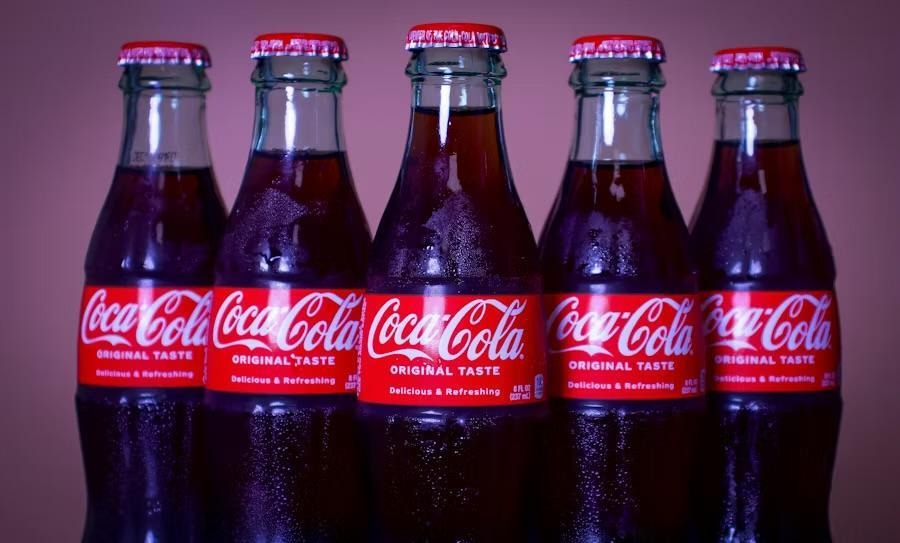
Coca-Cola's brand identity has remained consistent since 1886 and is built around three core values: happiness, sharing, and refreshment.
This identity is expressed through every campaign, packaging design, and customer interaction for the past 130 years. Few brands in history have maintained that level of consistency across generations and cultural shifts without losing relevance in today’s market.
The Coca-Cola “Red” is a proprietary shade that makes the brand instantly recognizable across every market, product variant, and channel worldwide. The Spencerian script logo has also remained a key part of the visual identity for over a century. Both elements convey authenticity and tradition while staying familiar over the years.
The full visual system rests on four unmistakable elements: the color, the script, the bottle, and the ribbon, each strong enough to identify the brand independently without the others.
The 1985 New Coke incident is one of the most instructive moments in brand identity history. Consumer research showed people preferred the new formula's taste in blind tests, yet the public backlash was overwhelming.
Audiences had formed a deep emotional attachment to something constant in their lives, and changing the product felt like a betrayal of the identity they were familiar with.
The new product was good, yet Coca-Cola nearly failed because the brand identity was stronger than the product itself.
What to Learn
- Brand equity is a product of the audience and not the company. When Coca-Cola tried to change its formula, consumers pushed back because the identity had become part of their lives.
- A single color, applied consistently over decades, becomes more powerful than any logo. Coca-Cola Red triggers recognition before a consumer reads a single word.
- Strong brand identities adapt their expression without changing their core. Coca-Cola updates campaigns and cultural references while preserving the same visual system and emotional positioning it has held for over a century.
What Are Common Mistakes in Brand Identity Building?
Common mistakes in brand identity building often come from a lack of clarity, inconsistency, and short-term thinking. The mistakes below cover the most damaging patterns, their consequences, and how to avoid them.
- Building Without a Strategy
Brands that jump straight into logo design without defining purpose, values, and positioning produce identities that look polished but generic. The end result is a brand that blends into its category rather than standing out.
It is important to start any brand identity project with a research and strategy phase before drawing up a design brief at all.
- Inconsistent Application
When a strong identity system is applied inconsistently across channels, it quickly loses its power. Audiences need repeated, consistent exposure to build recognition and trust.
Assign a brand governance owner and establish a clear approval process for every new creative asset before it goes live.
- Trend-Chasing
Redesigning a brand identity to follow visual trends produces short-term freshness at the cost of long-term recognition. Brands that rebrand every two to three years in response to design trends never build the deep recognition that compounds into brand equity.
Build identity systems around brand strategy, not design culture or trends.
- Skipping Creative Testing
Launching a brand identity without testing how audiences perceive it is one of the most avoidable but frequently overlooked mistakes in brand building. Visual assets that feel clear internally often land differently with target audiences.
Always test key identity elements, including logo, color, and messaging, with real audience samples first before rolling it out fully.
Strong brand identity is not just about design choices. It requires clear direction, consistent execution, and continuous refinement.
Learn how to avoid common brand-building mistakes
Should You Build a Brand Identity In-House or Hire an Agency?
Whether a brand should build a brand identity in-house or hire an agency depends on budget, experience, and the level of strategic input required. Both approaches work, but they suit different situations.
Building in-house gives more control and closer alignment with the product and team. This method works well when there is an existing design and branding capacity or when speed and flexibility matter most.
However, limitations show up when strategic depth is needed. Without strong experience in positioning and identity systems, the result of building in-house can feel inconsistent or generic.
Hiring an agency brings structured thinking and an external perspective. Agencies combine research, strategy, and design into a cohesive system, which reduces guesswork and improves clarity.
This approach is more suitable when the brand needs clear positioning, when the business is scaling, or when internal expertise is limited. The trade-off is cost and less direct control over day-to-day decisions.
Choosing what method to use comes down to three factors.
- Budget
Limited budget favors in-house, while extensive budgets allow for agency support. - Expertise
If the team lacks strategy or design experience, using an agency reduces risk. - Scale
For small or early-stage brands, in-house may be enough. However, for multi-channel or growing brands, an agency provides a structure that the in-house method lacks. - Time
In-house teams move faster for small tasks. Agencies, on the other hand, are better suited for structured, long-term identity systems.
In summary, the in-house method works best for brands that prioritize flexibility and cost-effectiveness. Agencies work better to provide structure and expertise.
The better choice is the one that aligns with the brand's complexity and the in-house team's capabilities.
Explore top brand-building agencies and how to choose one