
Brand advertising is a marketing strategy designed to shape how people recognize and perceive a brand over time. This type of advertising prioritizes long-term brand awareness over short-term conversions.
Companies that focus on brand advertising aim to establish brand identity, credibility, and loyalty with target audiences.
Brand advertising campaigns go beyond traditional promotion that focuses on selling products. These campaigns influence how audiences think about a brand long after the advertisement ends.
This article presents a curated list of brand advertising examples from known brands. Each example breaks down the campaigns and the marketing lesson behind their success.
Learn how brand advertising builds long-term brand growth
What Is Brand Advertising?
Brand advertising is a long-term marketing approach that helps build brand trust and differentiate a brand from competitors.
The key differentiator between brand advertising and performance marketing is the primary objective each approach is designed to achieve.
Brand advertising focuses on building awareness first, then gradually strengthening brand equity and emotional connection with target audiences. Performance marketing, on the other hand, targets immediate, measurable actions, such as clicks or conversions.
As a result, brand advertising builds future demand while performance marketing captures existing demand.
Brand advertising is executed through a range of campaign formats, including TV, storytelling, digital, and experiential.
- TV campaigns reach large audiences and reinforce brand recognition.
- Storytelling ads build an emotional connection with target audiences.
- Digital campaigns engage users across online platforms.
- Experiential campaigns create immersive and memorable brand interactions with audiences.
Discover how brand advertising strengthens brand equity and recognition
What Makes a Brand Advertising Campaign Successful?
A successful brand advertising campaign is defined by its ability to build strong brand recall, create an emotional connection, and deliver consistent branding over time. The core elements of a successful campaign are outlined below.
- Emotional storytelling creates a deeper connection with the audience and makes campaigns more memorable.
- Distinctive brand assets improve recognition and reinforce brand identity across campaigns.
- Cultural relevance ensures campaigns resonate with the target audience's values and persuade them.
- Memorability helps campaigns stay in the audience's minds long after exposure.
- Consistency strengthens brand recognition across channels over time.
When these elements are combined through strong creative execution, brand advertising improves brand recall and shapes audience perception.
See how advertising testing tools measure creative effectiveness and audience attention
What Are the Best Brand Advertising Examples?
The best brand advertising examples are campaigns that demonstrate how brands build strong awareness and meaningful audience connection over time.

These examples show how global brands use creative strategies to shape perception and strengthen long-term brand equity.
Each example highlights a different approach, from neuroscience-driven creative optimization to purpose-led storytelling and mass personalization.
How Did JDE Peet’s Improve Brand Advertising Performance With Neuroscience Insights?

JDE Peet’s improved its advertising performance by integrating neuroscience to predict audience response before campaigns go live.
The main objective was to improve L'OR's brand recall and visibility across global campaigns. The L’OR campaign struggled with brand visibility in a crowded digital market.
JDE Peet’s used Neurons AI to evaluate advertising effectiveness and provide evidence-based feedback.
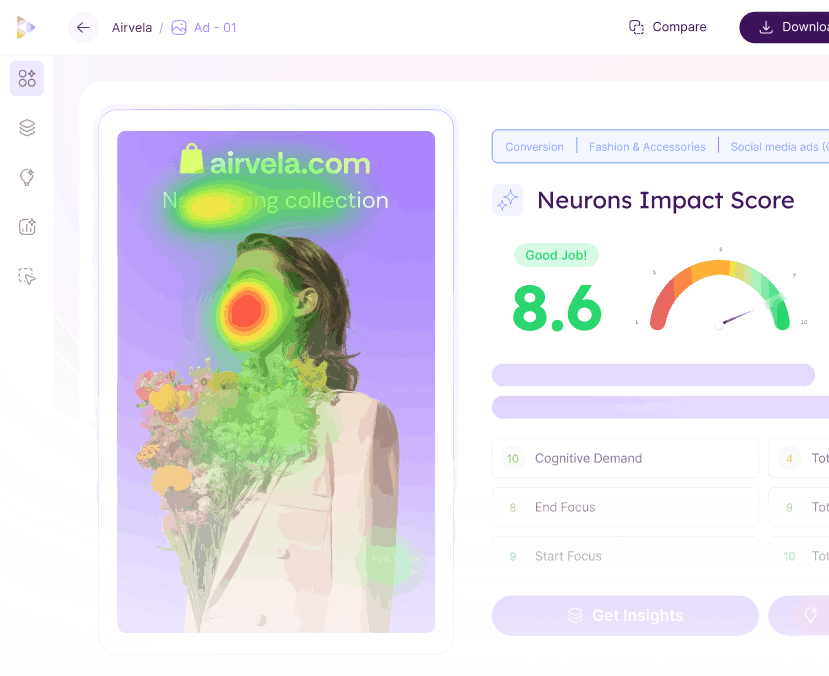
Neurons’ heatmaps revealed weak brand cues as the primary creative problem. Existing creatives failed to consistently capture attention on key brand elements such as product visuals and logo placement.
Predictive modeling was then used to identify what elements of the creative were likely to be noticed and remembered.
Using the insights gained from creative testing, the team refined visual hierarchy and strengthened brand cues to align with viewing patterns.
This optimized approach led to stronger brand recognition and measurable growth in brand equity across markets.
The campaign shows that using predictive data to evaluate creative before launch helps identify weaknesses early and improves overall campaign effectiveness. Pre-testing creative improves brand recall and strengthens long-term brand perception.
See how JDE Peet’s improved advertising effectiveness using neuroscience insights
How Did Nike Build a Powerful Brand With the “Just Do It” Campaign?
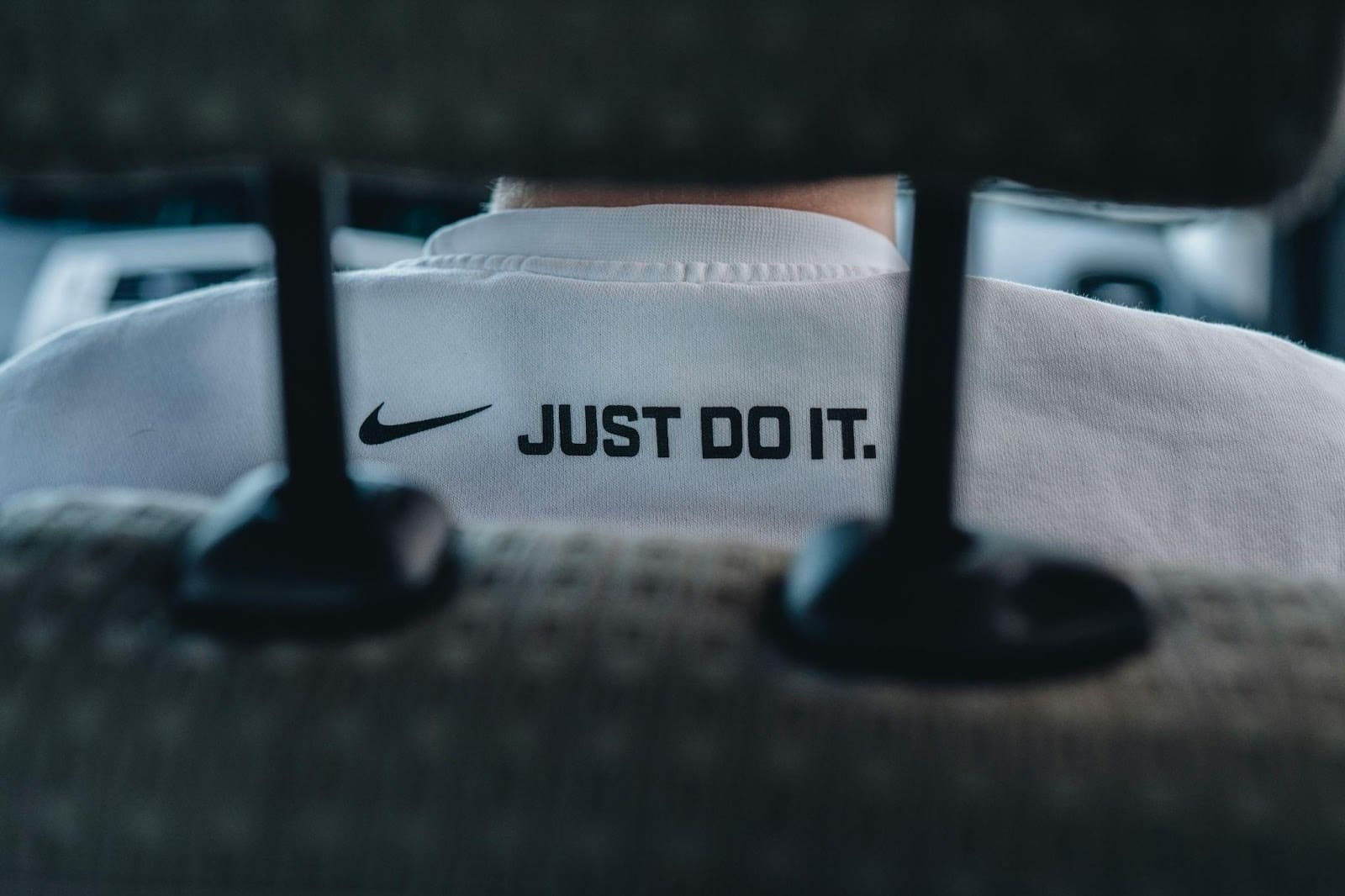
Nike launched the “Just Do It” campaign in 1988. Before then, Nike was seen as a niche brand, appealing only to a small group of male athletes in competitive sports. Nike’s market share was further destabilized by the arrival of Reebok, a competitor that had captured the interest of many with its aerobic shoes.
The campaign objective was to reposition Nike from a niche athletic shoe company into a brand with universal appeal.
The core message behind the “Just Do It” campaign was relatability. The slogan captures both universality and individuality, implying that anyone willing to try could reach their goals.
Nike used inspiring stories and athlete narratives to bring this messaging to life. The campaign featured both elite athletes and everyday individuals, showing moments of struggle, perseverance, and achievements. The message resonated with consumers seeking motivation beyond sports.
The campaign strengthened Nike’s global identity by creating a consistent and recognizable message across all channels. By 1998, Nike’s share of the North American domestic sport-shoe business had grown from 18% to 43%.
The marketing takeaway from the “Just Do It” campaign is that emotional storytelling outperforms product-focused advertising in building long-term brand equity.
Explore Nike’s iconic “Just Do It” brand campaign
How Did Dove Transform Beauty Advertising With the “Real Beauty” Campaign?

Dove’s 2004 “Real Beauty” campaign is one of the most impactful brand advertising examples to date. The campaign was launched after a global study conducted across 10 countries revealed that only 2% of women considered themselves beautiful.
The campaign's concept and purpose centered on closing the gap between industry beauty standards and how real women saw themselves.
Dove challenged traditional beauty standards by showing real women of different ages, body types, and ethnicities. This approach stood in stark contrast to conventional advertising, which often relied on overly edited and “perfect” imagery.
The creative execution extended across multiple channels, including billboards, print, video, and digital platforms. Initiatives such as “Real Beauty Sketches” further reinforced the message of true beauty and self-perception.
The “Real Beauty” campaign strengthened brand trust and loyalty by positioning Dove as a brand promoting authenticity, inclusivity, and self-esteem.
This brand advertising example revealed that aligning messaging with authentic representation builds deeper brand trust and loyalty.
See how Dove’s “Real Beauty” campaign reshaped beauty advertising
How Did Coca-Cola Personalize Brand Advertising With the "Share a Coke" Campaign?
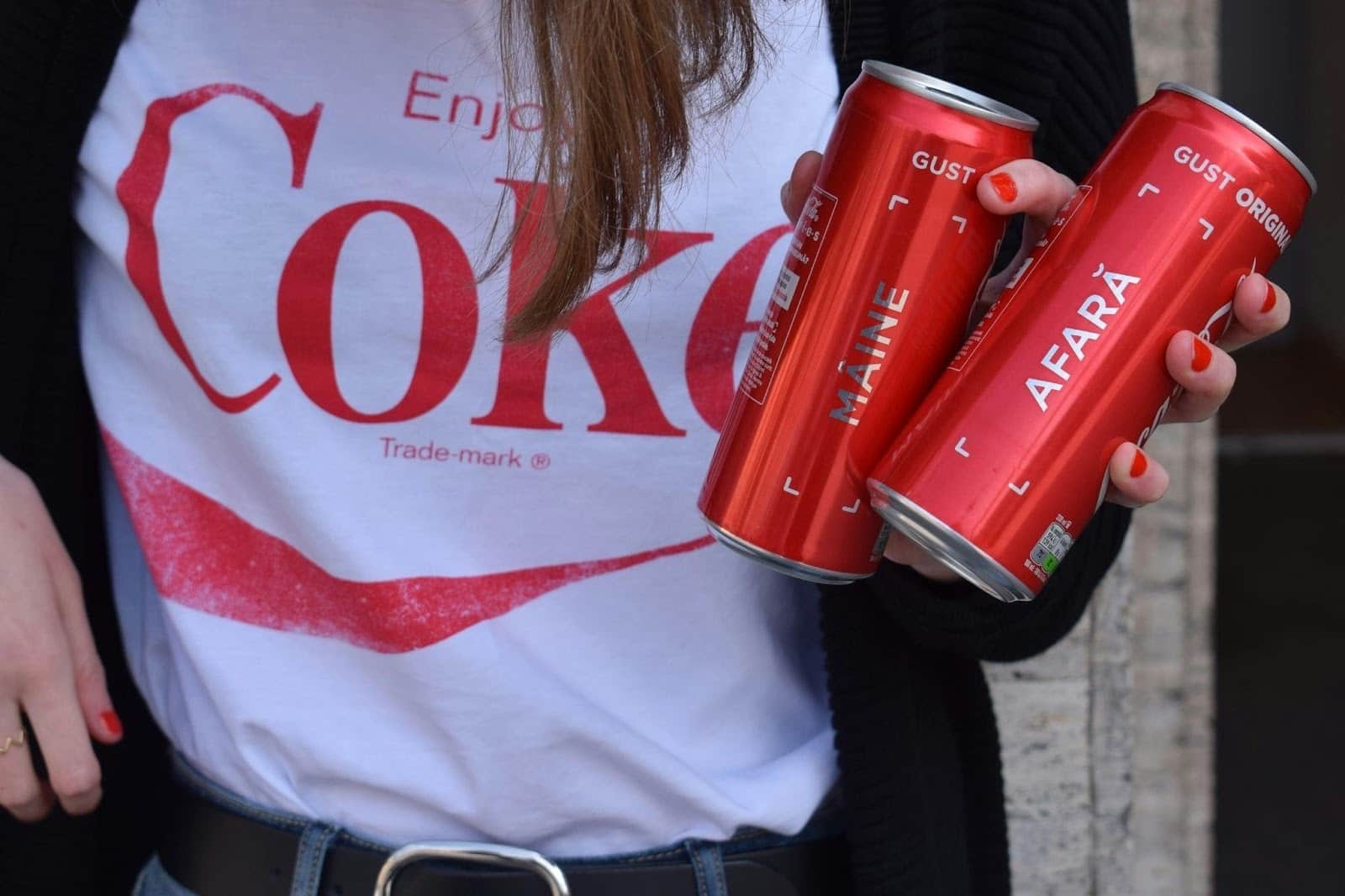
Coca-Cola launched the “Share a Coke” campaign in Australia in 2011 to tackle declining sales among the younger audience. The company replaced its prestigious logo on bottles with 150 of the most popular names in the country.
The campaign encouraged participation by inviting customers to find bottles with their names or friends' names and to share their personalized experiences on social media. Customers could also print custom bottles on demand at various pop-up kiosks.
Personalization amplified global engagement by making each engagement feel unique. In Australia alone, sales rose by over 7% among young adults.
Coca-Cola expanded the campaign to 80 countries, adapting names and cultural nuances to maintain personal relevance.
The “Share a Coke” campaign reveals that personalization builds social and emotional connection while driving audience participation.
Explore the “Share a Coke” personalized brand campaign
How Did Heineken Use Storytelling in the "Worlds Apart" Campaign?

Heineken launched the “Worlds Apart” campaign in 2017. It was a social experiment designed to explore how strangers of opposing views could connect through a shared task. The campaign aimed to position Heineken as a facilitator of open dialogue and human connection.
People with different viewpoints on topics such as climate change, gender identity, and feminism were required to work together in pairs. Each pair was to complete the task assigned before discussing their opposing views.
The campaign created meaningful dialogue by allowing the participants to ease tension through a shared activity before engaging in conversation.
Storytelling played a crucial role in making the campaign memorable and shareable. Heineken centered the narrative around the principle of neutrality, following the pair’s journey from initial differences to understanding. This approach kept audiences engaged and emotionally invested. The campaign shows that unscripted storytelling built around real human experiences creates emotional engagement and encourages social sharing at scale.
Watch the Heineken “Worlds Apart” brand campaign
How Did Tropicana Brands Group Optimize Brand Advertising Creative Using Neuroscience Insights?
Tropicana Brands Group faced the challenge of developing its omnichannel brand campaign assets to strengthen its position in the industry. The objective was to maximize visual engagement across out-of-home, video, packaging, and marketing channels.
To achieve this, Tropicana used Neurons AI to test advertising creatives before the campaigns go live. The analysis measured visual hierarchy, cognitive engagement, and brand impact across campaign assets.
These insights were then used to optimize the campaigns by ensuring key elements were placed in high-focus areas within campaign assets.
The results were a measurable improvement in brand visibility and engagement. The Naked smoothie brand, a subsidiary of Tropicana, ran an out-of-home bus campaign that delivered strong results, prompting an extension.
These changes improved brand communication effectiveness by giving a holistic view of how asset types perform in the market, rather than relying on intuition.
Tropicana's approach shows that neuroscience-based pre-testing across all channels produces stronger, more consistent brand communication before any budget goes live.
See how Tropicana optimized advertising creative using neuroscience insights
How Does Google Turn Storytelling Into Brand Advertising With "Year in Search"?
The Google “Year in Search” campaign started in 2010 as Google’s Zeitgeist report. This report evolved into a highly anticipated year-end campaign revealing the world’s most popular search queries.
The campaign aimed to present Google as a brand that celebrates shared cultural moments, not just a search engine.
Using real search data, Google compiles the most significant queries and turns them into a short film, commonly referred to as its hero video.
In these videos, the search queries are often categorized into themes such as love, hope, loss, and resilience. The emotional storytelling connects the audience with the brand by presenting shared human experiences during important life events and global moments.
In 2024, the campaign expanded beyond the hero film to include social activations, fandom-first content, and a podcast series. In that year, the campaign generated a 6x lift in conversations, 765 million views across all platforms, and 4.2k+ articles curated from trend lists.
The “Year in Search” campaign resonates globally every year because search data reflects genuine human curiosity, making every edition a representation of what the world collectively cared about in that year.
Consistency builds anticipation and reinforces Google’s position year over year.
The campaign shows that combining real user data with emotional storytelling creates relatable narratives that strengthen brand connection over time.
Explore Google’s “Year in Search” storytelling campaign
How Did Airbnb Build Community Through Its "Belong Anywhere" Campaign?
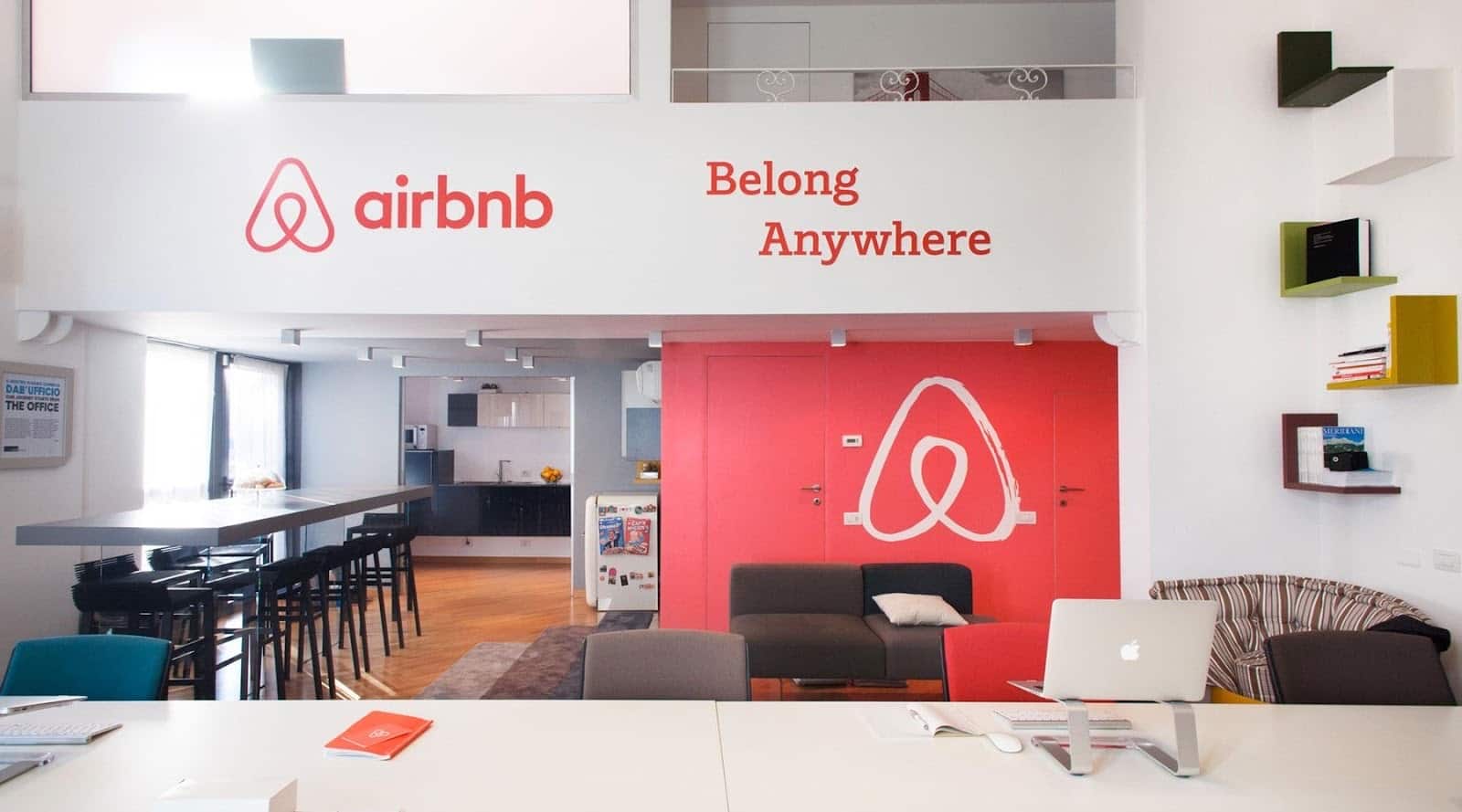
The Airbnb “Belong Anywhere” campaign was launched in July 2014. The aim was to reposition the brand from an accommodation provider into a global community platform.
At the core of the campaign was the message that people can feel at home anywhere in the world.
Airbnb emphasized community and cultural connection by featuring real stories from hosts and guests across locations such as India, London, and New York. This approach extended to collaborations with local businesses and tourism boards to create localized content that resonated with specific communities.
The “Belong Anywhere” campaign portrayed authentic travel experiences and local perspectives. These stories were communicated mostly as videos and user-generated content, including TV commercials, digital advertising, and social media campaigns.
During this campaign, the Bèlo was also unveiled as the new logo, symbolizing belonging.
Airbnb’s storytelling reinforced the brand’s mission by focusing on real people’s journeys and experiences. This narrative made the campaign relatable and helped communicate Airbnb’s role in connecting people across cultures.
The campaign strengthened Airbnb’s brand identity by consistently associating the brand with belonging and human connection. This positioning differentiated Airbnb from traditional hospitality services and supported long-term brand affinity.
Following the campaign’s success, Airbnb expanded into new markets, including Asia and Latin America. The user base also expanded significantly, increasing from 40 million in 2014 to 60 million by the end of 2015.
The Airbnb "Belong Anywhere" campaign stands as one of the most effective brand advertising examples of community-driven positioning, transforming Airbnb from a home-sharing platform into a global cultural phenomenon. brand
Learn about Airbnb’s “Belong Anywhere” brand campaign
How Did Spotify Use Personalization in Its "Spotify Wrapped" Brand Campaign?
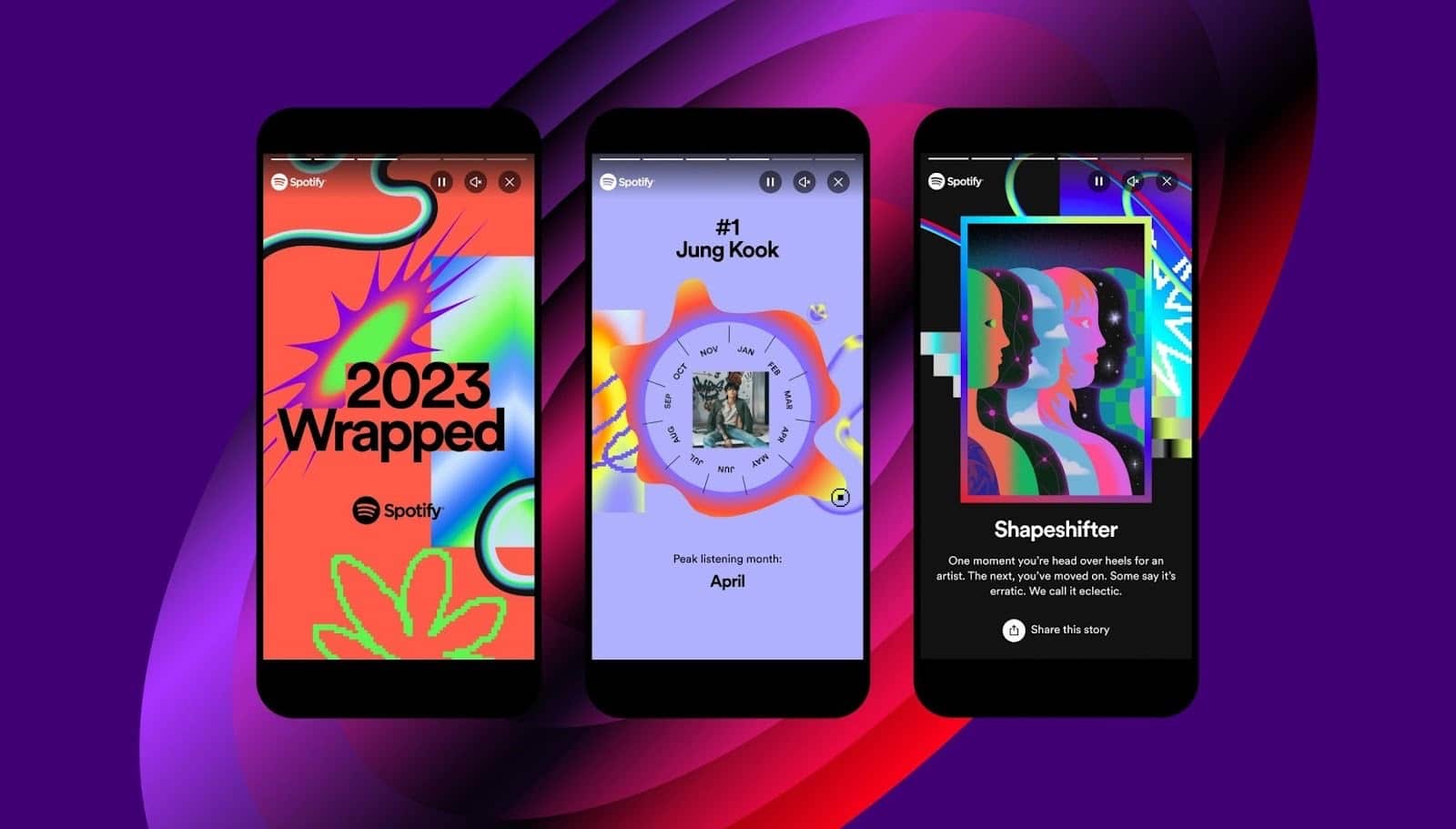
Spotify launched “Year in Music” in 2015 as a basic listening recap before rebranding the campaign as “Spotify Wrapped” in 2016. “Spotify Wrapped” has since grown into a viral sociocultural phenomenon.
The campaign concept centers on collecting, summarizing, and visualizing user data throughout the year. Each user is then provided with a shareable summary of their top songs, artists, genre, and listening patterns.
Spotify tracks and logs users’ listening habits from January 1 to generate personalized summaries that reflect individual preferences. Using deep behavioral analytics, machine learning, and segmentation, Spotify creates thousands of Wrapped experiences to fit listeners of all kinds.
The “Spotify Wrapped” campaign was designed with virality in mind. The Wrapped slides feature bold fonts, bright colors, and sharp graphics, making them visually appealing.
Users are prompted to share their wrapped designs across their social media pages, driving organic visibility and increased exposure through social sharing.
Personalization makes Spotify Wrapped highly engaging because each user receives a summary that reflects their identity, creating an emotional connection that generic brand advertising rarely achieves.
The “Spotify Wrapped” campaign is among the brand advertising examples that redefined how personalization drives organic reach.
Discover how Spotify Wrapped became a viral brand campaign
What Can Marketers Learn From These Brand Advertising Examples?
Marketers can learn that successful brand advertising examples rely on a consistent set of principles that shape how audiences perceive and remember a brand. These campaigns show how strategic creativity, relevance, and audience understanding drive long-term impact.
- Emotional storytelling makes campaigns more relatable and easier for audiences to remember over time.
- Cultural relevance helps brands stay relevant by connecting with real-world conversations and moments.
- Distinctive creative assets strengthen recognition and make brand assets more noticeable across channels.
- Audience insights guide creative decisions by revealing what captures attention and drives engagement.
When applied together, these principles help brands create advertising that is not only memorable but also effective at building long-term awareness and customer loyalty.
Explore how brand advertising contributes to long-term brand building
How Can Brands Test and Optimize Their Advertising Creative?
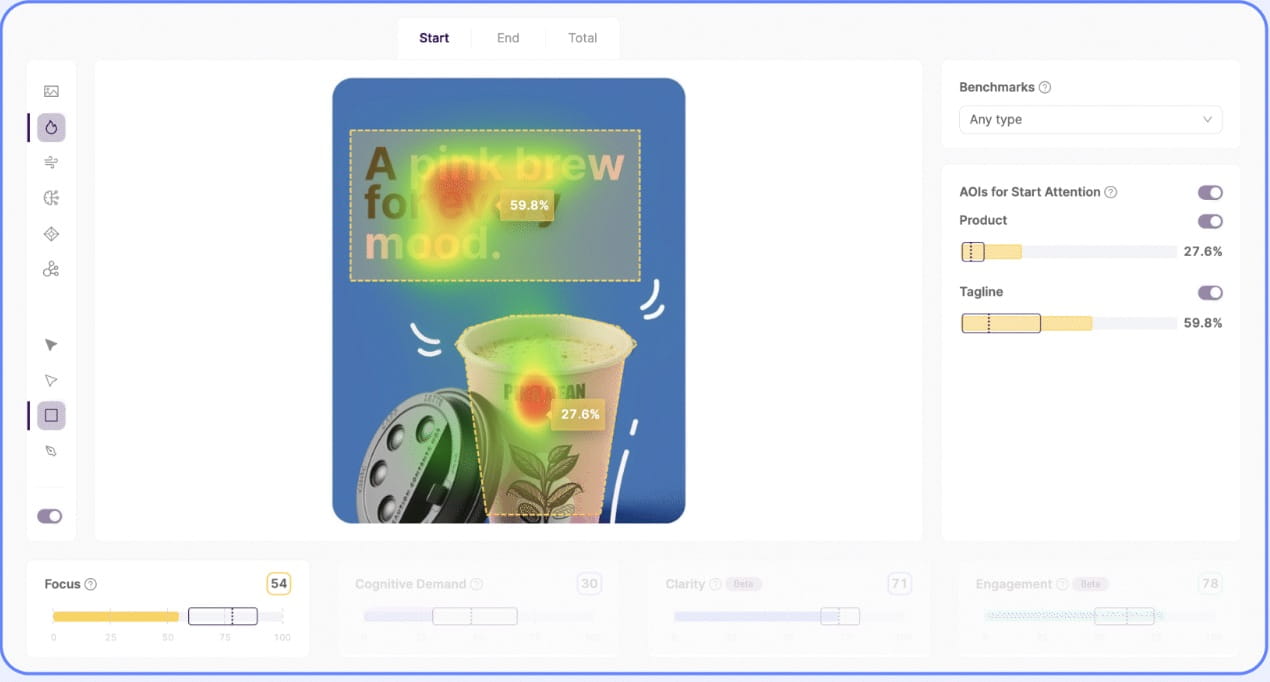
Testing creative concepts before launch improves advertising effectiveness by identifying what works best, reducing the risk of wasting the advertising budget.
Early testing reduces the risk of underperforming campaigns and allows marketers to refine creative assets based on data, not intuition.
Attention measurement and neuroscience insights can predict advertising performance by analyzing how audiences respond to visual cues, messaging, and layout of creative assets. These methods evaluate which parts of a campaign capture audience attention first and leave an impression.
Marketers can measure emotional engagement and brand recall before launching campaigns by using tools like Neurons AI, which assess cognitive responses and memory encoding. These insights help optimize creative execution, improve clarity, and strengthen overall campaign impact.
Discover how AI-powered advertising testing improves creative performance
What Are the Key Takeaways From These Brand Advertising Examples?
Successful brand advertising examples share consistent principles that drive long-term awareness and audience connection. Across these campaigns, brands focus on emotional storytelling, cultural relevance, personalization, and distinctive creative execution to build a strong brand identity.
Each campaign demonstrates that effective brand advertising goes beyond promoting products. Strong campaigns create meaning, connect with audiences on a human level, and remain consistent across channels and over time.
Learn more about how brand advertising strengthens long-term brand value