Your campaign dashboard shows which ads get clicks, what those clicks cost, and which assets drive conversions. But when you decide what to scale or cut, how much do you know about each ad’s impact on your brand?
Most media teams optimize on the data their channels give them: clicks, CPC, conversion rate and ROAS. That data is obviously valuable, but it only shows half of what each ad does.
An asset might attract attention without making the brand noticeable. Another might have a lower CTR while doing a stronger job of helping people remember who you are. Performance data alone leaves those differences out of the decision.
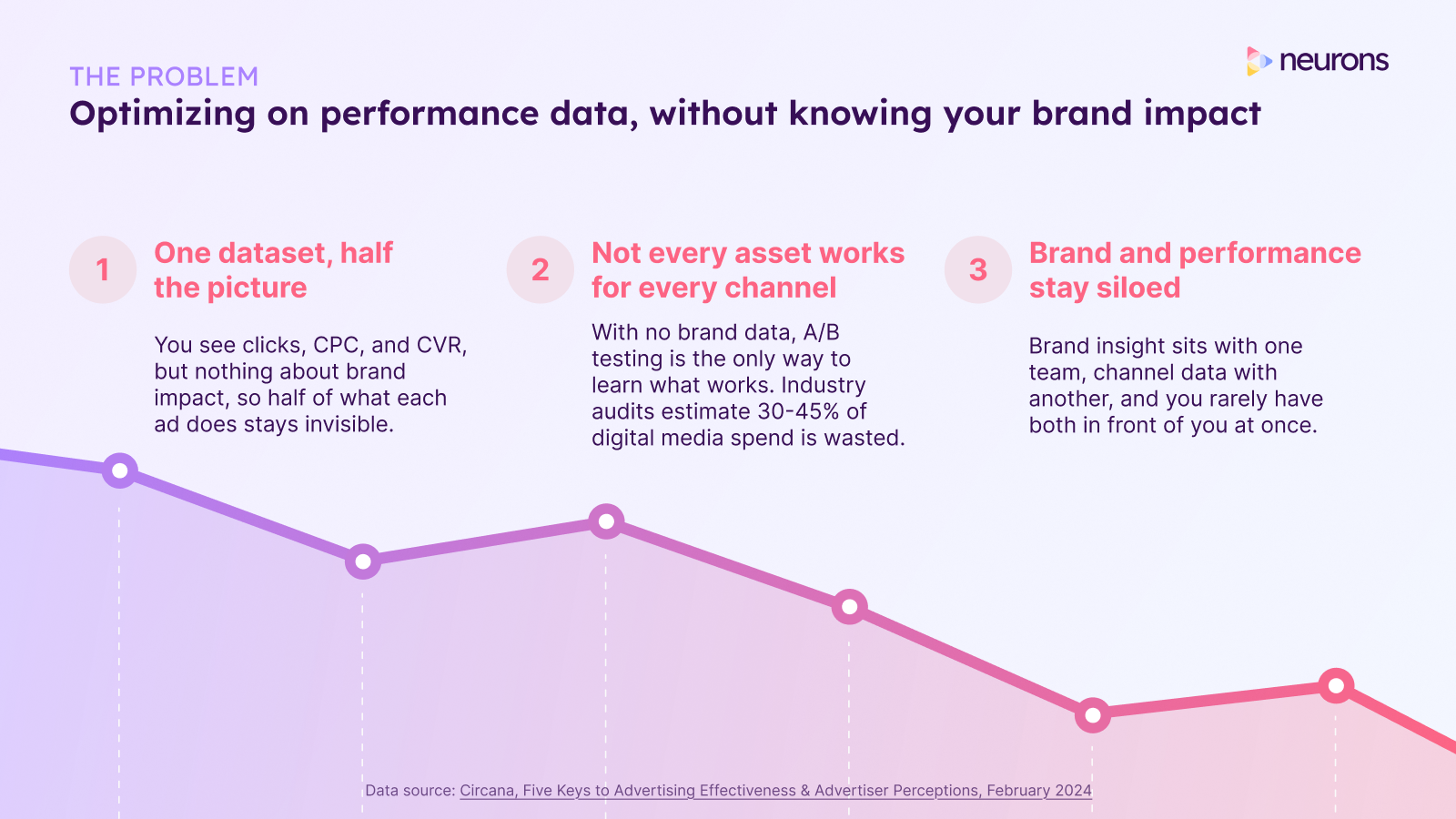
So winners get scaled on clicks alone, and brand impact stays invisible. Industry audits estimate 30–45% of digital media spend is wasted (Circana, Five Keys to Advertising Effectiveness, February 2024).
And there’s more: WARC found that combining brand and performance marketing delivers 90% higher ROI than performance marketing alone (Warc, The Multiplier Effect study).
Neurons adds the missing piece: a brand dataset that sits next to your performance data, so every media decision is made on both. As a result, clients have found that they get better CTR, CPC, and VTR.
In this article, you’ll discover:
- Why performance metrics leave gaps in media decisions
- How Neurons adds attention, brand visibility, and memory data to asset comparisons
- How to use both datasets to guide A/B testing and campaign iteration
- What results Neurons has helped customers achieve
Why Media Decisions Need More Than Channel Data
Enterprise media teams manage assets across channels, formats, markets, and campaign objectives. Every round of optimization means deciding which variants deserve more investment, which need changes, and which should stop running.
Three challenges make those decisions harder.
Performance Metrics Show Only Part of Each Ad’s Impact
CTR, CPC, and CVR tell you how people respond through clicks and conversions. It’s valuable data, but it doesn’t tell you whether attention reaches the brand, whether the product gets noticed, or how likely the ad is to be remembered.
When these signals are missing, teams have limited evidence for judging how an asset supports brand building alongside immediate response. A low click-through rate can become a reason to cut an asset before its contribution to the campaign’s wider objectives has been considered.
As mentioned in the introduction, this is an important consideration as WARC found that combining brand and performance marketing delivers 90% higher ROI than performance marketing alone (Warc, The Multiplier Effect study).
The Same Asset Can Work Differently Across Channels
A creative that performs well in one placement may need changes for another. Format, viewing conditions, and the time available to communicate all affect what an audience can take in.
A/B testing helps reveal those differences once assets are live. Adding predictive data before launch helps teams make more informed choices about which variants enter the test and what to change before ad spend.
Brand and Performance Data Sit with Different Teams
Media teams work with channel results. Brand and insights teams bring a different view of effectiveness. When those datasets stay separate, it becomes harder to agree on what makes an asset worth investing in.
Bringing them into the same review gives teams a shared basis for deciding how each asset supports the campaign’s goals on all levels.
Add a Brand Dataset Alongside Performance Once the Campaign Is Live
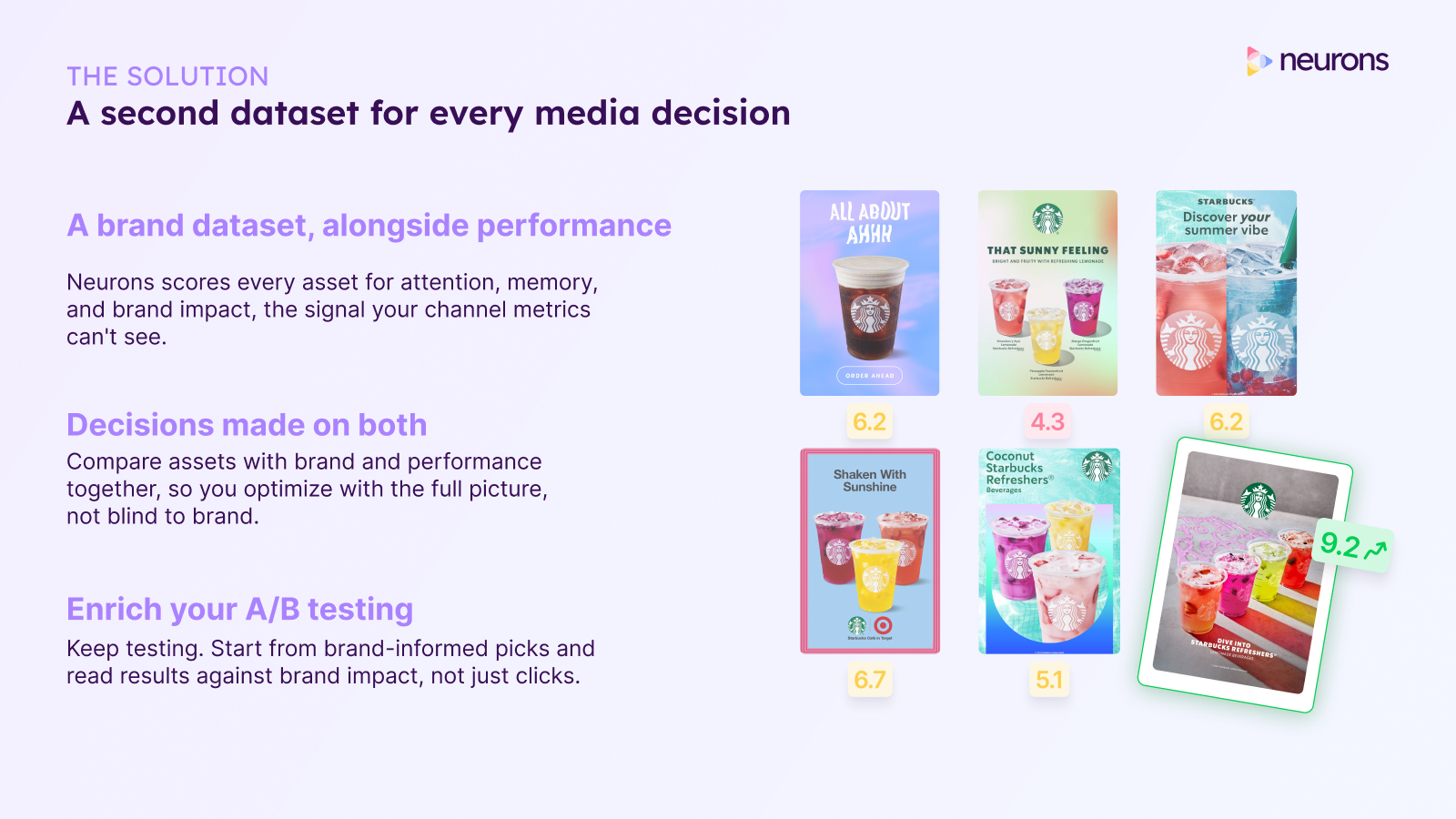
Neurons provides neuroscience-backed predictions of how people are likely to respond to creative assets. For media iteration, these give teams another set of signals to evaluate alongside live campaign results.
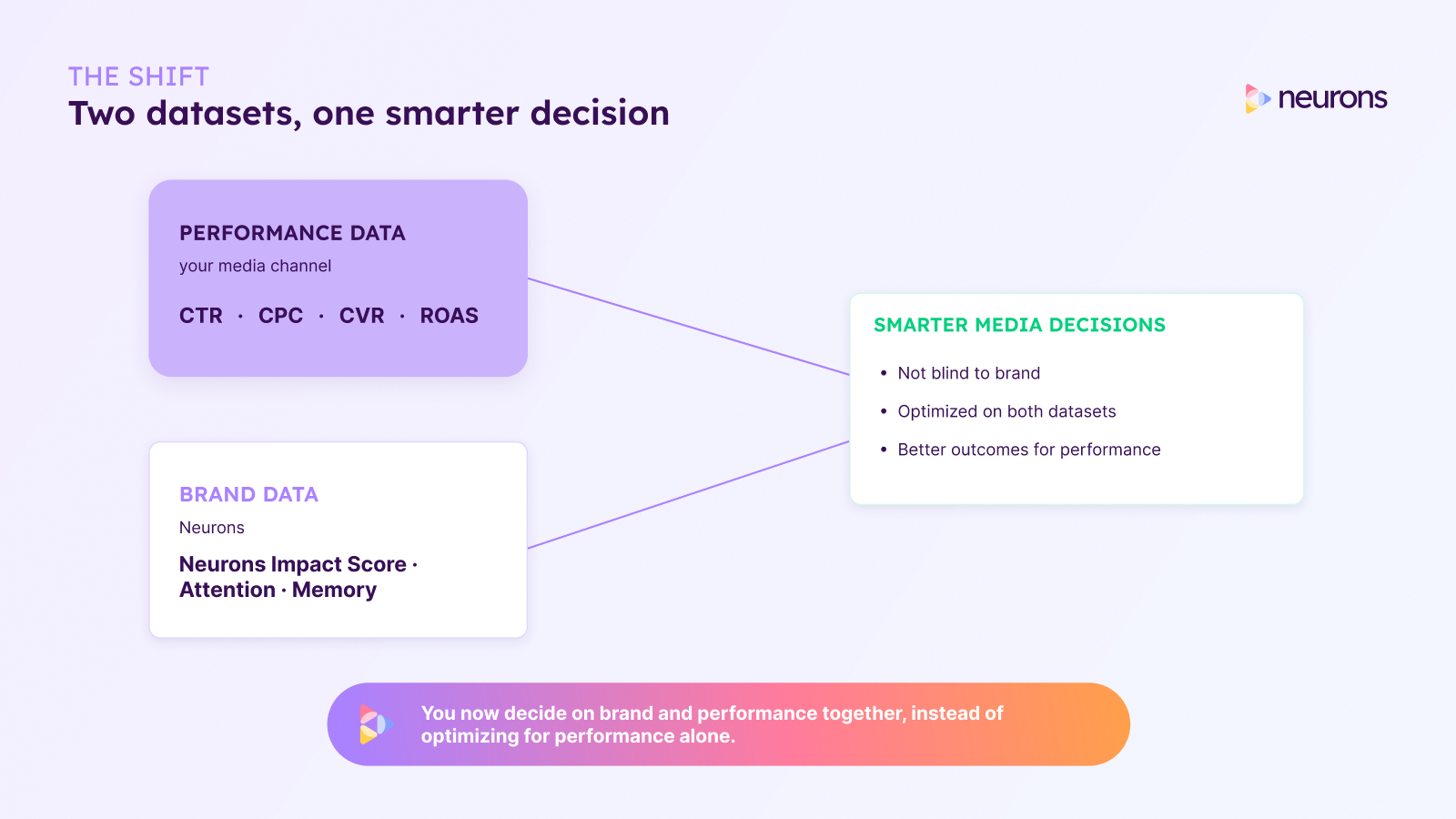
Two Datasets, One Smarter Decision
Put side by side, the two datasets let you decide on brand and performance together, instead of optimizing for performance alone. A high-CTR ad can no longer hide a forgettable ad.
See What Gets Attention
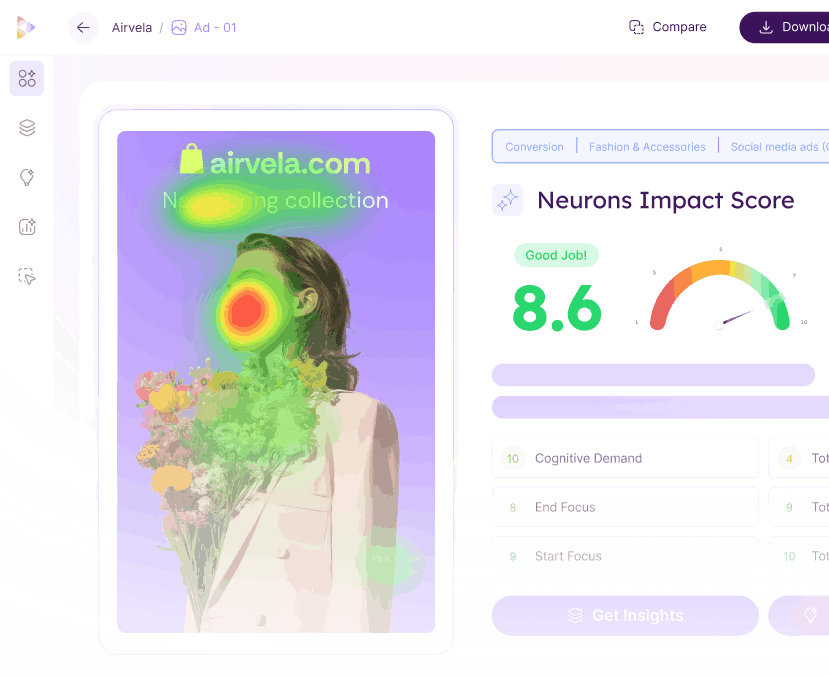
Attention predictions help you understand where people are likely to look and whether key elements, such as the brand or product, are likely to be seen.
This makes a media review more actionable. If an asset attracts clicks but the brand receives little attention, the next iteration can address brand visibility while preserving the elements associated with strong response.
Evaluate Memory and Overall Impact
Ad memory predictions add another dimension to asset comparisons. The Neurons Impact Score provides an overall evaluation based on the creative’s objectives and context, helping teams assess assets against the job they need to do.
These are predictive signals. Reading them alongside observed campaign performance helps you decide what to test next and assess whether an iteration improves both response and the potential to build brand equity.
Bring Both Datasets into the Same Review
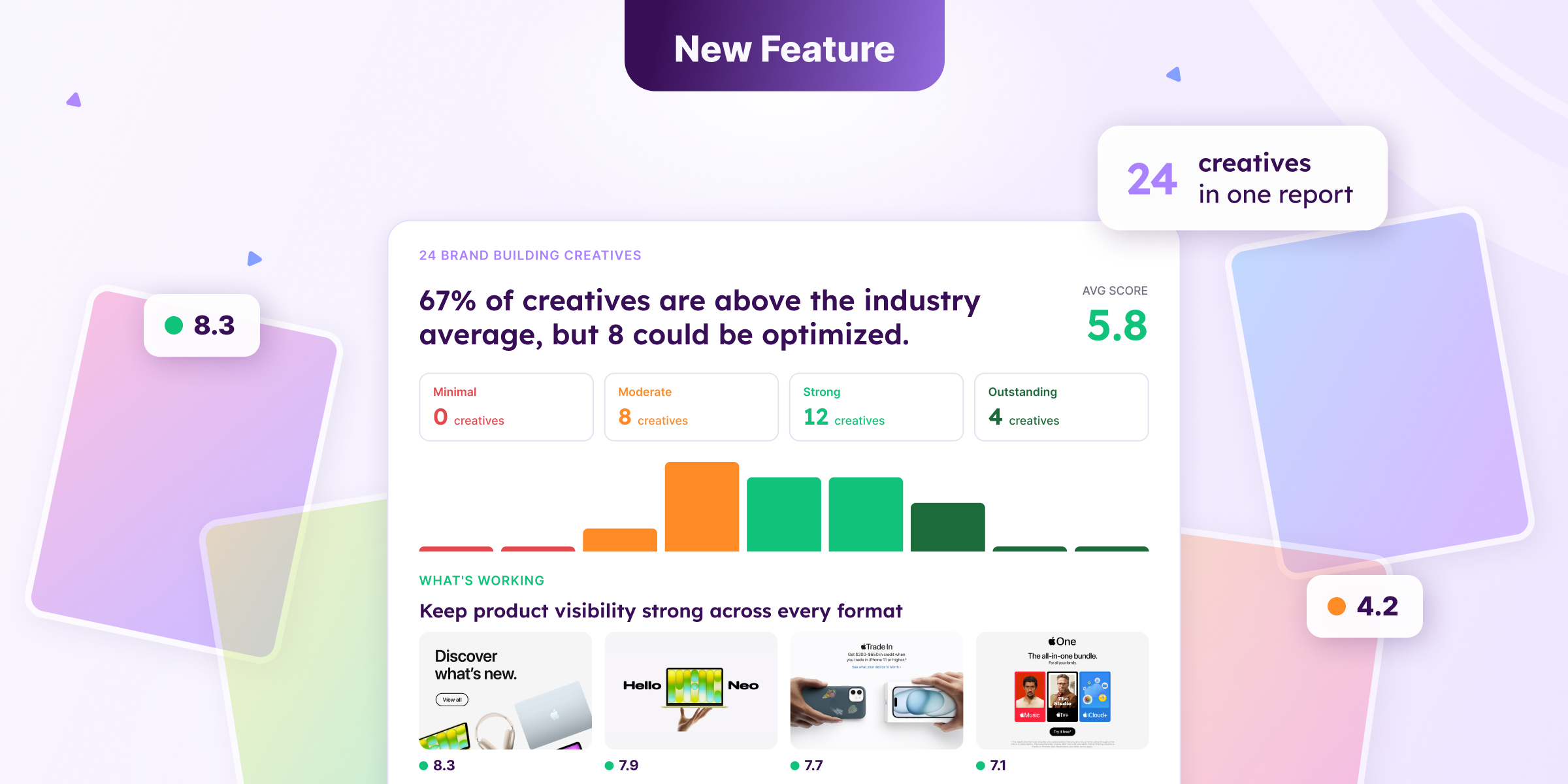
Compare Neurons scores with CTR, CPC, CVR, and ROAS at the asset level. For enterprise teams building their own reporting workflows, the Neurons API offers a way to bring creative data into those workflows.
The result is a review where a media buyer, brand marketer, and campaign manager can discuss the same asset using evidence relevant to each of their objectives.
For more on evaluating effectiveness, explore the Kantar and Neurons webinar on The New Rules of Creative Effectiveness.
Use Both Datasets to Guide Each Media Iteration
Neurons helps teams choose stronger starting points and interpret the results with brand impact in view.
Before Launch: Choose Which Variants to Test
Score the assets being considered for each channel and review their attention, brand visibility, and memory predictions against the campaign objective.
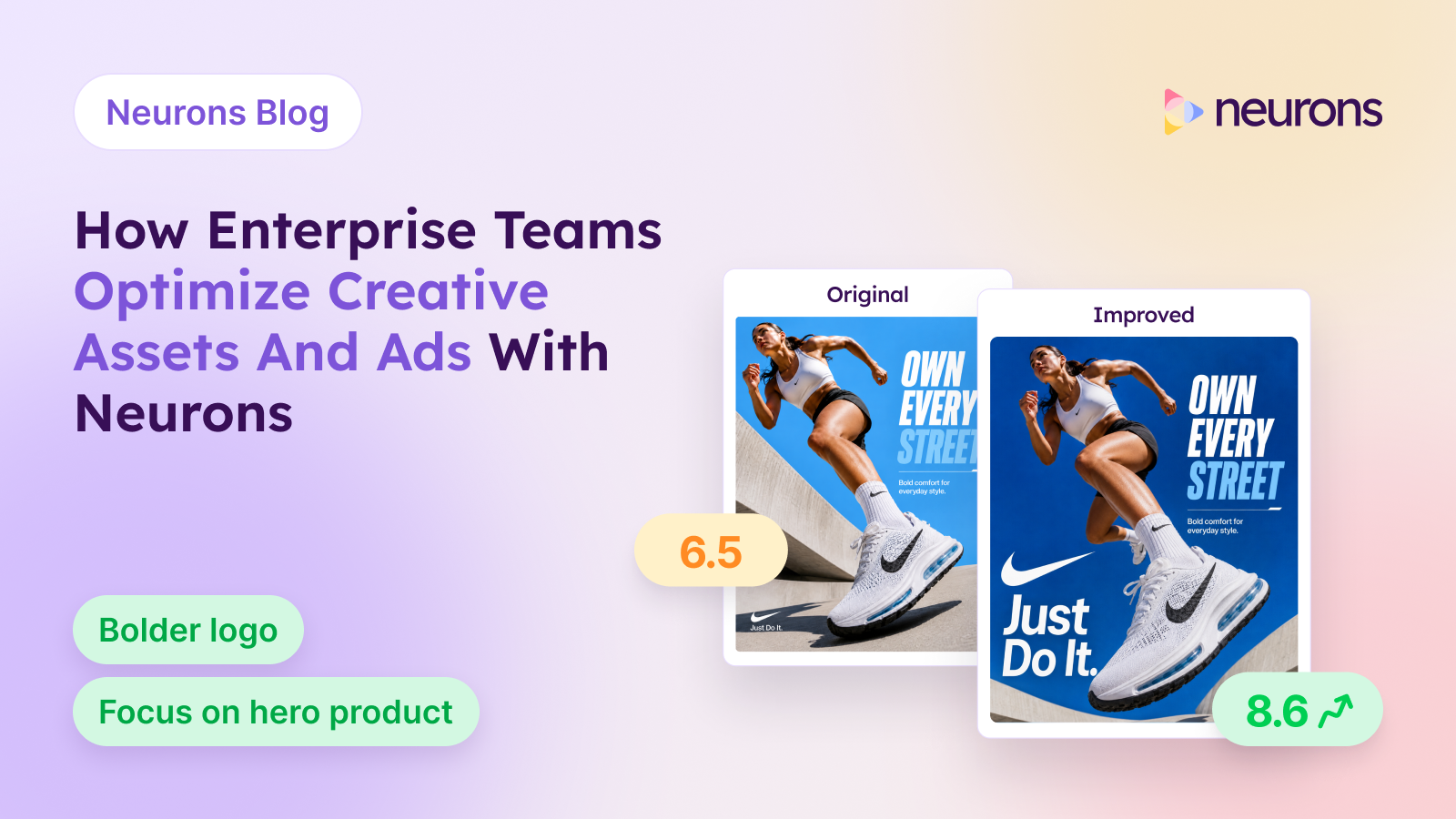
For example, if a product launch asset draws attention to the background while the product receives very little attention, the team can revise the layout and test it again before committing media budget.
This gives live tests a clearer purpose: comparing promising variants and specific improvements, with evidence behind the selection.
During the Campaign: Read Results Against Brand Impact
An asset with strong CTR and weak brand visibility may warrant a revised version that makes the brand more prominent. An asset with strong predicted brand impact but weak conversion performance warrants further investigation into the creative, audience, placement, or offer.
Neither dataset explains every outcome by itself. Together, they help teams form more specific hypotheses and decide where the next test should focus.
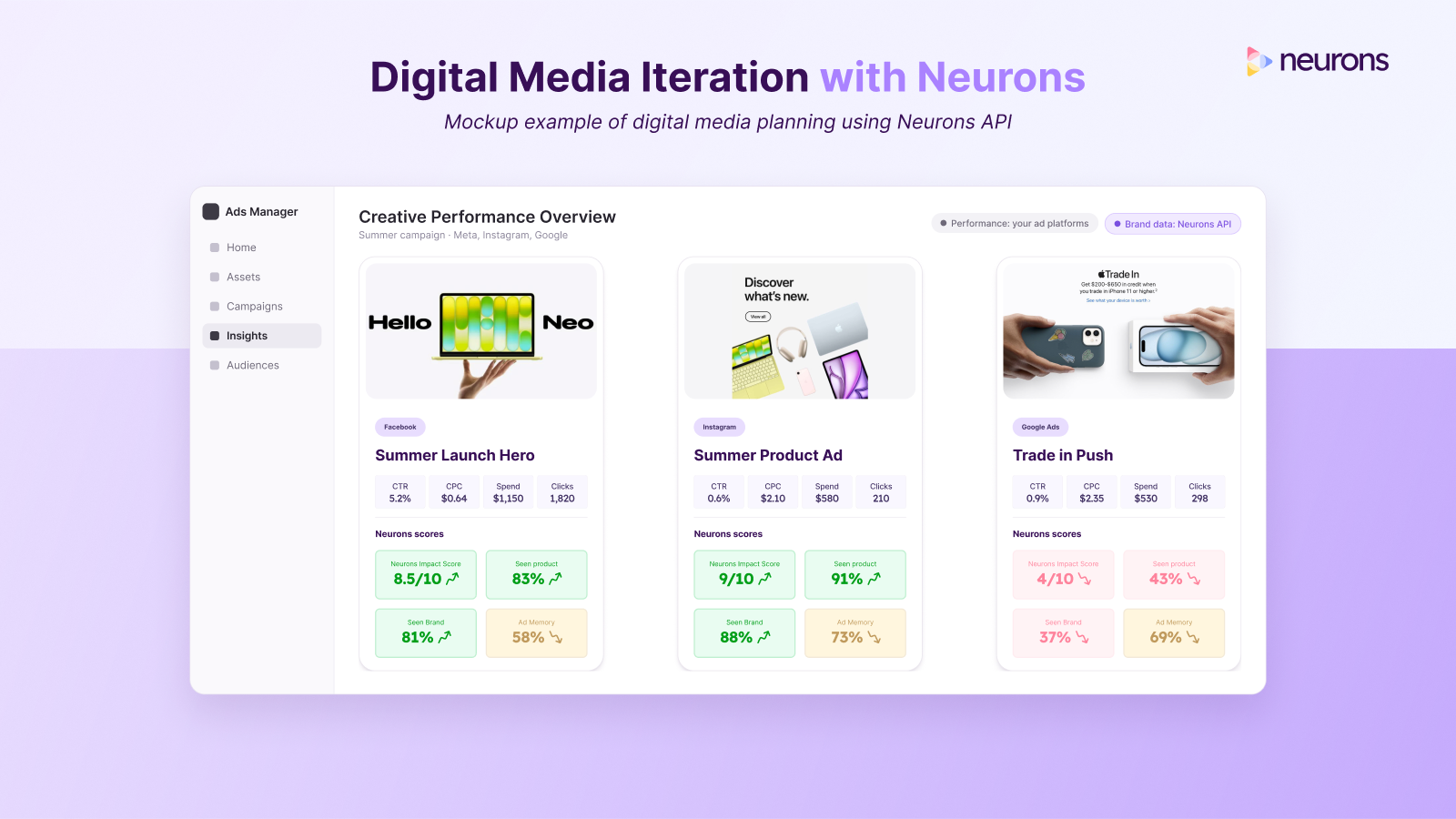
With the Neurons API, brand scores sit right next to the metrics you already track, in the tools you already use.
- Digital media: compare social, display and video placements on CTR, CPC and spend alongside Neurons Impact Score, % Seen Brand, % Seen Product and Ad Memory. Spot the ad that clicks well but leaves no brand trace, and the one that builds memory at a lower cost.
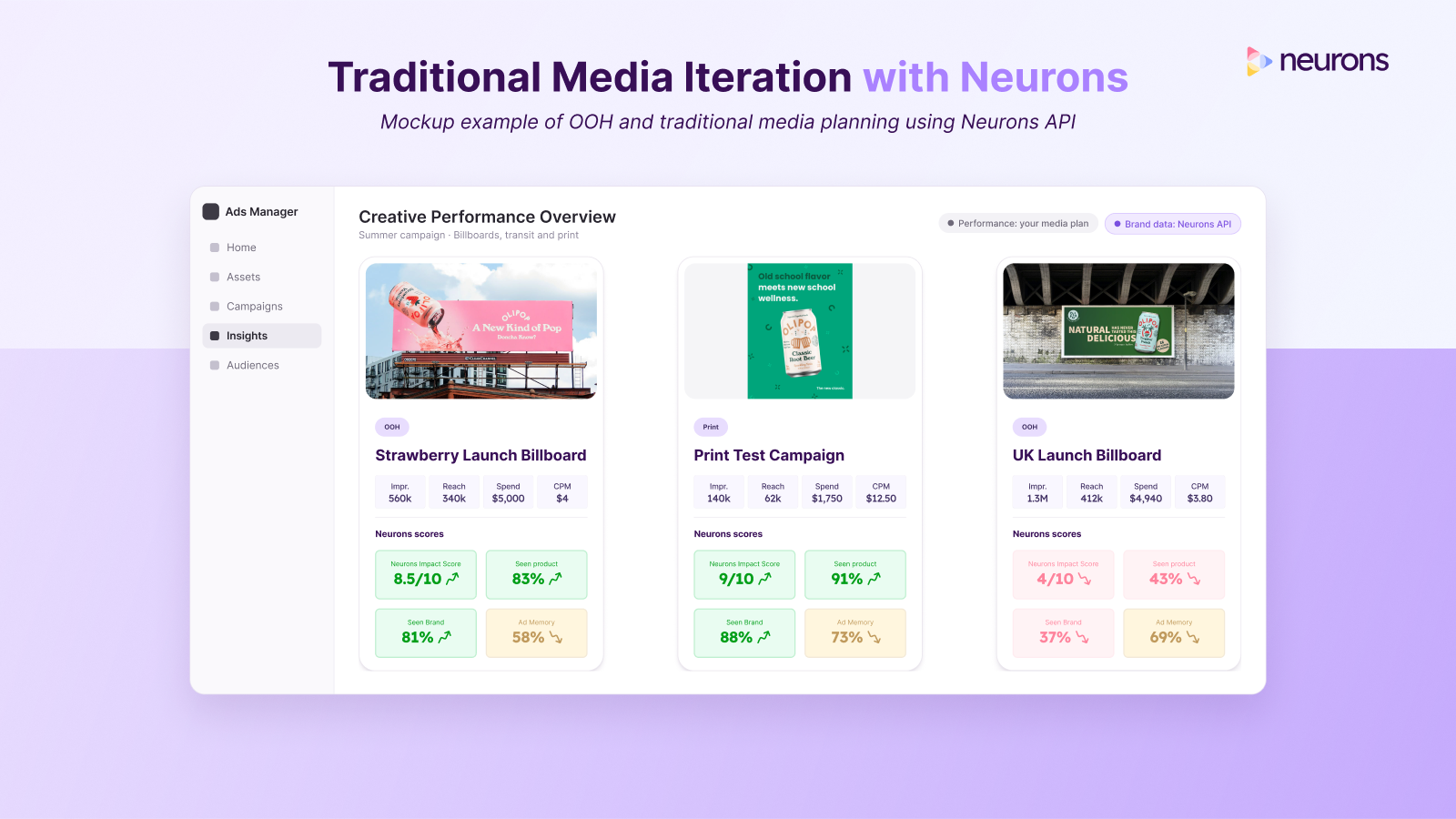
- Traditional media and OOH: score billboards, print and out-of-home creative on the same brand metrics, next to impressions, reach and CPM. Every channel is measured on one scale, so cross-channel budget calls get easier.
Enrich A/B Testing and Scale Assets Against the Campaign Objective
Use both datasets when choosing which assets receive more budget during digital campaigns. The criteria should reflect what the campaign needs to achieve, whether that is immediate response, brand building, or a combination of the two.
For OOH and traditional media, the same principle applies: review creative predictions alongside the reach, impressions, and cost data available for the placement.
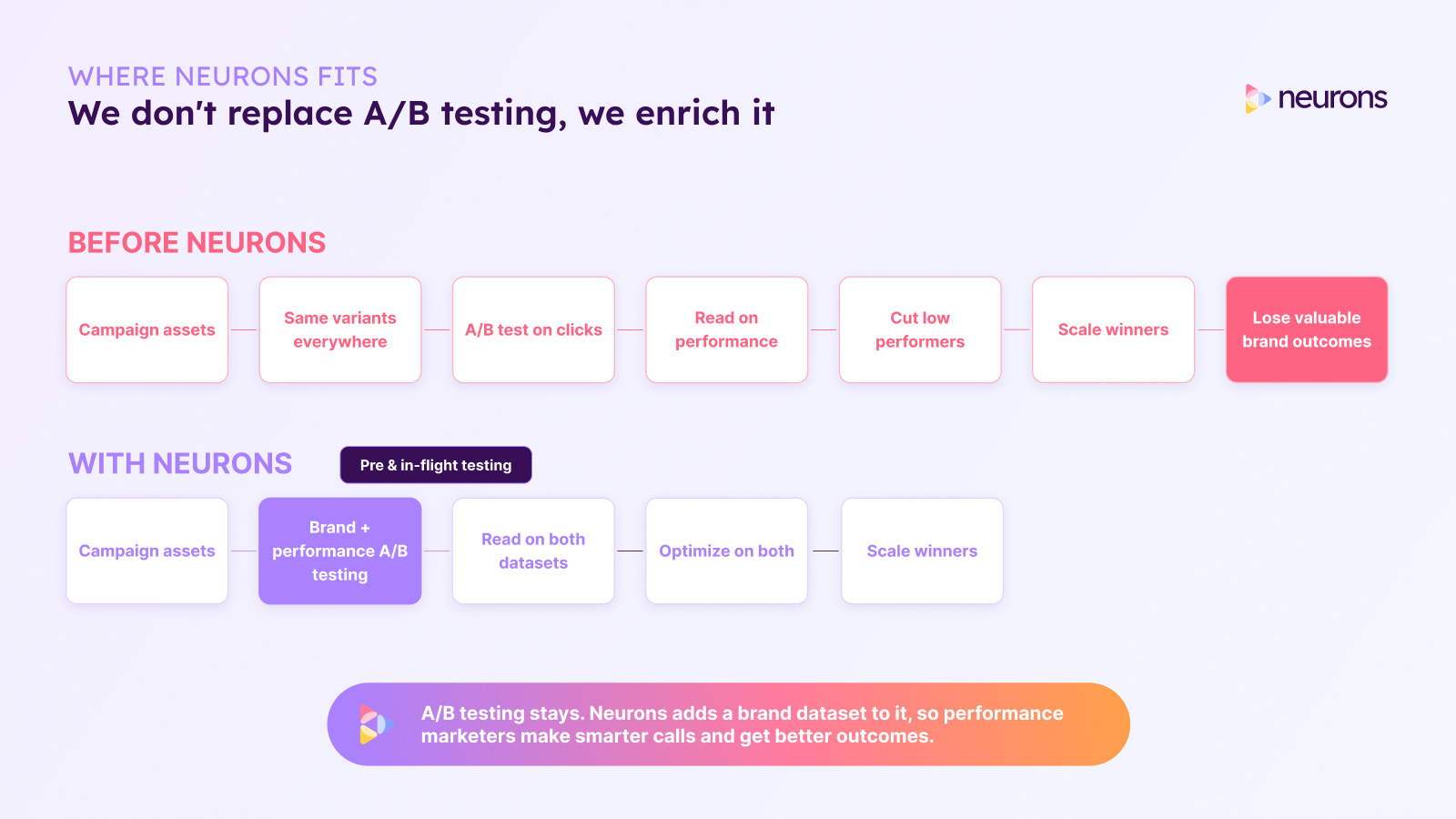
A/B testing stays. Neurons adds a brand dataset to it, before launch and in flight.
Before Neurons:
- Campaign assets
- Same variants everywhere
- A/B test on clicks
- Read on performance
- Cut low performers
- Scale winners, and lose valuable brand outcomes
With Neurons:
- Campaign assets
- Brand and performance A/B testing (pre-launch and in-flight)
- Read on both datasets
- Optimize on both
- Scale winners
You start from brand-informed picks, so fewer test cycles are spent finding the obvious losers. Then you read results against brand impact, not just clicks, and reallocate budget mid-flight with evidence on both sides.
What Changes When Media Decisions Are Made on Both Datasets
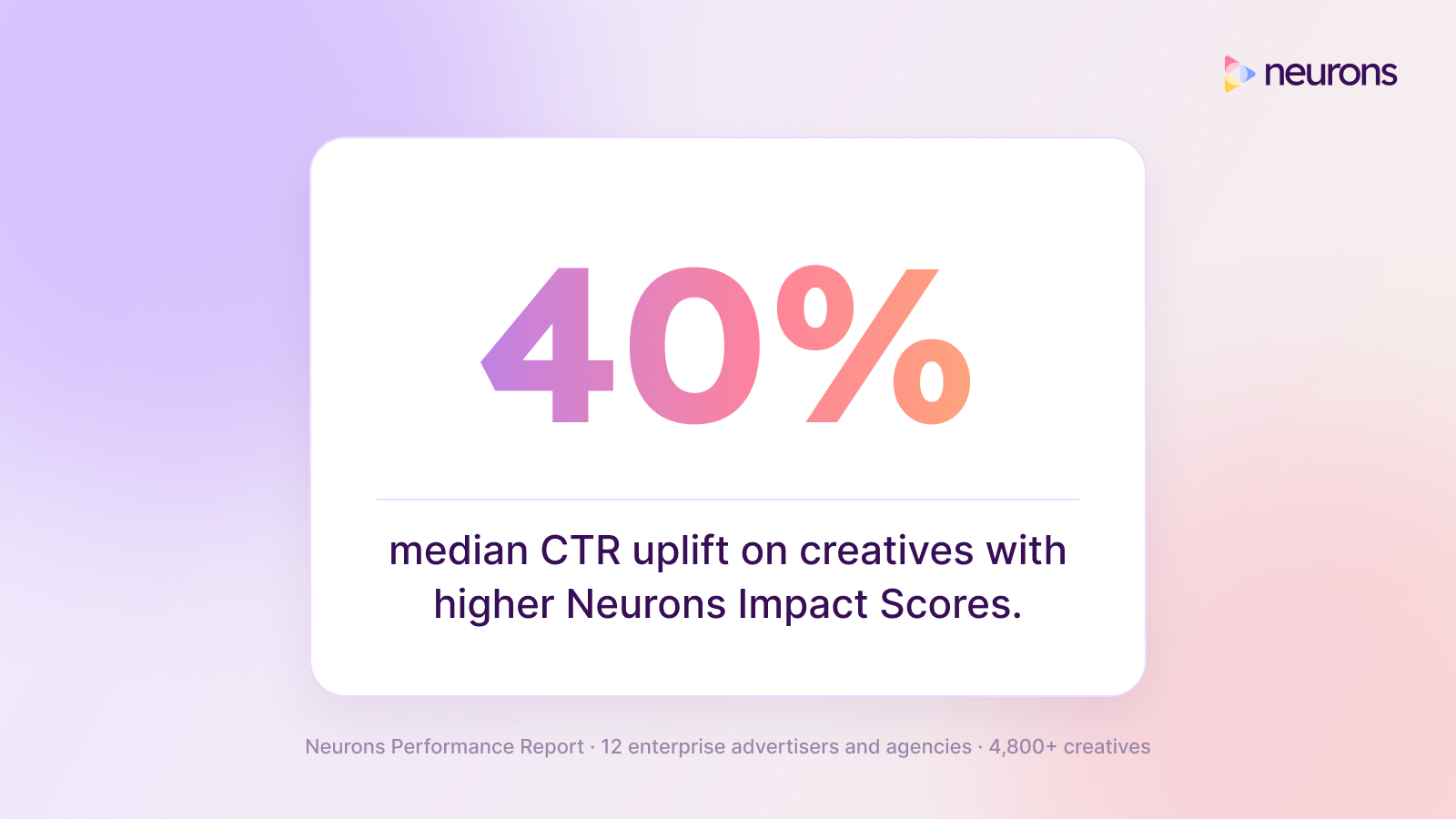
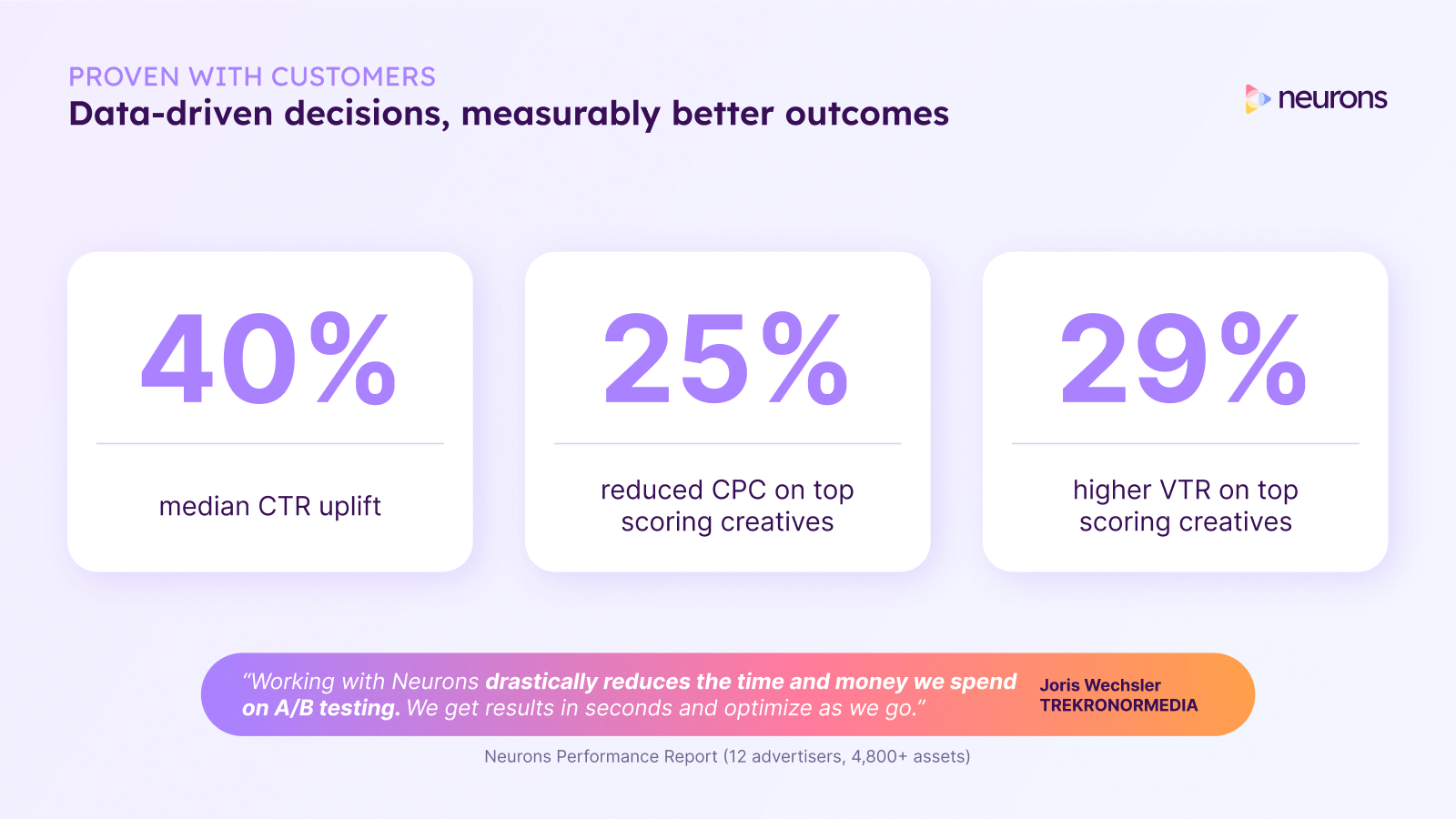
We measured it. Across 4,800+ creatives from 12 enterprise advertisers and agencies, running on Meta, TikTok, YouTube and Google, assets with higher Neurons Impact Scores consistently delivered better performance:
- 40% median CTR uplift
- 25% lower CPC on top-scoring creatives
- 29% higher VTR on top-scoring creatives
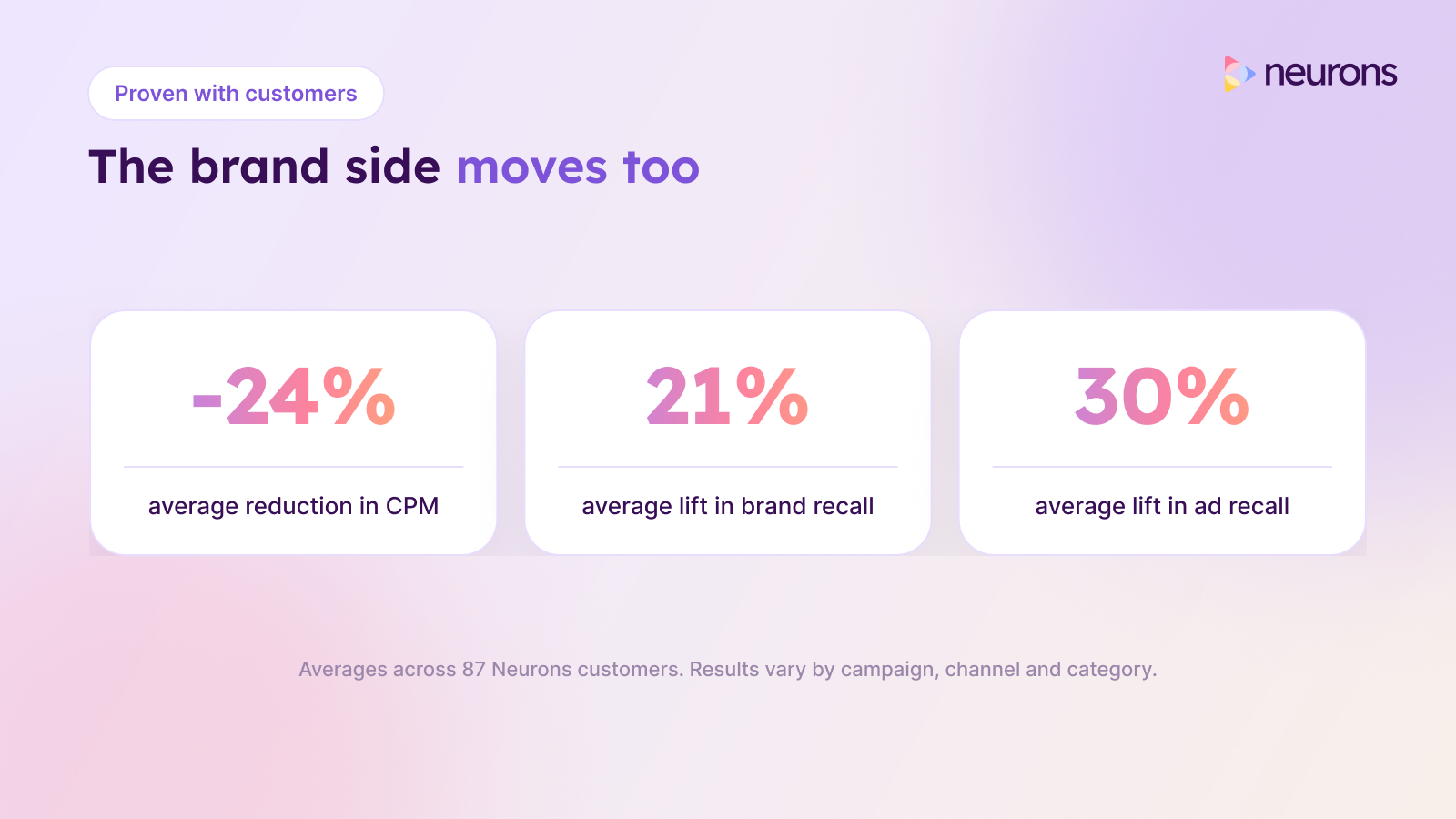
The brand side moves too. Across 87 Neurons customers, optimized assets showed a 24% average reduction in CPM, a 21% average lift in brand recall and a 30% average lift in ad recall. Results vary by campaign, channel and category.
Read the full Neurons Performance Report.
"Working with Neurons drastically reduces the time and money we spend on A/B testing. We get results in seconds and optimize as we go." - Joris Wechsler, Tre Kronor Media
Tre Kronor Media replaced slow live A/B test cycles with pre-launch predictions and saw a 32% average CTR uplift across display campaigns. For client Rexel, 30 minutes of changes lifted CTR by 73%. Read how Tre Kronor Media launches with ads that are already optimized.
Schibsted pre-tests client creatives before distribution. For electricity supplier Ztrm, a few layout and CTA changes raised display CTR by 29.5%. Read how Schibsted grounds advertiser conversations in evidence.
Mindshare Lithuania analyzed 1,800+ ads in a few hours to back its media strategy with attention data, and won a six-agency pitch. Read how Mindshare made its media strategy stronger.
Make Your Next Media Decision with Brand Impact in View
Every decision to test, revise, scale, or cut an asset shapes what your media budget delivers. Adding brand data gives your team more evidence for those decisions and keeps brand-building objectives visible throughout campaign optimization.
Explore Media Iteration with Neurons and book a demo to see how attention, memory, and impact data can support your team’s media decisions.