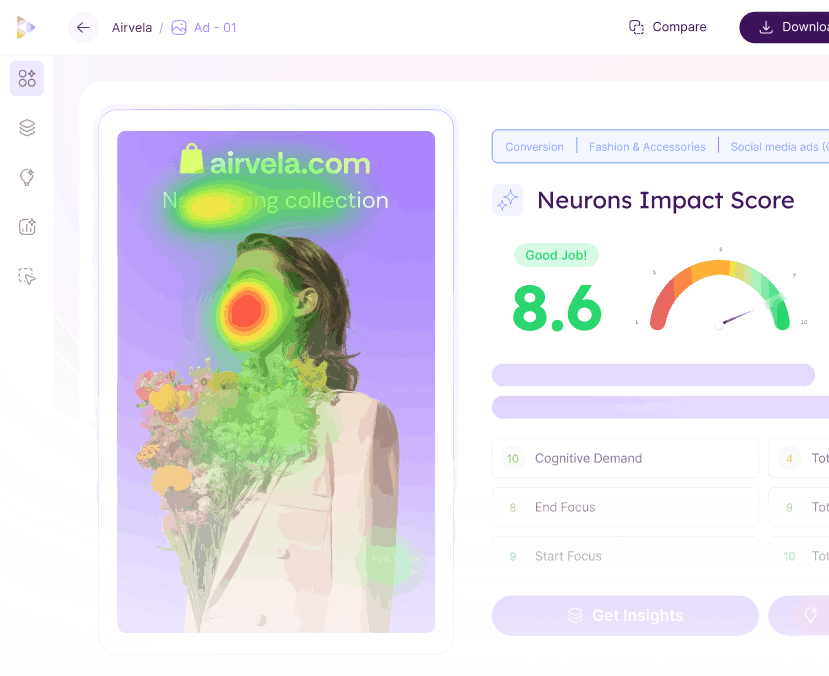

Brand management shapes how a brand is presented and perceived
Brand management is the process of shaping and maintaining how a brand is perceived by its target audience.
It combines strategy, execution, and measurement to guide the brand and track performance over time.
Brand management differs from branding and marketing. Branding defines a brand's visual and verbal identity, while marketing promotes the brand and its products or services. Brand management aligns branding and marketing to ensure consistency across all touchpoints.
Learn how brand building creates long-term growth
What Does Brand Management Actually Include?
Brand management includes five core components: strategy, identity, assets, communication, and measurement.
- Strategy
Strategy defines how the brand is positioned in the market and how it stands out from competitors.
- Identity
Identity covers the visual and verbal elements of the brand, such as logos, colors, tone, and messaging.
- Assets
Assets include all brand materials used across channels, such as websites, ads, packaging, and content.
- Communication
Communication ensures the brand message stays clear and consistent across all touchpoints.
- Measurement
Measurement tracks brand performance using metrics like awareness, perception, and recall.
Why Is Brand Management Important for Business Growth?

Brand management is important for business growth because it shapes how customers recognize, trust, and choose a brand.
When a brand is properly managed, it becomes clear and easy to understand, which in turn increases perceived value. Higher perceived value attracts more customers, supports premium pricing, and increases revenue. It also keeps customers coming back.
This process builds brand strength. Brand strength supports steady demand, strengthens customer loyalty, and sustains revenue over time.
For example, a well-managed brand communicates a clear benefit and delivers it consistently. As a result, customers see it as more valuable, leading to repeat purchases and stronger loyalty. A poorly managed brand sends mixed signals and struggles to retain customers.
The key benefits of brand management are outlined below.
- Higher and More Stable Demand
A strong brand attracts customers more consistently over time.
- Stronger Customer Loyalty
Customers return more often when they trust and recognize the brand.
- Greater Pricing Power
Strong brands can charge higher prices without losing customers.
- Higher Revenue
Better demand and pricing lead to increased overall revenue.
- More Consistent Business Growth
Stable demand and loyal customers support steady growth over time.
See how strong brands drive measurable business growth
How Does Brand Management Work in Practice?
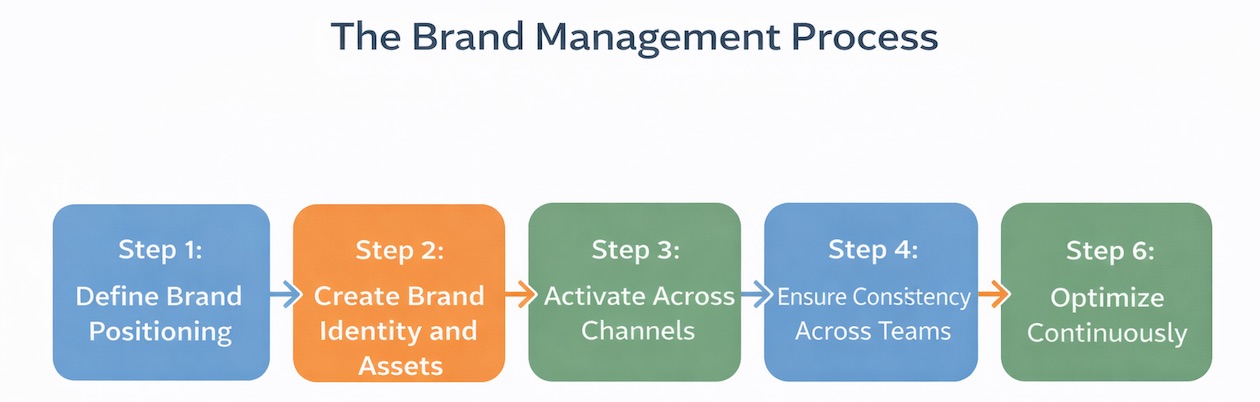
Brand management works through a step-by-step framework that guides how a brand is defined, presented, and improved over time.
The steps to follow are outlined below.
Step 1: Define Brand Positioning
Clarify what the brand stands for and how it should be perceived.
Step 2: Create Brand Identity and Assets
Develop visual and verbal elements such as logos, colors, and messaging.
Step 3: Activate Across Channels
Apply the identity across marketing channels, products, and customer touchpoints.
Step 4: Ensure Consistency Across Teams
Align teams so the brand is presented the same way everywhere.
Step 5: Measure Brand Performance
Track key metrics such as awareness, perception, and recall.
Step 6: Optimize Continuously
Refine the brand based on insights and performance data.
What Is the Brand Management Process Step by Step?
The brand management process follows six key steps, expanded below.
- Define Brand Positioning
Define the brand’s target audience, core value, and point of difference. To shape this clearly, use methods such as customer research and competitor analysis. For example, Apple positions itself around simplicity and premium design, which guides how people see its products.
- Create Brand Identity and Assets
Translate the positioning into visual and verbal elements such as logos, colors, typography, and tone of voice. This ensures the brand is easy to recognize and remember across different contexts. Coca-Cola, for instance, uses a consistent red color, distinctive font, and simple messaging to maintain strong recognition.
- Activate Across Channels
Apply the brand consistently across marketing channels, products, and customer touchpoints. This keeps the brand visible and reinforces the same message wherever customers interact with it. For example, Nike maintains a consistent tone and visual style across ads, stores, and digital platforms.
- Ensure Consistency Across Teams
Align internal teams with clear brand guidelines so every interaction reflects the same message. This prevents mixed signals and strengthens how the brand is perceived. Companies like Airbnb maintain a unified tone across marketing, product design, and customer support.
- Measure Brand Performance
Track metrics such as awareness, perception, and recall to gauge the brand's performance. This provides clear insight into what is working and what needs improvement. Netflix monitors engagement and retention data to understand how audiences respond to its brand and content.
- Optimize Continuously
Refine positioning, messaging, and execution based on performance insights and market changes. This keeps the brand relevant and aligned with customer expectations over time. For example, Spotify updates campaigns and user experience based on listening behavior and trends.
How Do You Define and Position a Brand?

To define and position a brand, identify who the brand serves, what it stands for, and how it differs from competitors.
Brand positioning is the space a brand occupies in the minds of its target audience. The target audience is the specific group of people that the brand seeks to serve. Once the target audience is clear, differentiation defines why the brand should be chosen over others.
To strengthen positioning, define brand purpose by stating why the brand exists beyond making a profit. A clear value proposition is also developed by outlining the specific benefit the brand delivers to its target audience. These elements give the brand a clear direction and strengthen how the brand is perceived.
Strong positioning makes a brand easy to recognize and choose. Apple focuses on simplicity and premium design, while Nike centers on performance and motivation, which shapes how both brands are perceived.
A simple positioning framework can be used to define this clearly:
For [target audience], [brand] is the [category] that [key benefit], because [reason to believe].
How Do You Create and Manage Brand Assets?
To create and manage brand assets, define the key elements that represent the brand and ensure consistent use across all touchpoints.
Brand assets are the visual and verbal elements that make a brand recognizable, including logos, colors, typography, imagery, and tone of voice. These elements shape how the brand looks and sounds in every interaction.
Brand guidelines define how the brand assets are used. These guidelines also ensure the brand stays consistent across teams and channels.
Consistency strengthens brand recognition and trust. When the same visuals and messaging appear across ads, websites, and packaging, the brand is easier to remember and appears more reliable. For example, Starbucks uses consistent colors, store design, and tone across its locations and digital platforms.
Digital asset management systems help ensure consistency by storing, organizing, and distributing brand assets in one place. These systems give teams access to the latest versions of files and reduce errors in how the brand is applied.
How Do You Manage Brand Consistency Across Teams and Channels?

To manage brand consistency across teams and channels, set clear rules, align teams, and control how brand assets and messaging are used at scale.
As teams grow and channels expand, maintaining consistency becomes harder. Different teams may interpret the brand in different ways, and messaging can drift across marketing, sales, and customer support. This creates mixed signals and weakens brand perception.
Governance systems and workflows help prevent this by setting clear rules and approval processes. These systems define how the brand should be presented.
Consistency also depends on cross-functional collaboration. Marketing, product, and support teams must work from the same guidelines and communicate regularly. Shared tools also ensure all teams follow the same standards.
Companies like Microsoft maintain a unified tone across product design, campaigns, and customer interactions by aligning teams around shared brand standards.
The best practices for managing brand consistency are listed below.
- Define clear brand guidelines to help teams understand how the brand should look and sound.
- Use shared tools for brand assets to make it easier to find the right files and avoid mistakes.
- Set approval workflows to catch issues early before anything goes live.
- Train teams to apply brand standards correctly in different situations.
- Review brand usage regularly to keep it consistent across channels.
How Do You Measure Brand Performance and Impact?
To measure brand performance and impact, track key metrics that show how people recognize, remember, and choose a brand over time.
Measurement is critical because it shows what is working and what needs to change. Without measurement, decisions rely on guesswork, which makes it harder to improve performance.
Brand tracking provides a structured way to measure performance over time using key performance indicators such as awareness, recall, preference, and attention.
- Awareness measures how many people recognize the brand
- Recall measures how easily people remember the brand
- Preference shows whether people choose the brand over competitors
- Attention measures how well marketing captures interest
These insights guide decisions across marketing and strategy. For example, low awareness may signal a need to increase reach campaigns, while weak preference may lead to changes in messaging or positioning.
Understand how brand tracking measures awareness and perception over time
What Are the Most Effective Brand Management Strategies?
The most effective brand management strategies are storytelling, consistency, emotional branding, differentiation, and personalization.
- Storytelling
Stories make the brand easier to understand and remember. Red Bull uses storytelling around extreme sports and adventure to connect with its audience.
Tell clear and consistent stories that reflect the brand’s values and purpose. This strengthens recall and makes the brand more meaningful to customers.
- Consistency
Consistency strengthens recognition and builds trust over time. Google, for instance, uses consistent colors, typography, and interface design across its products and platforms.
Brands should apply the same visuals, tone, and messaging across all channels and touchpoints.
- Emotional Branding
Emotional branding increases loyalty and makes the brand more memorable. For example, Dove focuses on real beauty and self-confidence in its campaigns, which builds an emotional connection with its audience.
Create messages and experiences that connect with how people feel, not just what they need.
- Differentiation
Clear differentiation helps the brand stand out and gives customers a reason to choose it. Tesla focuses on innovation and sustainability in its products and messaging, which sets it apart from traditional car brands.
Focus on what makes the brand distinct and reinforce it in every interaction.
- Personalization
Personalization tailors brand experiences based on user behavior and preferences. Amazon uses browsing and purchase data to recommend products.
Use customer data to deliver relevant content, offers, and experiences. This improves engagement and increases the likelihood of conversion.
How Does Brand Management Relate to Brand Equity and Loyalty?
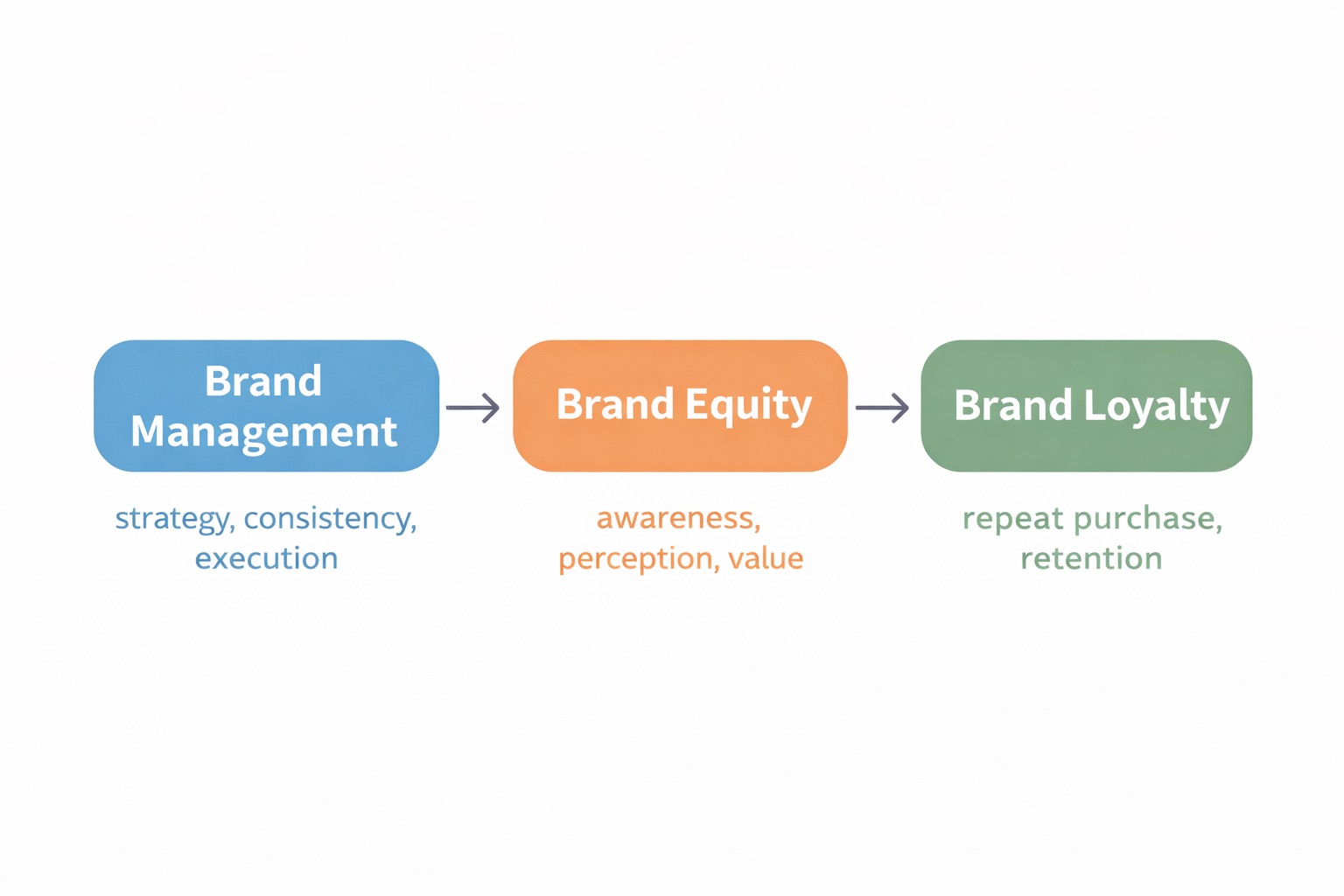
Brand equity is the value a brand holds in the minds of customers. Brand loyalty is the tendency of customers to choose the same brand repeatedly over time.
Brand management builds brand equity by shaping how people see and remember the brand. This is done through consistent messaging and experiences. Strong brand equity then supports brand loyalty, as customers are more likely to return to a brand they recognize, trust, and prefer.
For example, when a brand communicates a clear benefit consistently across channels, people understand what it stands for and why it matters. This builds perceived value, which makes customers choose the brand more often and keep coming back over time.
What Tools and Systems Are Used in Brand Management?
Brand management tools and platforms help teams create, manage, and measure brand activity at scale. These tools fall into three main categories: asset management tools, analytics tools, and collaboration tools.
- Asset Management Tools
Asset management tools store and organize brand assets in one place. These tools help teams find the right files quickly and avoid errors.
- Analytics Tools
Analytics tools track brand performance through metrics such as awareness, perception, and engagement. Teams use this data to understand what is working and where to improve.
- Collaboration Tools
Collaboration tools support communication and coordination across teams. With collaboration tools, teams stay aligned and are able to execute the brand consistently.
These tools become necessary as teams grow and brand activity spreads across multiple channels. Without them, assets become scattered, messaging becomes inconsistent, and performance becomes harder to track.
Explore how AI improves creative performance and brand impact
What Does a Brand Manager Do?
A brand manager oversees how a brand is presented and ensures it stays consistent, relevant, and effective across all touchpoints.
The key responsibilities of a brand manager are listed below.
- Define and maintain brand positioning and strategy
- Manage brand identity and assets across channels
- Oversee campaigns and ensure consistent messaging
- Monitor brand performance using key metrics
- Coordinate teams to align brand execution
What Are Examples of Successful Brand Management?
Successful brand management shows up in how clearly a brand is positioned, how consistently it is executed, and how well it connects with customers. The examples below show how this works in practice.
- IKEA

IKEA differentiates itself through affordable, self-assembled furniture and a unique in-store experience. The brand defines a clear position around low-cost, functional design, which guides its product design, pricing, and store layout.
The store follows a guided path that exposes customers to a wide range of products, while flat-pack design keeps costs low.
This approach is applied consistently across locations and channels, reinforcing the brand’s promise. As a result, IKEA maintains strong global demand and remains one of the most recognizable furniture brands worldwide.
- McDonald’s

McDonald’s maintains consistent branding, menu structure, and customer experience across locations. The brand builds a clear identity through its visual system, core menu, and service style, then applies it across all markets.
Customers know what to expect whether they visit in London or New York, even when menus are adapted for local tastes. This consistent execution across teams and channels builds trust and supports high recognition. It also contributes to steady global revenue and repeat purchases.
- Spotify

Spotify uses data-driven personalization to shape its brand experience. The brand collects and uses listening data to create tailored content such as Discover Weekly and Spotify Wrapped.
These features are activated across the app and social platforms, making the experience feel personal and shareable. This continuous use of data helps Spotify refine its offering over time.
As a result, Spotify keeps users engaged, strengthens retention, and continues to grow its global user base.
What Are Common Brand Management Challenges?
Brand management faces several common challenges as teams grow and brand activity expands across channels. The key challenges and how to address them are outlined below.
- Inconsistency Across Channels
Different teams may present the brand in different ways, which weakens recognition and trust.
Set clear rules, use shared tools, and review brand usage regularly to keep execution aligned.
- Scaling Across Teams and Markets
Growth introduces more channels, regions, and stakeholders, which makes it harder to maintain a unified brand.
Standardize workflows and adapt messaging carefully for local markets without losing core identity.
- Measuring Brand Performance
Brand impact is not always easy to quantify, especially over the short term.
Use consistent tracking methods and focus on key metrics such as awareness, perception, and loyalty to guide decisions.
- Internal Misalignment
Teams may interpret the brand differently, which leads to mixed messaging and inconsistent execution.
Align teams through clear communication, training, and shared processes to ensure everyone follows the same direction.
How Is Brand Management Evolving With AI and Data?
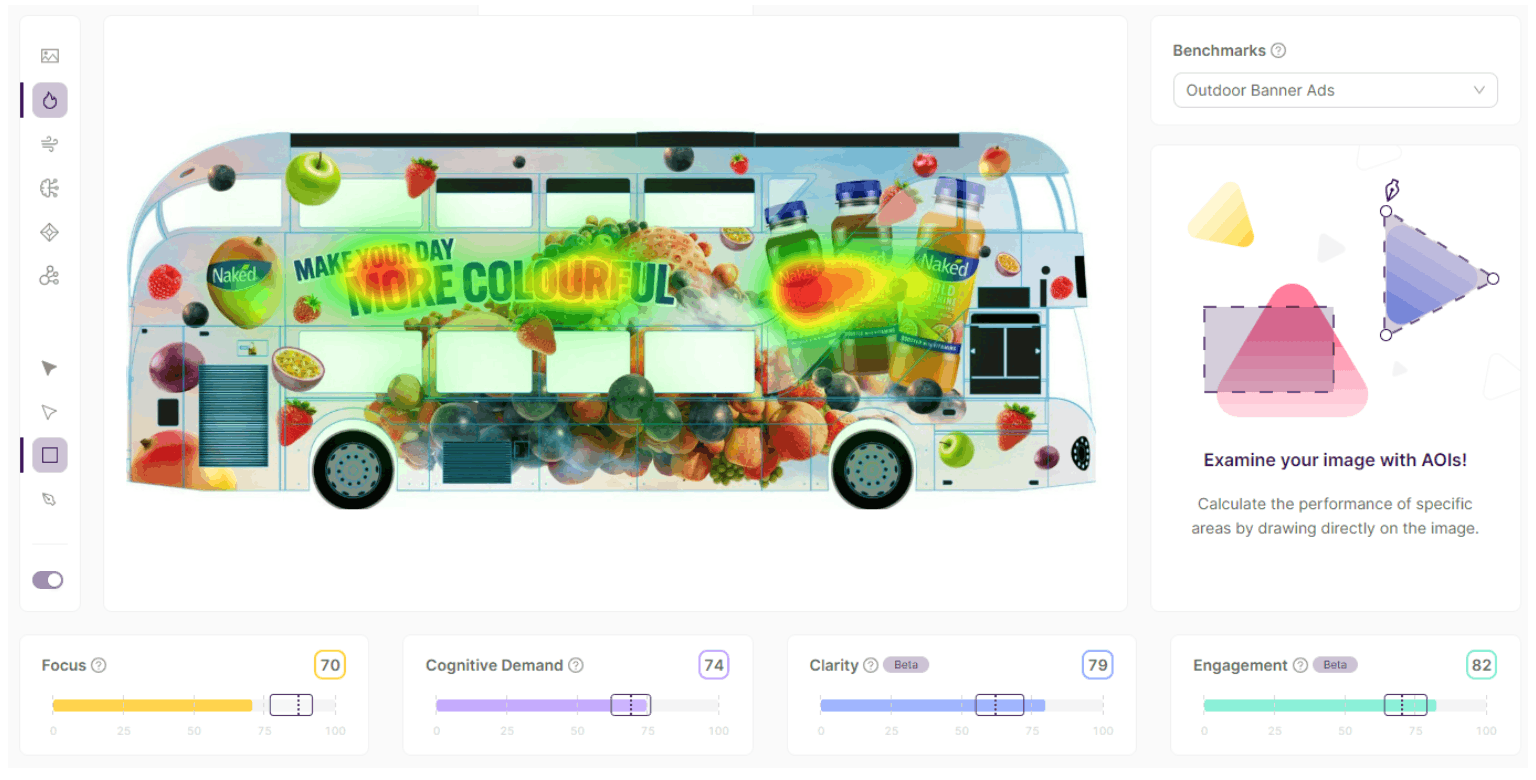
Brand management has changed with the rise of AI and data. Brands now rely more on data to guide decisions and improve performance.
AI and automation improve how brands create, test, and optimize content. These systems analyze large amounts of data to identify patterns, predict outcomes, and guide creative decisions. This reduces guesswork and helps teams focus on what works.
Attention measurement is also a key part of this shift. Tools like Neurons AI analyze visual attention to predict which parts of a creative will attract focus before launch. This allows teams to refine designs early and improve performance.
Data from these innovations improves brand decisions by linking creative performance to real outcomes. Metrics such as attention, recall, and engagement show how people respond to brand activity, which helps teams adjust messaging, visuals, and strategy.
This shift supports performance-driven branding, where decisions are based on measurable results rather than assumptions. Brands can test ideas faster, improve consistency, and build stronger connections with their audience over time.
Discover how AI predicts attention and improves marketing effectiveness
What Are the Key Takeaways for Effective Brand Management?
The key takeaways for effective brand management are summarized below.
- Follow a structured process: define positioning, build identity, activate across channels, ensure consistency, measure performance, and optimize continuously.
- Define a clear brand positioning based on the target audience and differentiation.
- Build a strong identity using consistent visuals and messaging.
- Apply the brand consistently across all teams and channels.
- Measure brand performance using metrics such as awareness, recall, and preference.
- Use data and AI to improve decisions and optimize creative performance.
- Focus on long-term consistency to build trust, loyalty, and steady growth.