According to SQ Magazine, the average social media user spends only about 8.25 seconds viewing a single post before moving on. Capturing attention within that brief window is one of the biggest challenges in social media marketing.
This challenge exists because social media is neurologically different from other marketing channels. Every social media platform is designed to stimulate the brain’s dopamine reward system by combining variable reinforcement with social validation. Understanding what drives engagement, therefore, requires more than traditional marketing research.
Neuromarketing solves this challenge by combining neuroscience and marketing to uncover the subconscious drivers of engagement that surveys and focus groups often miss.
This guide explains how to use neuromarketing to create more effective social media content in seven simple steps.
Explore how neuromarketing is applied across social media, digital marketing, and brand advertising
What Is Neuromarketing and Why Does It Matter for Social Media in 2026?
Neuromarketing is the use of neuroscience to better understand consumer behavior. Instead of relying on surveys or self-reported feedback, it measures how audiences respond to marketing content at a subconscious level.
To achieve this, neuromarketing combines electroencephalography (EEG), eye tracking, facial coding, and predictive AI to measure attention, emotion, memory, and other subconscious signals. These insights give marketers a clearer view of audience behavior than traditional research alone.
Neuromarketing has become increasingly important for social media because users make split-second decisions inside crowded feeds. Brands often have only two to four seconds to grab attention before users move on to the next post. In 2026, this matters even more as content volume rises, creative cycles move faster, and brands need stronger evidence before publishing.
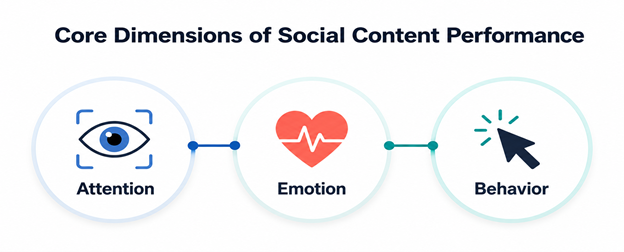
Social media neuromarketing focuses on three core dimensions that influence content performance. These dimensions are outlined below.
- Attention identifies the visual elements, headlines, hooks, and creative layouts that stop users from scrolling and encourage them to keep watching or reading.
- Emotion measures the feelings that strengthen engagement, increase sharing, improve brand recall, and build stronger connections with audiences over time.
- Behavior examines the factors that influence meaningful actions, including clicks, follows, saves, purchases, and other conversion-focused outcomes.
Learning how to use neuromarketing on social media helps brands replace guesswork with evidence about what audiences notice, feel, remember, and act on. This approach supports stronger content decisions, more effective campaigns, and better social media performance.
Watch the webinar: How to Scale Brand Growth on Social Media
Why Is Social Media a High-Stakes Environment for Neuromarketing?

Social media is a high-stakes environment for neuromarketing because every post competes for limited user attention in fast-moving feeds. Platforms are designed to maximize engagement, leaving brands only moments to influence user behavior.
The three distinctive characteristics outlined below explain why social media requires a different approach to content creation.
- The Dopamine Loop
Dopamine is a neurotransmitter that plays a central role in the brain’s reward and motivation system. Social media platforms stimulate dopamine through unpredictable rewards, where positive interactions such as likes, comments, shares, and notifications occur at irregular intervals.
Every rewarding interaction reinforces the desire to keep checking for the next reward. Over time, the brain learns to repeat this scrolling behavior, causing attention to shift rapidly from one post to the next.
- The Two to Four Second Attention Window
Continuous scrolling encourages users to evaluate content almost instantly. During the first few seconds, the limbic system, the part of the brain responsible for emotion and instinctive reactions, determines whether a post deserves attention.
The prefrontal cortex then evaluates the content more logically and supports deliberate decision-making.
This sequence makes the opening moments of a post especially important. Creative elements such as visual hierarchy, compelling hooks, and emotionally relevant messaging determine whether users continue engaging or keep scrolling.
- Social Validation Circuits
Social feedback, such as likes, comments, and shares, activates the nucleus accumbens, one of the brain’s primary reward centers. Positive social feedback reinforces the value of that content, increasing the likelihood of similar engagement in the future.
This creates a reinforcement loop where higher engagement attracts more visibility, leading to additional interactions and stronger brand associations.
Understanding these neurological mechanisms gives brands a competitive advantage. When content aligns with the brain’s natural patterns of attention, emotion, and behavior, it earns stronger engagement, more shares, higher conversions, and better campaign performance.
How To Use Neuromarketing on Social Media: 7 Practical Tips
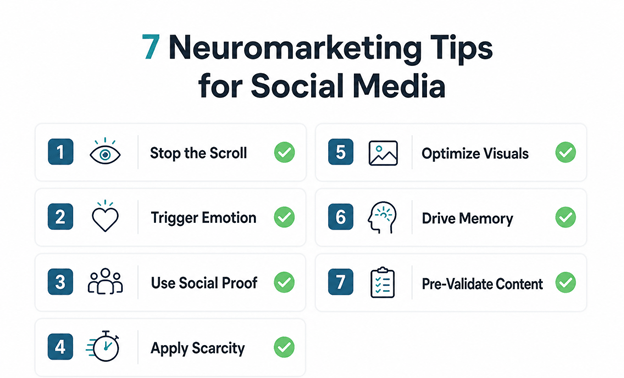
To use neuromarketing on social media effectively, brands need to apply neuroscience principles throughout the content creation process.
The seven practical tips below explain how to capture attention, strengthen engagement, and encourage meaningful user actions.
1. Stop the Scroll in the First Two Seconds

The first two seconds determine whether users engage with a post or continue scrolling. During this brief window, the brain automatically filters large amounts of information to decide what deserves attention. This process happens before users consciously evaluate the content, making involuntary attention triggers essential for improving social media performance.
The brain naturally pays attention to information that stands out from its surroundings. Elements such as strong visual contrast, human faces, unexpected patterns, and curiosity immediately attract attention by interrupting the brain’s automatic filtering process. Capturing this initial attention creates an opportunity to increase engagement throughout the rest of the post or video.
How To Apply This in Your Content
- Fast-Paced Thumb-Stoppers: Open with motion, a surprising visual, or an immediate shift in scene to interrupt automatic scrolling.
- High Visual Contrast: Use contrasting colors, sizes, lighting, or composition to help important elements stand out quickly in crowded social media feeds.
- The Human Element: Include faces, eye contact, and genuine emotional expressions to naturally attract visual attention and strengthen audience connection.
- Pattern Interruption: Break expected visual patterns with an unusual angle, unexpected text, or a contrast between what users expect and what they see.
- Open Loops and Text Hooks: Write headlines that create curiosity without immediately revealing the answer to encourage continued viewing or reading.
- The Von Restorff Effect: Make one important element visually distinctive so it stands out from everything around it, increasing the likelihood that users notice and remember it.
2. Trigger Emotion Before Logic

The limbic system processes information emotionally before logical thinking begins. Therefore, creating an emotional response early encourages users to keep engaging with the content.
The four main creative elements that strengthen emotional responses are outlined below.
- Authentic Facial Expressions: Genuine emotional expressions build trust and help audiences connect with content on a personal level.
- Relatable Storytelling: Stories built around familiar experiences, challenges, or aspirations create stronger emotional connections than facts alone.
- Music and Audio: Background music, sound effects, and voiceovers reinforce emotional tone and shape how audiences experience content.
- Color Psychology: Colors influence mood, perception, and emotional responses before audiences consciously evaluate the message.
The goal is to create high-arousal emotions such as awe, surprise, excitement, and even anger. Compared with low-arousal emotions like contentment, high-arousal emotions generate more sharing and make content more memorable.
How To Apply This in Your Content
- Create a strong emotional peak early in the viewing experience before introducing product information or detailed explanations.
- Reinforce that emotional response with rational messaging, such as product benefits or supporting evidence.
- Use relatable stories to evoke emotions that make audiences more receptive to your message.
Learn how to measure emotions in advertising
3. Use Social Proof and Community Signals

Mirror neurons and social validation circuits explain why people are influenced by the actions and experiences of others. Seeing other people trust, recommend, or engage with a brand increases confidence and reduces uncertainty.
The four most effective forms of social proof on social media are outlined below.
- User-generated content showcases authentic customer experiences that strengthen trust and credibility.
- Customer reviews provide independent feedback that reassures potential customers before they make a decision.
- Testimonials share real success stories that reinforce brand claims and build confidence.
- Influencer partnerships introduce products through trusted creators who have already established credibility with their audiences.
How To Apply This in Your Content
- Regularly feature customer reviews, user-generated content, testimonials, and authentic creator partnerships instead of relying only on promotional posts.
- Encourage customers to share their experiences and participate in conversations around your brand.
- Highlight genuine customer feedback and respond to community interactions to strengthen trust and encourage engagement.
4. Apply Scarcity and Urgency Triggers
The brain assigns greater value to opportunities that are rare or time-limited. This response is driven by loss aversion, where people are motivated to avoid losing valuable opportunities. Scarcity and urgency, therefore, encourage faster decision-making by increasing the perceived value of an offer.
When scarcity is combined with social proof, it creates a stronger neurological impact by increasing trust while reinforcing the fear of losing the opportunity.
How To Apply This in Your Content
- Use genuine scarcity triggers such as limited-time offers, low stock alerts, exclusive launches, or registration deadlines.
- Combine scarcity with social proof by highlighting customer reviews, recent purchases, or the number of people who have already claimed the offer.
- Pair urgency with a clear call to action. For example, “Join over 2,000 marketers who have already registered before enrollment closes on Friday.”
5. Optimize Visuals Using Eye-Tracking Principles
The brain processes visual information significantly faster than text, making visual design one of the strongest factors influencing social media performance. However, eye-tracking research shows that visual attention is not distributed equally across every element. Instead, users follow predictable scanning patterns that determine what they notice first, engage with, or ignore.
The following eye-tracking insights explain how users visually navigate social media content.
- F-Pattern Scanning: Users primarily focus on the top and left sections of text-heavy content before gradually scanning downward.
- Z-Pattern Scanning: Viewers naturally scan simpler layouts in a Z-shaped path, moving across the top, diagonally through the center, and across the bottom.
- Visual Gravity: Visual elements such as large objects, bright colors, faces, strong contrast, and movement naturally attract attention before surrounding elements.
How To Apply This in Your Content
- Position headlines, branding, and key messages where users naturally look first.
- Arrange content to follow natural scanning patterns and guide attention toward the most important information.
- Use strong visual contrast, faces, and movement to establish a clear visual hierarchy.
- Remove unnecessary visual clutter so important elements receive more attention.
- Position calls to action where viewers naturally finish scanning the content.
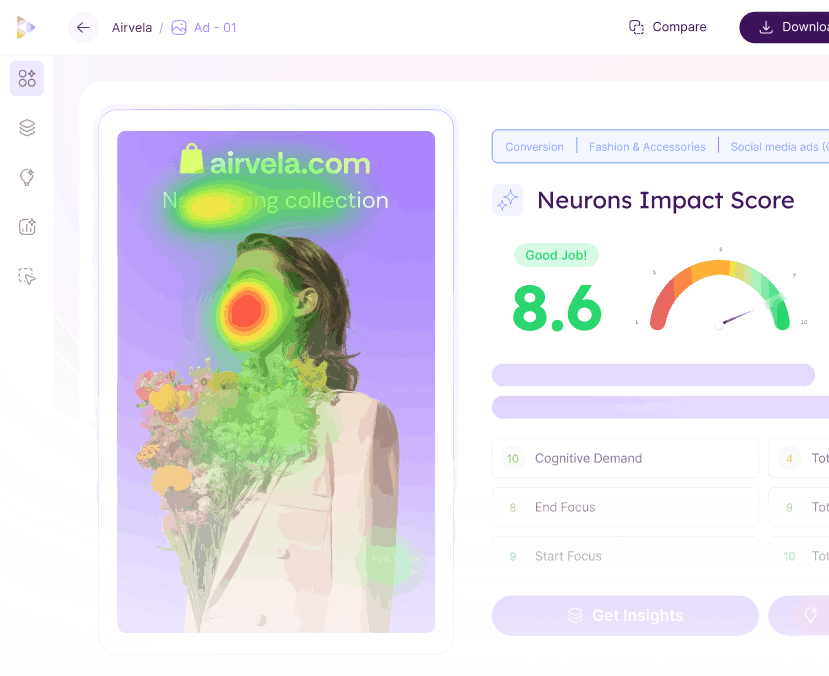
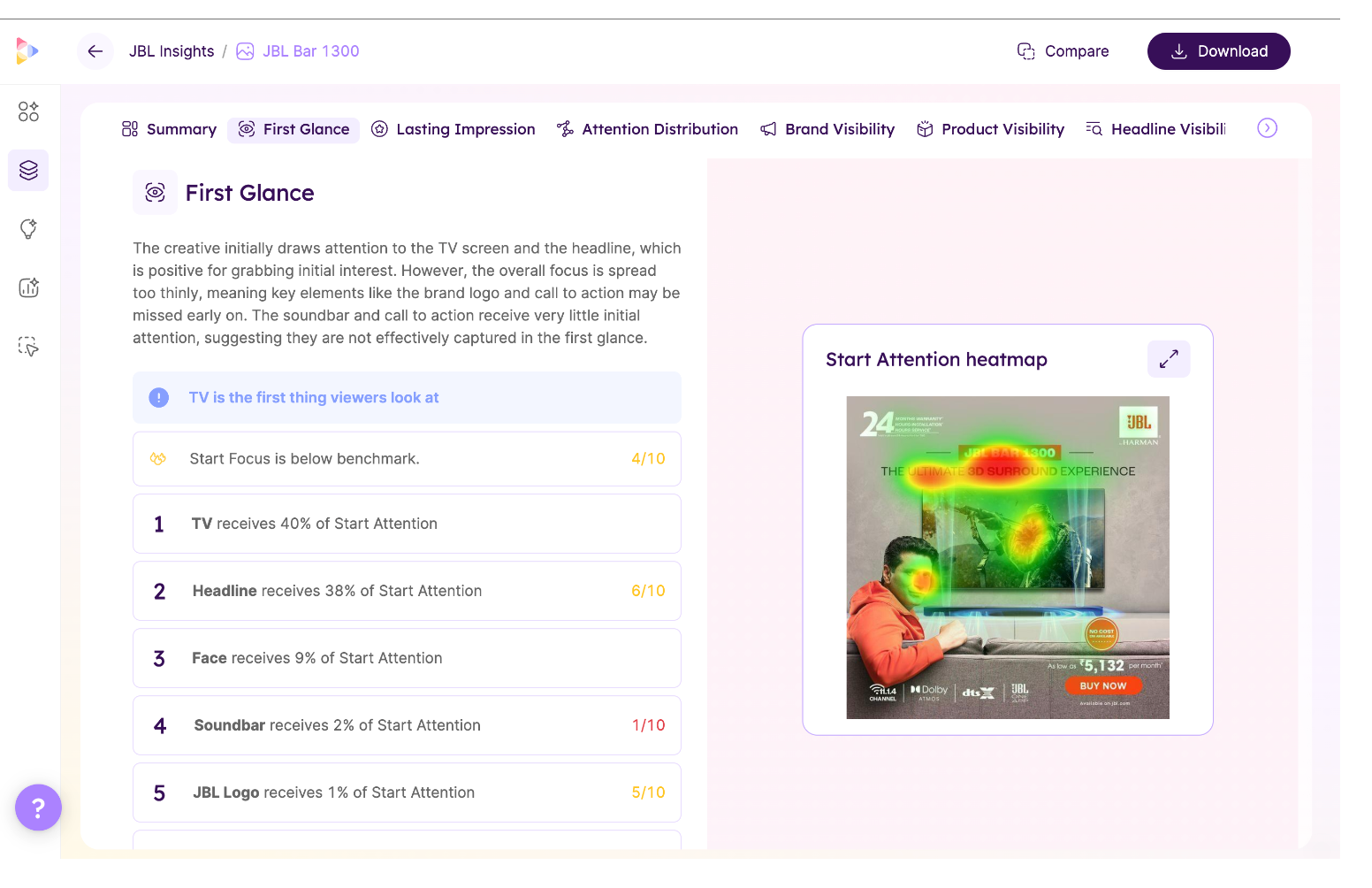
Neurons AI attention heatmaps predict where audiences are most likely to focus, helping teams identify overlooked branding, distracting elements, and weak calls to action before launch.
Steal the neuroscience tactics that make display ads impossible to ignore
6. Create Content That Drives Memory and Sharing
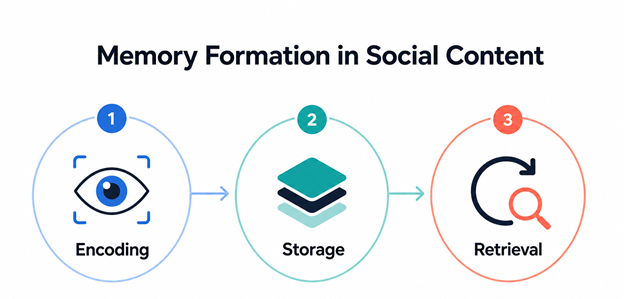
Memory formation on social media occurs in three stages: encoding, storage, and retrieval. Each stage plays a different role in how social media content is remembered.
- Encoding: Encoding is the process of taking in new information so the brain can store it for later. Strong hooks, eye-catching visuals, emotional storytelling, and clear messaging capture attention, allowing the brain to encode new information while users scroll.
- Storage: Storage is the process of strengthening encoded information so it remains in memory over time. Repeated exposure to consistent branding, recurring visual elements, and familiar content themes reinforces encoded information across multiple interactions.
- Retrieval: Retrieval is the process of recalling stored information when it is needed. Distinctive branding, memorable slogans, and recognizable brand assets make it easier for audiences to remember your content when they encounter your brand again or are ready to make a purchase.
Dopamine-triggering content also strengthens memory formation by creating rewarding experiences that audiences want to revisit. For example, introducing an unexpected outcome or building anticipation encourages users to engage with content and share it with others.
How To Apply This in Your Content
- Capture attention with strong hooks, eye-catching visuals, and emotional storytelling to support effective memory encoding.
- Reinforce key messages through consistent branding, recurring visual elements, and repeated content themes.
- Use distinctive brand assets such as memorable slogans, colors, and visual identity to improve brand recall.
- Create content that reveals unexpected outcomes or builds anticipation to encourage engagement and sharing.
7. Use Neuromarketing Tools for Pre-Validation
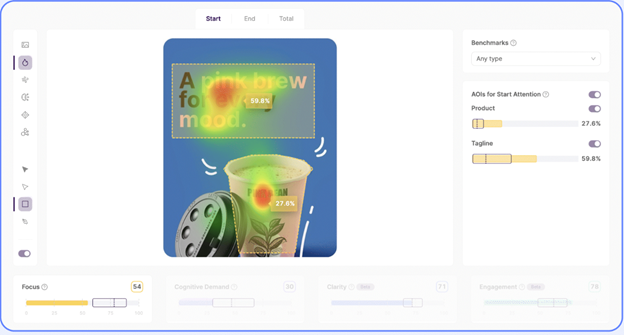
Launching social media ads without pre-validation increases the risk of investing advertising budgets in underperforming creatives. Today, predictive AI tools such as Neurons AI reduce this risk by making traditional neuromarketing more accessible without relying on specialized hardware. Instead, these platforms use AI models trained on neuroscience data to predict attention, memory, and engagement before content is published.
The Neurons AI pre-validation workflow for social media creatives follows these steps.
- Upload one or more social media creatives to the platform.
- Generate predictive attention, memory, and engagement scores for each creative.
- Review frame-by-frame attention heatmaps to identify where viewers are most likely to focus.
- Use automatic brand tracking to verify whether logos, products, and other branding elements receive sufficient visual attention.
- Review AI recommendations to identify weak visual hierarchy, distracting elements, and ineffective calls to action.
- Compare multiple creative variations to determine which version is predicted to perform best.
- Refine the creative using the recommended improvements.
- Validate the updated creative before publishing the campaign.
Pre-validation allows marketers to identify and correct creative weaknesses before launch, improving campaign performance while eliminating unnecessary advertising costs.
Predict which content will stick in memory before it goes live
How Does Neuromarketing Apply Across Different Social Media Platforms?

Neuromarketing is effective across all social media platforms because the same underlying neuroscience principles influence how users perceive, engage with, and respond to content.
However, the way those principles are applied differs across platforms due to differences in interface design, content formats, and browsing habits.
For example, users consume short-form videos differently from static images, while professional networking platforms encourage different engagement patterns than entertainment-focused platforms.
Understanding these platform-specific behaviors allows marketers to apply neuromarketing principles more effectively across different social media environments.
Instagram’s primary neuromarketing trigger is visual aesthetics and aspirational identity. The platform’s users make rapid judgments about content based on what they see, making first impressions especially important.
The following neuromarketing insights improve content performance on Instagram.
- High-Quality and Emotionally Resonant Imagery: High-quality visuals that evoke positive emotions capture attention and encourage longer engagement.
- Human Faces in the Upper Third of the Image: Faces naturally attract visual attention. Positioning them near the upper third of the image increases the likelihood that users notice them early while scrolling.
- Stories and Reels: Full-screen vertical formats create a more immersive viewing experience, helping brands capture and maintain user attention.
- User-Generated Content (UGC): Authentic customer content provides social proof at scale, strengthening trust and encouraging engagement.
Practical Application Tips
- Maintain a consistent visual identity by using recognizable colors, fonts, and editing styles across posts.
- Use carousel posts to encourage users to spend more time interacting with your content.
- Mix Reels, Stories, and feed posts to increase visibility across different areas of the platform.
- Encourage customers and creators to tag your brand, then repost high-quality user-generated content to strengthen authenticity and social proof.
Download the Complete Guide: How to Advertise on Instagram
TikTok
TikTok’s primary neuromarketing trigger is the brain’s release of dopamine, driven by variable rewards. Every swipe offers the possibility of discovering something new, encouraging users to keep scrolling and engaging with content.
The following neuromarketing insights improve content performance on TikTok.
- Authenticity Outperforms Polish: Natural, relatable content often generates stronger engagement than high-budget videos because it feels more genuine and trustworthy.
- The Hook Must Come in the First 1.5 Seconds: Users decide almost immediately whether to keep watching or continue scrolling. Opening with a strong visual, bold statement, or unexpected moment captures attention early.
- Sound and Music Are Neurologically Essential: Sound and music strengthen emotional responses, reinforce memory, and make content more immersive and memorable.
Practical Application Tips
- Participate in relevant trends, challenges, and hashtags while adapting them to your brand’s message.
- Keep videos concise and deliver the main message within the first few seconds instead of saving it for the end.
- Use trending sounds or original audio that complements the content and strengthens its emotional impact.
- Encourage comments, duets, stitches, or remixes to increase interaction and extend the reach of your content.
Discover TikTok marketing strategies that drive results
Facebook’s primary neuromarketing triggers are social validation and community belonging. The platform’s users are more likely to engage with content that creates meaningful interactions and strengthens connections with other people.
The following neuromarketing insights improve content performance on Facebook.
- Community-Oriented Content: Content that encourages discussion, shared experiences, or participation generates stronger engagement because it creates a sense of belonging.
- Meaningful Social Engagement: Facebook rewards content that generates genuine conversations, comments, and shares over passive interactions such as likes alone.
Practical Application Tips
- Build and actively manage Facebook Groups to create stronger communities around your brand.
- Host Facebook Live sessions, Q&A sessions, or community events to encourage real-time interaction.
- Encourage customers to tag friends or share posts when it adds value to the conversation.
- Share customer stories, community milestones, and behind-the-scenes updates to strengthen relationships and encourage organic discussion.
Learn how to advertise effectively on Facebook
Conclusion
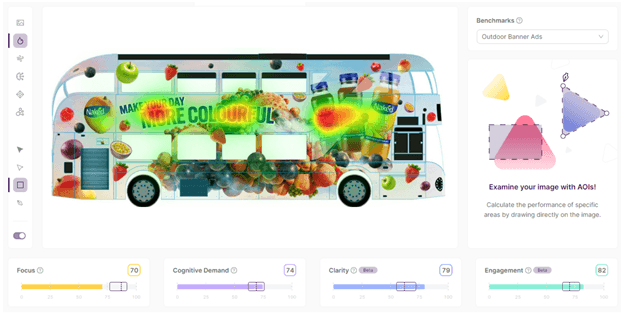
Using neuromarketing on social media starts with understanding how the brain responds to marketing content. Applying those insights through stronger creative, platform-specific strategies, and pre-validation helps brands capture attention, build stronger audience connections, and improve campaign performance.
Predictive AI makes neuromarketing more practical and accessible than ever. Tools such as Neurons AI allow marketers to test and refine creative before launch, reducing guesswork and improving results.
Learning how to use neuromarketing on social media also helps brands move from reactive content creation to more evidence-led campaign planning.
Ready to create smarter, higher-performing social media campaigns? Book a demo to see how Neurons AI can help you apply predictive neuromarketing to your next campaign.