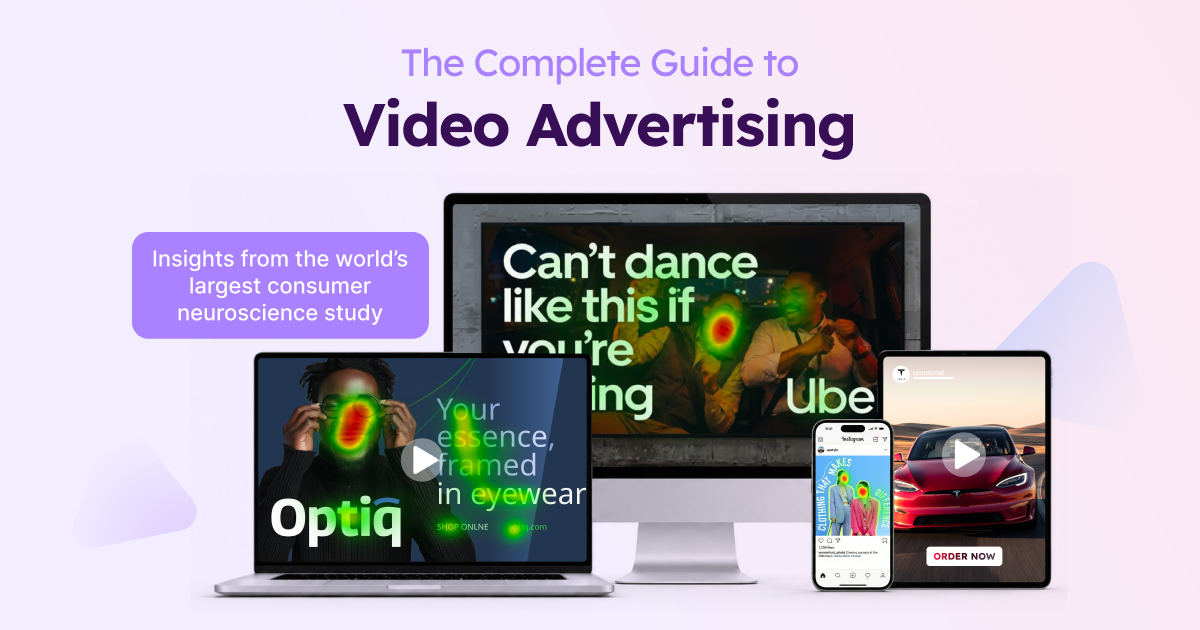
We used neuroscience to test video effectiveness across platforms. Together with EMERGE we created the world's largest consumer neuroscience platform study of its kind, with more than 7,600 participants.
The findings reveal the obvious: an ad in the cinema gets more attention and higher brand recall.
The findings also reveal the hidden layers: Video Banners are as effective as ads placed in front of movies, they just serve a different purpose and need to be approached differently.
It's not the format, it's how you approach it that determines the effectiveness.
Understand the effectiveness of ads based on:
- A framework identifying the key subconscious processes shared by successful advertising
- Specific metrics scored across platforms
- What affects memory recall and how lower scores doesn’t always equate failure, but an opportunity to rethink the creative assets and narrative
The full report gives you:
- Platform benchmarks that show where different video environments perform best
- A neuroscience-backed framework for assigning each platform a clear role
- Practical guidance for adapting creative to suit each environment while improving effectiveness
…and more.
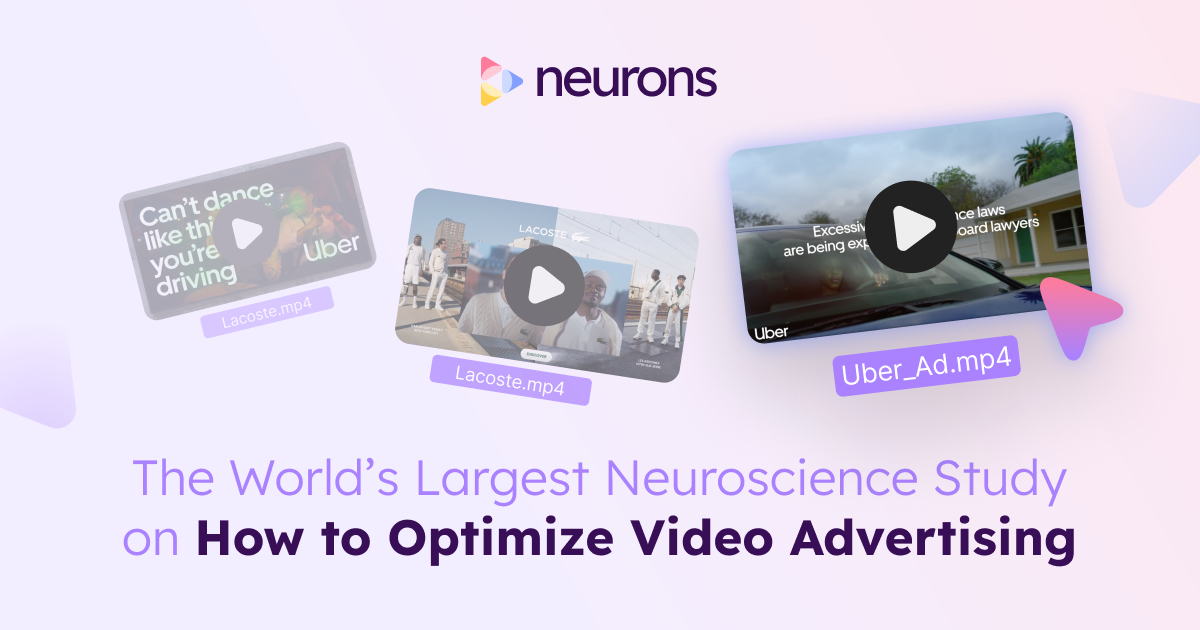
1. Video Banners Get Just 1.7 Seconds to Make an Impact
Viewability tells you whether an ad is seen. It does not tell you whether anyone paid attention.
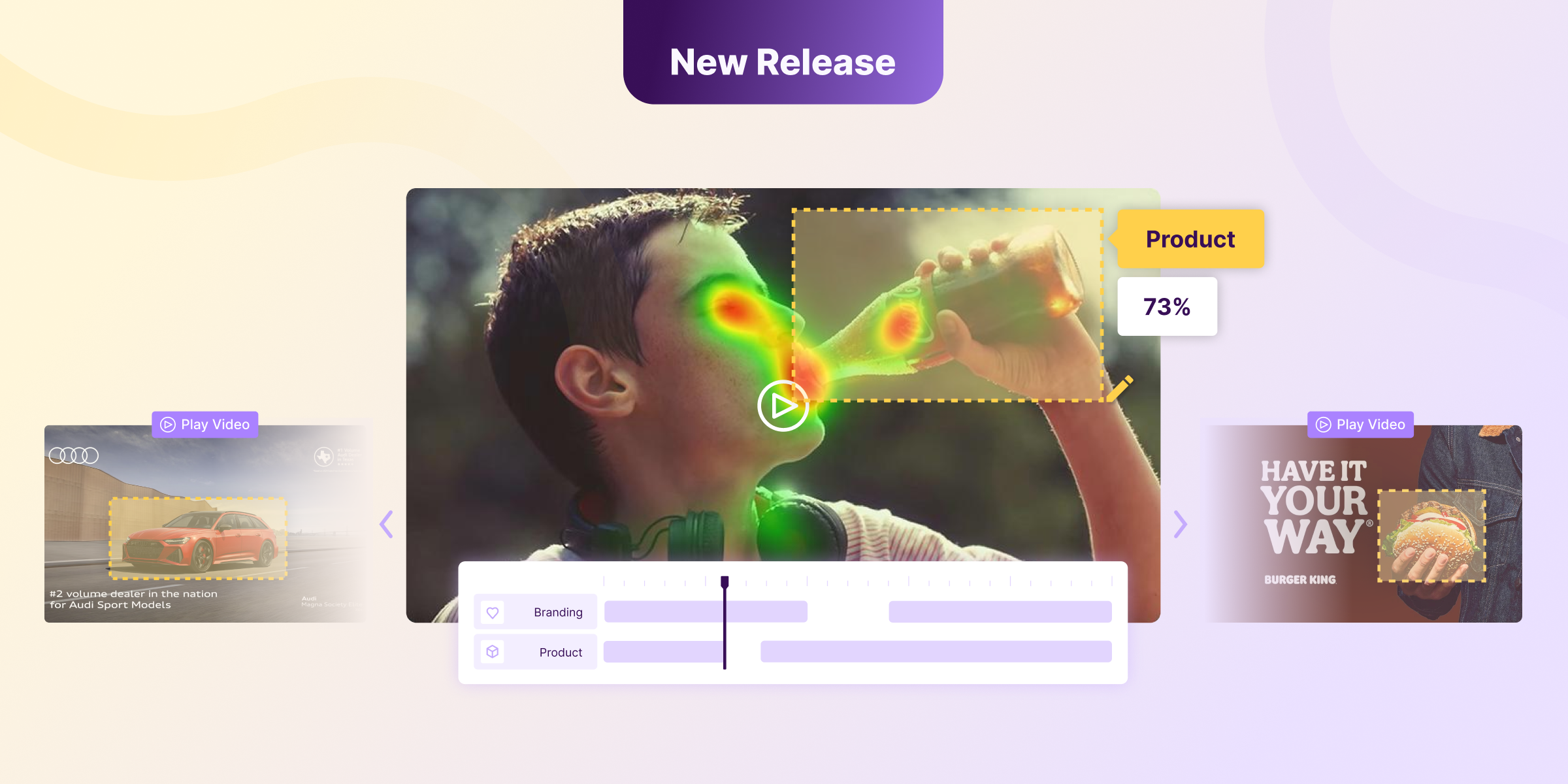
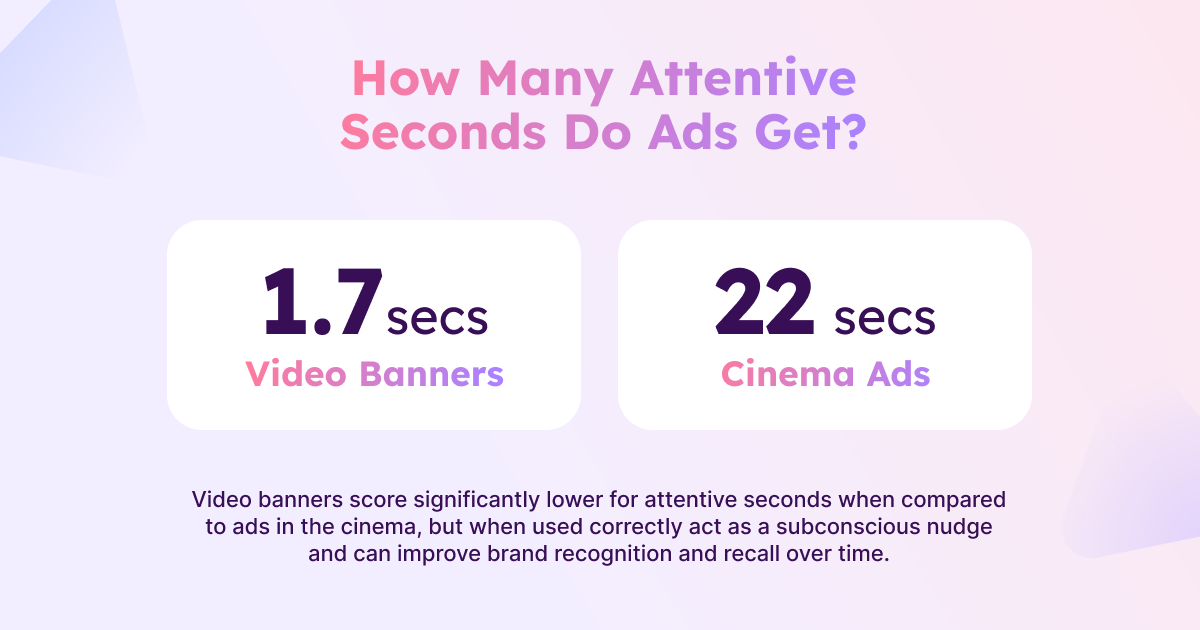
In the study, Video Banners averaged just 1.7 attentive seconds, even though they stayed in view longer.
That gap reflects the reality of high-speed, user-controlled environments, where people scroll past ads as part of the experience. It does not make banners ineffective. It changes the job they do.
Video Banners average just 1.7 attentive seconds.
You cannot tell a complicated narrative that builds high levels of trust in 1.7 seconds.
You can present a strong visual cue, communicate one clear message, and show distinctive brand assets. This will give consumers a subconscious nudge that will, over time, lead to improved brand recognition and recall.
Find more video attention benchmarks in the Report
2. A Small Screen Demands Almost as Much Mental Effort as an Ad Viewed in the Cinema
Small screens do not necessarily demand less mental effort.
Social Media ads recorded a cognitive demand of 81.7, compared to cinema’s 90, supporting the report's finding that raw processing effort is broadly similar across video environments.
What changes is how efficiently that effort is used.
In immersive settings, like the cinema, attention is focused on the ad and viewers have time to follow a narrative.
When it comes to social feeds and banners, the brain must also filter platform clutter and rapid context changes, leaving less capacity for a complex message.
This means that for the viewer’s brain to be able to process the information and for it to make an impact, you need both a simple message and visuals.
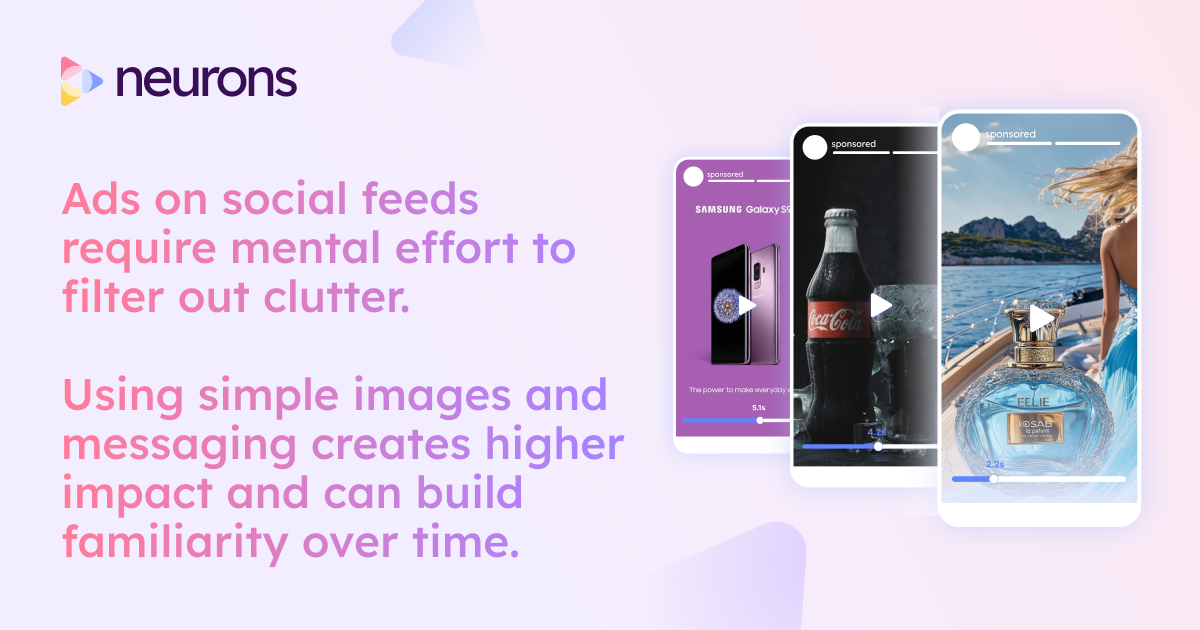
On social feeds and websites the brain has to filter out clutter, which is why you need a very simple and memorable ad.
This doesn’t make videos on Social Media ineffective. It simply changes how you shape the narrative for maximum impact.
Read the Report to find out what makes a Video Banner of ad on Social Media more memorable.
3. Big Screens Build Memory, While Small Screens Reactivate It
Cinema reached a 97.6% memory score in the study, which is almost double compared to Video Banners, showing the memory-building advantage of focused attention and longer exposure.
But smaller screens are not weaker versions of cinema. They serve a different memory function. Using them effectively can reinforce memory pathways. They act as brand reminders and can make a huge difference when someone is choosing between what brand to buy.
Cinema reaches 97.6% brand recognition.
The strategic opportunity is to plan the formats as a system: use immersive environments to establish richer brand memories, then use short, frequent placements to trigger and strengthen them.
Get the complete data and video optimization guidelines in the Report

Get the complete report and build a video strategy around the way people actually watch, process, and remember advertising.