A brand marketing strategy is the blueprint that guides how a business presents its brand identity to its target audience. If brand identity defines who the brand is, a brand marketing strategy outlines how the market understands and remembers that identity. The ultimate goal is to increase awareness, build equity, and foster long-term customer loyalty.
The foundation of a strong strategy is the brand positioning: how the brand wants to be perceived. With clear positioning, brands can define the right messaging, select channels, plan execution, and measure marketing activities to meet the bottom line.
The seven steps to building a brand marketing strategy are listed below.
- Define brand positioning
- Identify target audience and core insights
- Build a clear messaging architecture
- Choose the right marketing channels
- Develop consistent creative and brand assets
- Define brand marketing metrics before launch
- Launch, measure, and optimize
The following sections explain each step in detail.
Understand how brand marketing strategy connects to overall brand marketing execution
Step 1: Define Your Brand Positioning
Brand positioning defines the distinct space a brand seeks to occupy in the minds of a specific audience. Clear positioning guides everything else, including messaging, creative direction, pricing logic, channel selection, and even product packaging.
Strong brand positioning answers four structural questions: target audience (who?), category (what?), differentiation (how?), and value proposition (why?).
- The target audience is the specific group the brand intends to influence and serve.
- Category defines the competitive frame of reference, i.e., who the brand competes against.
- Differentiation shows what makes the brand meaningfully distinct within that category.
- A value proposition defines the primary benefit customers receive and the reason to choose the brand.
A concise brand positioning framework follows the outline below.
- For: [Target audience]
- In: [Category or market]
- Our brand: [Brand name]
- Delivers: [Primary benefit or value proposition]
- Because: [Proof of differentiation]
See a simple example for a beverage company below.
- For health-conscious urban professionals,
- In the premium ready-to-drink beverage category,
- Our brand is a plant-based energy drink,
- That delivers sustained natural energy without crashes,
- Because the formula uses clinically studied adaptogens and zero artificial additives.
A defined positioning like the one above aligns internal teams, sharpens external messaging, and shapes audience perception to brand equity.
Learn how to create distinctive positioning that improves brand recall
Step 2: Identify Your Target Audience and Core Insights

Identifying your target audience improves message relevance, media efficiency, and creative precision. Simply targeting a broad demographic like “young people” doesn’t cut it. Broad targeting weakens positioning, while focused targeting strengthens resonance.
An effective target audience analysis requires three core insights, including demographic data, behavioral patterns, and psychographic traits.
- Demographic Data: The demographic data define the population. Key data points include age, income, education, occupation, and location.
- Behavioral Patterns: Behavioral patterns reveal what the audience does, such as buying habits, channel preferences, and brand loyalty.
- Psychographic Inputs: Psychographic inputs explain why the audience makes decisions. Relevant data include values, attitudes, aspirations, lifestyle choices, interests, motivations, and pain points (frustrations).
To understand how these data define a target audience, consider the simple audience profile below.
Having specific data about your audience frames your messaging. A brand message resonates when the language reflects the audience’s vocabulary, values, and motivations.
Step 3: Build a Clear Messaging Architecture
Messaging architecture, also known as messaging hierarchy or messaging framework, is a structured system that ranks brand messages by importance.
Refer to the table below for an example of a structured messaging framework.
The hierarchy is organized to define what the brand says first (the core message), what it reinforces next (supporting pillars), and what it uses as supporting evidence (proof points). A clear framework ensures alignment and consistency across your marketing channels.
Repeated exposure to the same core message and pillars increases familiarity, which in turn improves recall and brand preference.
Explore how messaging supports broader brand marketing strategy
Step 4: Choose the Right Brand Marketing Channels

Brand marketing channels determine where and how audiences encounter the brand. To avoid wasting resources on ineffective platforms, channel selection should be a strategic decision that aligns with where the target audience is and what the brand aims to achieve.
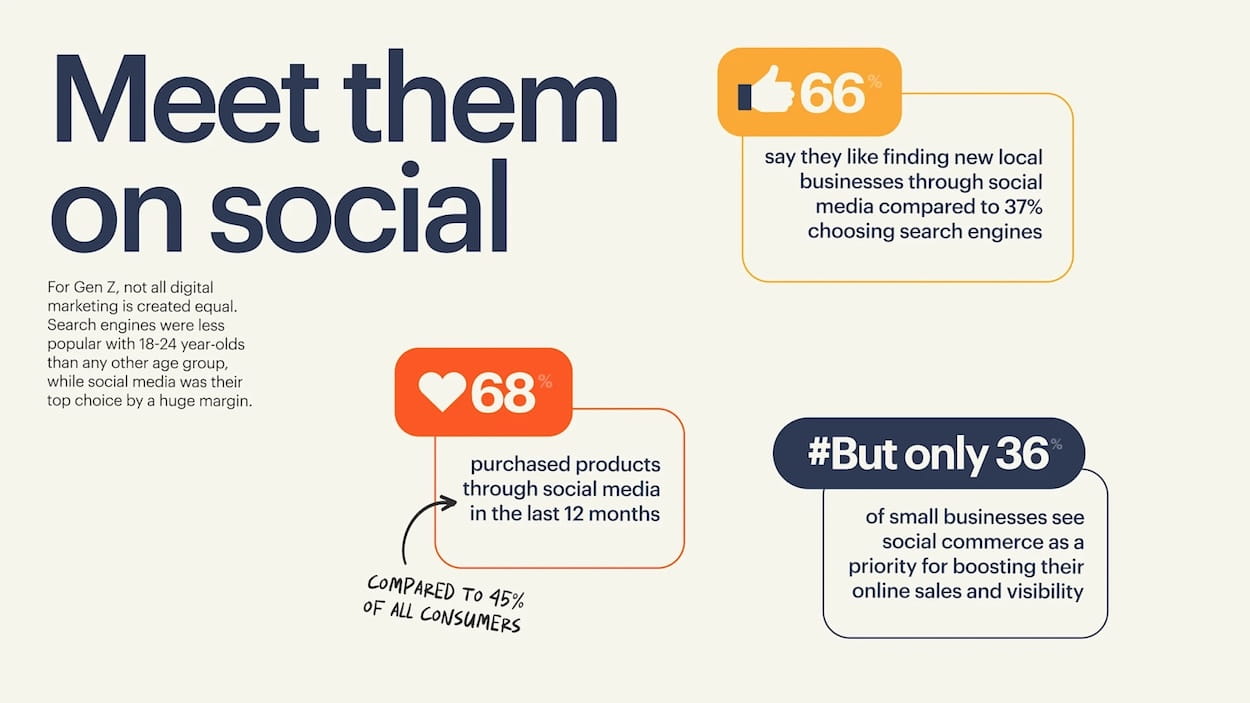
For example, social media is best for building awareness among Gen Z because they spend significant time on these platforms.
The POE framework is a more balanced approach to maximize impact across different channels. The three components of the POE framework are paid channels, owned channels, and earned channels.
- Paid channels include advertising that the brand pays for, such as social media and search ads. These channels deliver reach and visibility.
- Owned channels are assets that the brand fully controls, providing direct communication and long-term value. Examples are websites, blogs, email newsletters, and mobile apps.
- Earned channels include third-party mentions, reviews, social shares, and PR coverage. Their primary purpose is to boost credibility and trust.
While these are three separate categories, a strategic approach is to use paid media to drive traffic to owned channels, then leverage earned coverage to enhance brand reputation. This approach strengthens brand awareness. Consistently repeating the brand message across these channels reinforces memory and improves recall.
See how brand advertising activates brand marketing strategy
Step 5: Develop Consistent Creative and Brand Assets
Distinctive brand assets make a brand recognizable and memorable. Visual identity elements like logos and typography form the foundation of these assets, establishing the brand’s look and feel across all touchpoints.
Tone of voice conveys personality, values, and emotional connection. For instance, Nike inspires through motivating language that emphasizes determination and resilience. Each element of the brand assets must be consistent at every touchpoint to communicate a single brand story.
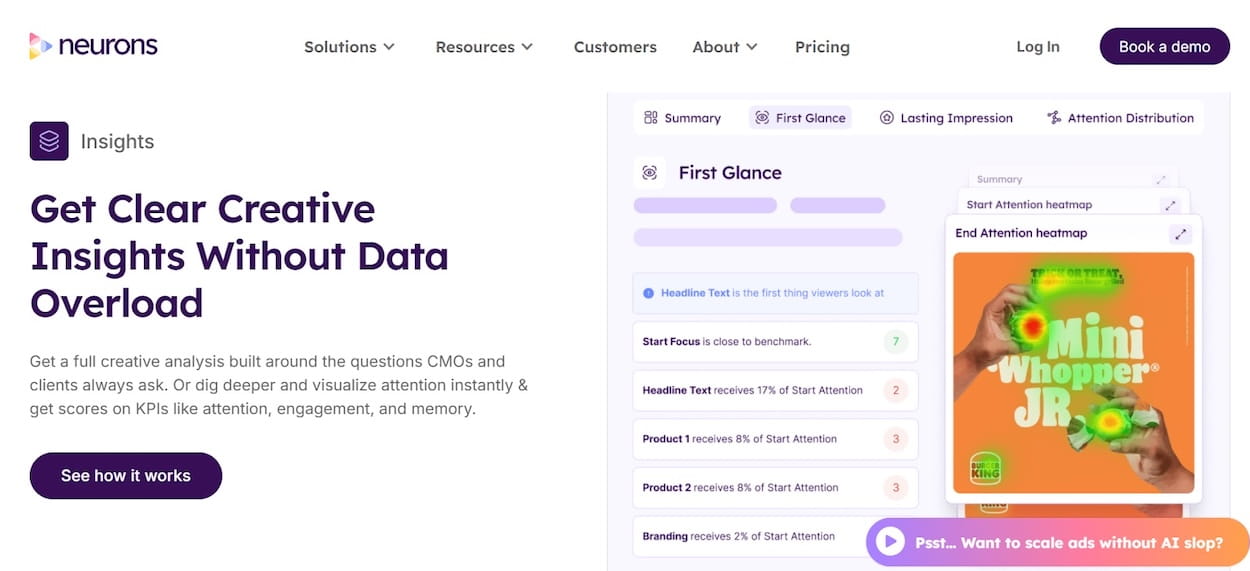
An effective brand marketing strategy also includes pre-launch creative testing to test and validate whether assets resonate with the target audience before full-scale deployment. Predictive testing using tools like Neurons AI reduces creative risk by revealing weak spots in messaging, placement, or visual prominence.
A simple checklist for asset alignment before launch is outlined below.
- Align brand assets with brand identity and strategy
- Define clear usage guidelines for visual assets to ensure consistency
- Apply visual elements correctly across formats and channels
- Test each asset for attention and recall
- Refine assets based on test results
Test and optimize creative assets before launch using predictive AI-powered brand validation
Step 6: Define Brand Marketing Metrics Before Launch
Before launching a brand marketing campaign, define key metrics to set expectations, prevent wasted spend, and allow teams to evaluate success objectively. The key metrics to assess are awareness, recall, consideration, and brand lift.
Awareness measures whether the target audience recognizes the brand. Recall assesses how people remember the brand after exposure. Consideration assesses the likelihood that audiences recall the brand as an option. Brand lift measures the incremental improvement in these metrics from a specific campaign.
Brand metrics measure perception, memory, and preference, unlike performance metrics, which measure immediate actions like clicks and conversions.
Discover how to structure brand marketing KPIs and measurement frameworks
Step 7: Launch, Measure, and Optimize

The final step of a brand marketing strategy is to launch campaigns, but not all at once. A phased rollout allows testing of creatives, channels, and messaging to mitigate risks. Early-stage exposure identifies strengths and weaknesses to guide future campaigns.
Brand lift should also be monitored continuously. Compare a test group exposed to the campaign with a control group not exposed to it. Track awareness, recall, and consideration to reveal trends in audiences' perception and memory. Use these insights to refine messaging, rotate creative, or reallocate media.
Use the outline below as a simple optimization checklist for this stage.
- Launch campaigns in phases for testing and learning
- Monitor brand lift over time
- Track which channels and creative materials perform best
- Apply insights to future campaigns for continuous improvement
Learn how brand tracking improves long-term brand performance
Common Brand Marketing Strategy Mistakes
Unclear positioning creates a structural weakness in a brand marketing strategy. Without a clearly defined position, messaging and campaigns lose focus.
Inconsistent messaging across channels is another mistake that fragments the brand experience. Fragmentation confuses audiences and weakens recall.
Another mistake is underinvestment in creative testing, which raises the risk of ineffective campaigns. Skipping pre-launch testing or predictive analysis misses opportunities to refine creative assets and maximize results.
Finally, overreliance on short-term performance metrics neglects long-term brand growth. Building brand equity is a long-term process, and focusing solely on immediate actions like clicks and sign-ups undermines awareness, recall, and consideration, which are equity drivers.
Corrective steps to prevent these mistakes are explained below.
- Define brand positioning with a clear framework: target audience, category, differentiation, and value proposition
- Maintain consistent messaging across all channel touchpoints. Employ branding governance tools to make it easier
- Conduct pre-launch creative testing for alignment, attention, and engagement metrics
- Balance short-term performance metrics with long-term brand metrics for a comprehensive overview of your brand health
Take the next step by leveraging AI-powered tools like Neurons AI to test and optimize campaigns before full launch. Applying these insights ensures your brand marketing strategy drives both short- and long-term growth.