
Brand health is a measure of how a brand performs in the minds of its target audience, reflecting how easily people recognize the brand. Brand health also reflects how customers feel about the brand and its potential to grow over time.
Companies with strong brand health are chosen more often, leading to steady demand over time. This makes brand health a strong indicator of how a company’s revenue is likely to grow.
Learn how brand building drives long-term business growth
Why Is Brand Health Important for Business Growth?
Brand health is important for business growth because it shapes how consumers make their decisions. Brands with strong health can charge better prices and still keep customers coming back. This leads to higher sales and, in turn, higher revenue.
In the short term, strong brand health makes it easier to convert demand because people are more likely to choose the brand. Campaigns also perform better because less effort is needed to convince people to buy.
Over the long term, strong brand health builds loyalty among customers. This loyalty keeps demand steady and supports consistent growth.
In the real world, a brand with strong health attracts customers more easily without relying heavily on discounts. People willingly choose the brand, which makes performance more consistent.
On the other hand, a weak brand struggles to attract attention and often depends on price cuts to compete. More effort is needed to win each purchase, and results are less predictable.
The key benefits of brand health are listed below.
- Higher and More Stable Demand
Strong brand health makes it easier for customers to choose the brand, which keeps demand steady.
- Greater Customer Loyalty
Customers are more likely to return and stay with a brand they trust and prefer.
- Stronger Pricing Power
Brands with strong health can maintain their prices without relying heavily on discounts.
- Higher Revenue
Steady demand and repeat customers lead to more consistent revenue.
- More Consistent Business Growth
Steady demand and repeat purchases help the business grow more predictably.
See how brand building works in a performance-driven world
What Are the Key Brand Health Metrics You Should Track?
Brand health is tracked through core metrics showing how customer awareness develops into long-term loyalty.
The 5 key metrics to focus on are outlined below.
- Awareness
Awareness reflects how many people know the brand. Strong awareness puts the brand in front of more people and increases the chance of future sales.
- Consideration
Consideration captures whether the brand comes to mind when customers make a buying decision. At this stage, brands convert interest into purchases more easily.
- Preference
Preference measures which brand customers lean toward when options are available. The decision shifts from “if” to “which one.” A preferred brand gets picked more often over its competitors.
- Usage
Usage tracks how often people buy or use the brand. This is where intention turns into real behavior. Frequent usage supports steady activity and a stronger position in the market.
- Loyalty
Loyalty focuses on whether customers come back again after buying once. Loyal customers return without needing to be convinced, which helps maintain stability.
These metrics work together as a system, with each one playing an important role. Awareness brings the brand to mind, while other metrics track how it builds into loyalty.
How Do You Measure Brand Health Effectively?
.jpg)
To measure brand health effectively, follow a clear step-by-step process outlined below.
Step 1: Define Objectives
Decide exactly what you want to understand about your brand. Clear objectives guide what you track and how you use the results.
Step 2: Select Metrics
Choose the metrics that match your objectives. Metrics such as awareness, consideration, preference, usage, and loyalty help track different stages of customer behavior.
Step 3: Choose Research Methods
Decide how you will gather the data. Surveys can help you understand perception, while behavioral data shows what customers actually do. Other methods include interviews, social listening, and attention tracking.
Step 4: Establish Benchmarks
Set a baseline for each metric. This makes it easier to see whether performance improves or declines over time.
Step 5: Track Over Time
Rather than a one-time snapshot, measure across intervals. Ongoing tracking helps you spot trends and adjust your strategy when needed.
Explore how brand tracking works in practice
What Is Brand Health Tracking and How Does It Work?

Brand health tracking is the process of measuring how a brand performs over time using consistent data. Organizations track brand health using methods such as surveys, panels, and digital signals.
Brand health tracking works better through continuous measurement. A single check shows where the brand stands at one point in time, while ongoing tracking shows how the brand improves or declines.
Over time, as the metrics change, it becomes easier to spot trends and patterns. These changes make it easier to spot what is working and what needs to be adjusted.
Tracking is critical because it provides steady insights that inform better decisions and help brands respond to real changes.
What Is the Difference Between Brand Health and Brand Equity?
Brand health and brand equity are closely related, but they are not the same. Brand health focuses on measurement, while brand equity reflects the outcome of those measurements.
Brand health tracks how a brand performs over time. Metrics such as awareness, perception, and customer behavior show where the brand stands and how it is changing.
Brand equity is the value a brand holds in the minds of customers. This value appears in trust, preference, and the likelihood of choosing the brand over others.
Brand health helps marketers understand what is happening, while brand equity reflects the result of those efforts.
How Can You Improve Your Brand Health?
To improve brand health, focus on actions that strengthen how customers notice, remember, and experience your brand. The key strategies are outlined below.
- Improve Creative Effectiveness
Clear visuals and simple messaging make your brand easier to notice and remember. Consistent creative elements like a bold logo or a short tagline improve recognition and shape how people perceive the brand.
- Increase Mental Availability
Frequent exposure across channels helps keep the brand top of mind. For example, consistent advertising and presence in everyday moments make the brand easier to recall.
- Strengthen Consistency
Using the same tone, visuals, and messaging across all touchpoints makes the brand easy to recognize. A brand that looks and sounds the same across ads, websites, and packaging feels more reliable.
- Optimize Media Mix
A balanced media mix ensures your message is seen often enough to make an impact. Combining social media, search, and video can improve both reach and recall.
See how creative testing improves brand impact
How Does Creative Performance Impact Brand Health?
Creative performance shapes brand health by influencing what people notice, remember, and think about a brand. A strong creative captures attention, which is the first step in building memory and shaping perception.
When people notice an ad, they are more likely to remember the brand.
Memory then shapes perception. Repeated exposure to clear and consistent creative builds familiarity and trust. This influences how people view the brand and form opinions about it.
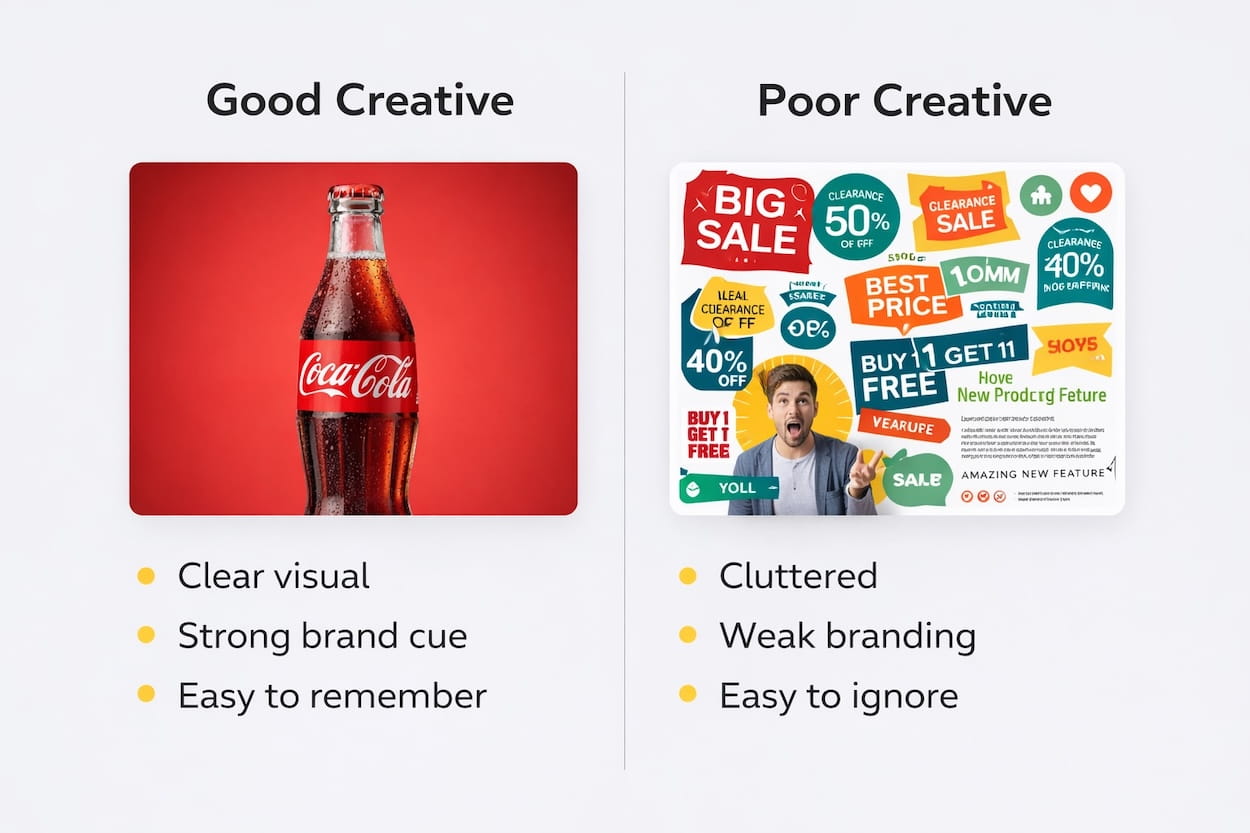
Creative quality directly affects brand metrics. Strong creatives improve recall and perception, while weak creatives limit these outcomes.
For example, a bold visual with a clear brand cue is easier to remember, while a cluttered ad is often skipped.
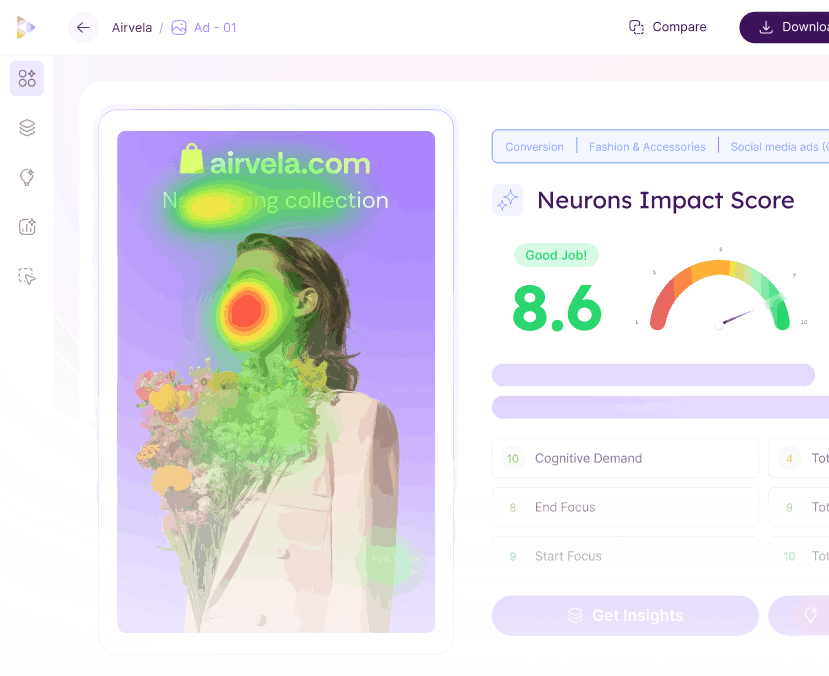
To predict this before launch, brands now use attention measurement tools like Neurons AI, which show which parts of a creative are likely to be noticed first.
Learn how attention measurement predicts ad performance
What Are Common Mistakes When Measuring Brand Health?

Common mistakes when measuring brand health can lead to incomplete insights and poor decisions. The most common ones are outlined below.
- Only Measuring Awareness
Focusing only on awareness ignores how people feel and behave toward the brand. Include metrics like perception, preference, and loyalty to get a full picture.
- Tracking Too Infrequently
Important shifts can be missed when metrics are not measured regularly. Track consistently to understand trends and respond early.
- Ignoring Qualitative Insights
Numbers do not always reflect customer behavior. Feedback from surveys or interviews helps explain what the numbers mean. Combine both for better insight.
- Not Acting on Data
Collecting data without taking action leads to no real change. Insights should guide decisions and changes. Use what you learn to adjust strategy and improve results.
How Often Should You Track Brand Health?
Brand health should be tracked regularly, but the right frequency depends on your goals, budget, and stage of growth.
Continuous tracking provides the most accurate view by helping you spot changes early and respond quickly. This approach works best for larger brands with the resources to support it.
Quarterly tracking collects data at set intervals, making it easier to review performance without high ongoing costs. This works well for growing companies.
Campaign-based tracking measures before and after campaigns to assess impact. This approach suits brands running targeted marketing efforts.
Each option involves a trade-off. More frequent tracking gives deeper insight but costs more, while frequent tracking reduces cost but may miss important changes.
Larger or more established brands benefit more from continuous tracking. Smaller or early-stage brands can start with quarterly or campaign-based tracking and scale over time.
Best practices for brand health tracking are outlined below.
- Match tracking frequency to business goals
- Combine regular tracking with campaign reviews
- Keep methods consistent for reliable comparison
- Review results and act on insights quickly
What Does a Brand Health Dashboard Look Like?
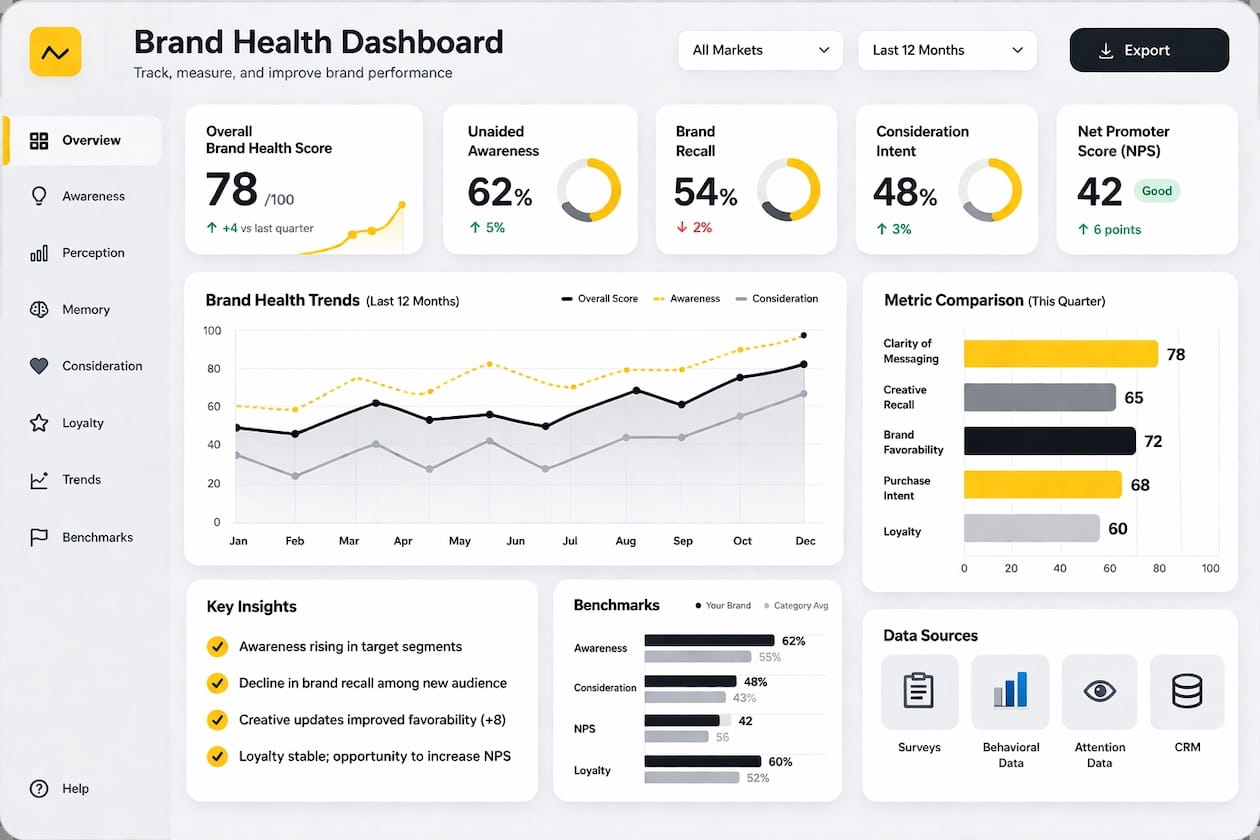
A brand health dashboard brings key metrics into one place so you can track performance at a glance.
A good dashboard includes core metrics such as awareness, consideration, preference, usage, and loyalty. Supporting metrics like sentiment, retention, and branded search can also add more context. Each metric should be clearly labeled and easy to read.
Clear visuals make the data easy to understand. Line charts show trends over time, so changes are easy to spot. Bar charts also help compare metrics across periods or segments. Benchmarks or targets act as reference points to show whether performance is improving or declining.
A simple structure keeps everything organized.
- Top: Key metrics (awareness, preference, loyalty)
- Middle: Trend charts over time
- Bottom: Deeper insights or breakdowns by audience, channel, or region.
How Can Brand Health Data Inform Better Marketing Decisions?

Brand health data helps marketers make better decisions by turning insights into clear actions.
The key marketing areas are outlined below.
- Budget Allocation
Spend can be shifted toward channels that improve awareness or strengthen perception, instead of spreading the budget evenly.
- Creative Optimization
Creatives can be refined based on what people notice and remember, leading to clearer messaging and stronger brand cues.
- Audience Targeting
Targeting can be adjusted to focus on groups with lower awareness or weaker perception, where improvement is needed most.
Understand how to turn brand insights into growth strategies
What Is a Brand Health Audit and When Should You Run One?
A brand health audit is a structured review of how a brand is performing across key metrics. The goal is to identify what is working, what is weak, and where improvements are needed.
A brand health audit is most useful during a rebrand, after a drop in performance, or when there are major changes in the market. These situations often signal a shift in how customers see or respond to the brand.
A simple checklist for a brand health audit is outlined below.
- Review awareness to see how many people recognize the brand.
- Assess perception to understand how customers feel about the brand.
- Check preference to see if customers choose the brand over others.
- Evaluate usage to understand how often customers buy or use the brand.
- Measure loyalty to see if customers return over time.
Conclusion: How Do You Build and Maintain Strong Brand Health Over Time?
Building and maintaining strong brand health requires a long-term strategic approach. Strong brands focus on clear messaging, consistent experiences, and regular tracking of key metrics.
Continuous measurement helps spot changes early and adjust quickly. These insights guide better decisions, strengthen perception, and support steady growth.
Discover how to build a stronger brand over time