Brand-building tools are software, systems, and frameworks that help teams create, manage, protect, test, promote, and measure a brand over time. Effective brand building requires multiple branding tools because no single tool can manage strategy, governance, and growth.
A structured stack approach creates a flywheel effect where each layer feeds the next, from strategy to creation, governance, testing, marketing, and visibility.
Strategy tools define the direction, creation tools develop visual elements, and testing tools validate assets for real-world impact. Governance tools then enforce consistency across teams and channels, while marketing tools amplify reach and awareness. Visibility tools, which are the final step, track perception and search presence.
Brands using a full branding stack create mental availability, strengthen recall, and improve long-term preference over competitors.
Brand building framework that connects creativity to measurable growth
What Are the Best Brand Advertising & Strategy Tools?
The best brand advertising and brand strategy tools are Neurons AI, Looka, and Adobe Color. These tools operate across two connected layers of brand development: defining strategic direction and preparing creative assets for execution.
Brand strategy tools focus on the high-level planning phase. The branding tools at this stage help set the direction for all subsequent marketing efforts by determining how a brand will stand out from competitors, occupy a specific space in consumers’ minds (positioning), and build long-term value.
Brand advertising tools activate those strategic choices through campaign execution. Creative execution, however, without a strong strategy, leads to misalignment. Similarly, a branding strategy without validation is expensive guesswork.
Before creative assets reach the market, validation serves as the bridge between strategy and execution, ensuring that branding decisions translate into measurable attention and recall.
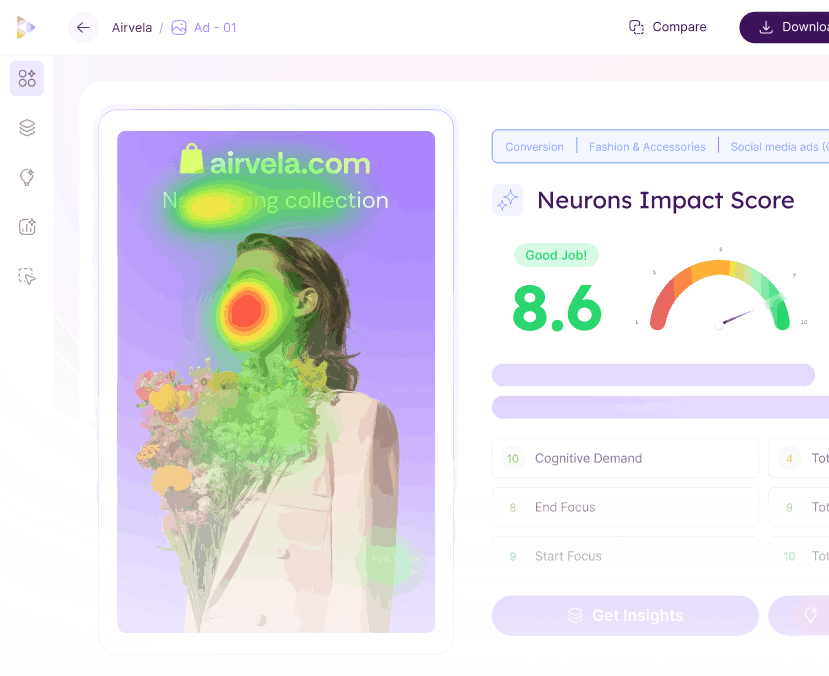
How brand strategy tools translate into measurable brand equity growth
The top advertising and strategy tools are listed below.
1. Neurons AI
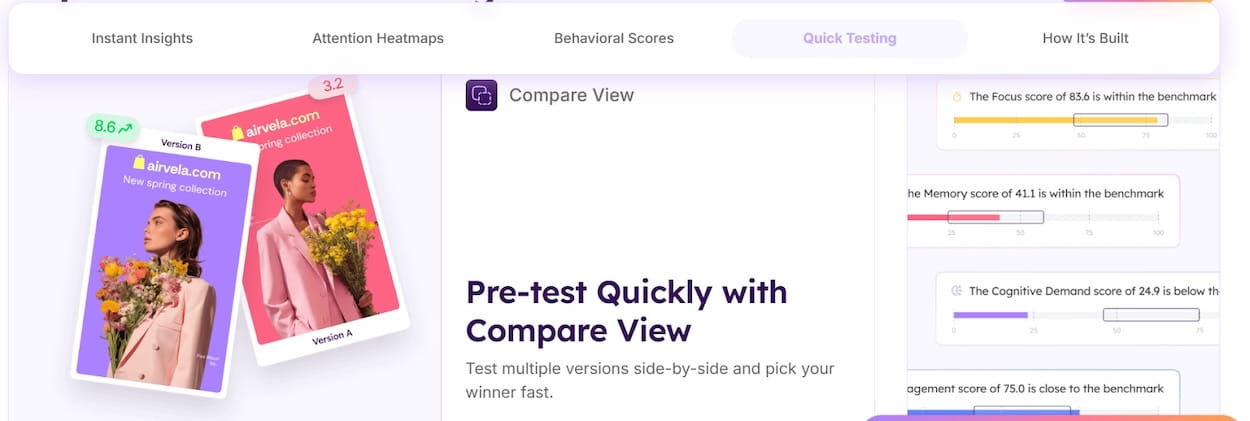
Neurons AI takes the lead as the creative testing platform for validating branded assets before launch. The platform uses artificial intelligence to predict how much attention an image or ad will get and how likely people are to remember it.
Neurons AI also evaluates how consistent visual elements are across different assets, preventing brand drift where materials start to look different. The Brand Kit feature allows users to upload their specific brand guidelines, which the AI then uses to check every new creative asset against those rules.
The platform essentially connects strategy to execution. Strategy defines goals. Neurons AI validates whether creative assets achieve those goals, increasing confidence before campaigns launch. For example, if the brand strategy of a local coffee shop is to drive recall when people think “cozy coffee spot,
Neurons AI creative testing platform for validating branded assets before launch
2. Looka

Looka is an AI-powered platform for brand identity creation. Startups and small-to-medium businesses rely on Looka for foundational work, such as logo design, offering hundreds of options in minutes.
With the logo design finalized, Looka delivers full brand kits with business cards, social templates, letterheads, invoices, and marketing assets to support promotional work.
Within the branding stack, Looka helps early-stage brands turn ideas into a visual identity. Thereafter, a performance validation tool predicts how consumers will perceive these assets before they go live.
Looka AI logo and brand identity builder
3. Adobe Color
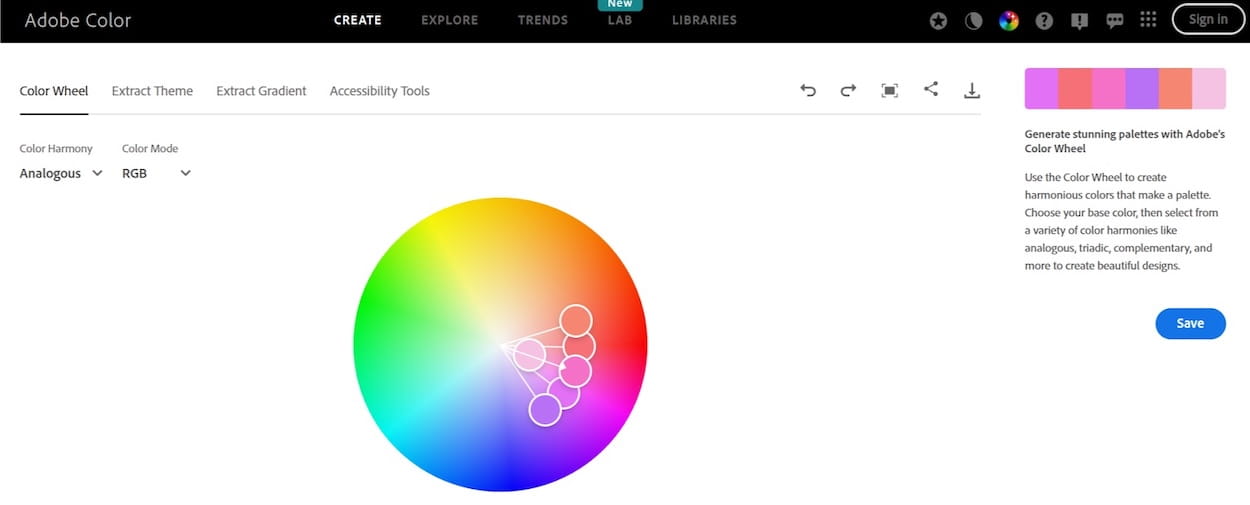
Adobe Color helps teams build and refine cohesive color systems rather than choosing colors at random. With Adobe Color, brands can generate harmonious palettes, test contrast, and define primary, secondary, and accent colors that work effectively across all creative assets.
A cohesive color system strengthens recognition by building mental links between the color and the brand. When the same color palette appears across all advertising and branding material, the human brain begins to associate those colors with the brand. This repetition increases mental availability, strengthening differentiation and recall.
Strong, cohesive palettes reinforce long-term brand equity by improving memorability, reducing visual inconsistency, and creating a recognizable presence across channels.
Adobe Color brand palette and harmony generator
What Are the Best Brand Guidelines & Governance Tools?
The best brand guidelines and governance tools are Frontify and Marq (formerly Lucidpress). Brand guidelines tools provide governance systems that control asset usage, enforce consistency, and protect brand equity across teams and markets.
Governance exists because brands scale faster than oversight can keep pace. As teams expand, structured systems become necessary to prevent inconsistency from eroding brand equity.
Why brand consistency is critical for building long-term brand equity
4. Frontify

Frontify functions as a comprehensive brand portal and digital asset management platform (DAM). DAM is a system for organizing, storing, retrieving, tagging, versioning, and securely distributing digital files across an organization.
What truly differentiates Frontify from traditional asset libraries is its governance-first approach. Traditional asset libraries primarily serve as storage repositories, so governance occurs only after inconsistencies arise.
In contrast, Frontify introduces AI-powered layers that help teams review drafts in real time, flag potential deviations from guidelines, suggest compliant alternatives, refine copy to match the voice, and even assist with content ideation.
Frontify differs from predictive creation validation platforms like Neurons AI, which forecast attention, recall, and emotions to the branding assets. A key purpose of the intelligence in Frontify is to automatically compare marketing materials with established brand guidelines to ensure consistency and compliance.
Rather than functioning as a standalone file repository, Frontify integrates its asset libraries with brand guidelines and workflows. This creates a single connected environment, where teams locate updated assets and use them appropriately within the surrounding brand rules.
For global teams, Frontify excels at controlled yet efficient distribution. Granular permissions allow headquarters to define access levels by region, role, or partner. The real-time updates and localized workflows enable the fast rollout of campaigns without compromising core brand integrity.
Frontify brand management and digital asset platform
5. Marq
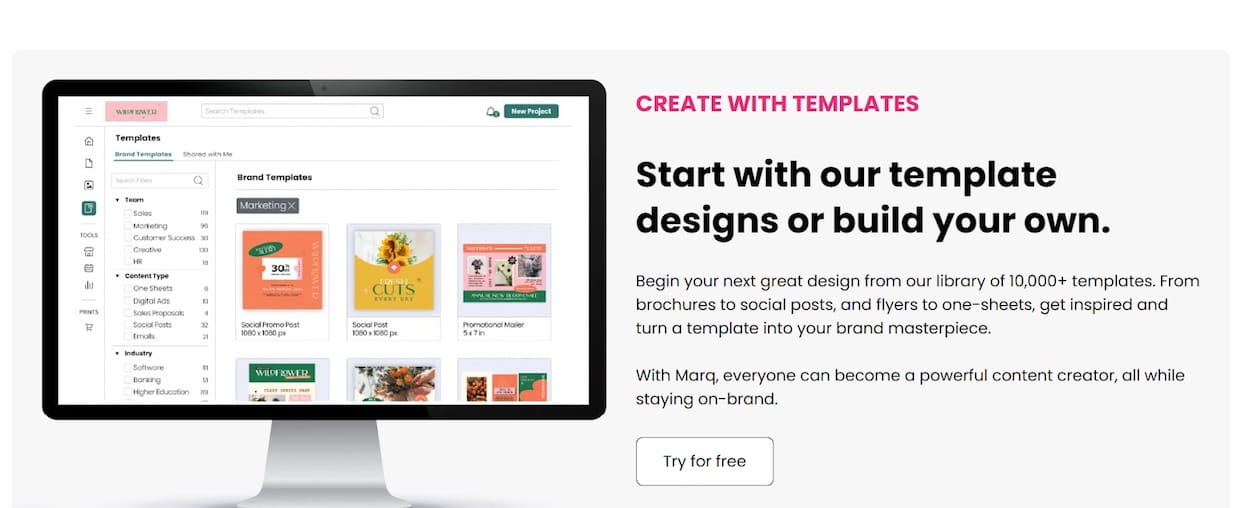
Marq (formerly Lucidpress) is a templated brand governance and workflow tool. It is specifically designed to help organizations maintain brand consistency while enabling distributed teams to create and customize content themselves.
The core functionality involves creating templates in which designers can “lock” essential elements to ensure the final output remains on-brand. To maintain governance, the platform includes built-in approval processes. Managers can review and approve customized content before it’s finalized for distribution.
Marq is essentially an operational brand control solution that bridges the gap between the need for consistent marketing materials and the demand for fast, customized, and localized content.
Marq brand templating and content governance software
What Are the Best Brand Marketing & Brand Awareness Tools?
The best brand marketing tools are Brandwatch and Ahrefs. These branding tools expand reach while simultaneously measuring how audiences perceive and discover a brand across channels.
Brands scale awareness, visibility, and reach through a combination of consistent multi-channel marketing, strategic partnerships, and data-driven content creation. These activities boost brand equity by fostering brand association, perceived quality, and loyalty.
Both Ahrefs and Brandwatch monitor marketing activities to help teams make informed decisions toward improved visibility.
How brand marketing efforts drive measurable brand awareness growth
6. Brandwatch
.jpg)
Brandwatch is a consumer intelligence and social listening platform that tracks mentions, sentiment, and online conversations across vast sources.
Brandwatch uses a hybrid AI system to track the emotional tone (positive, negative, neutral) of public conversation to analyze brand perception and reputation in real time. Consumer experiences, perceptions, and emotions accumulate over time to build brand equity.
Poor quality, negative reviews, or lack of brand awareness result in low equity. When a brand addresses pain points, improves user experience, or aligns with user values, perception shifts positively.
Brandwatch serves as the tool for monitoring these trends to inform proactive measures for building positive perception and, ultimately, brand equity.
Brandwatch consumer intelligence and brand monitoring software
7. Ahrefs
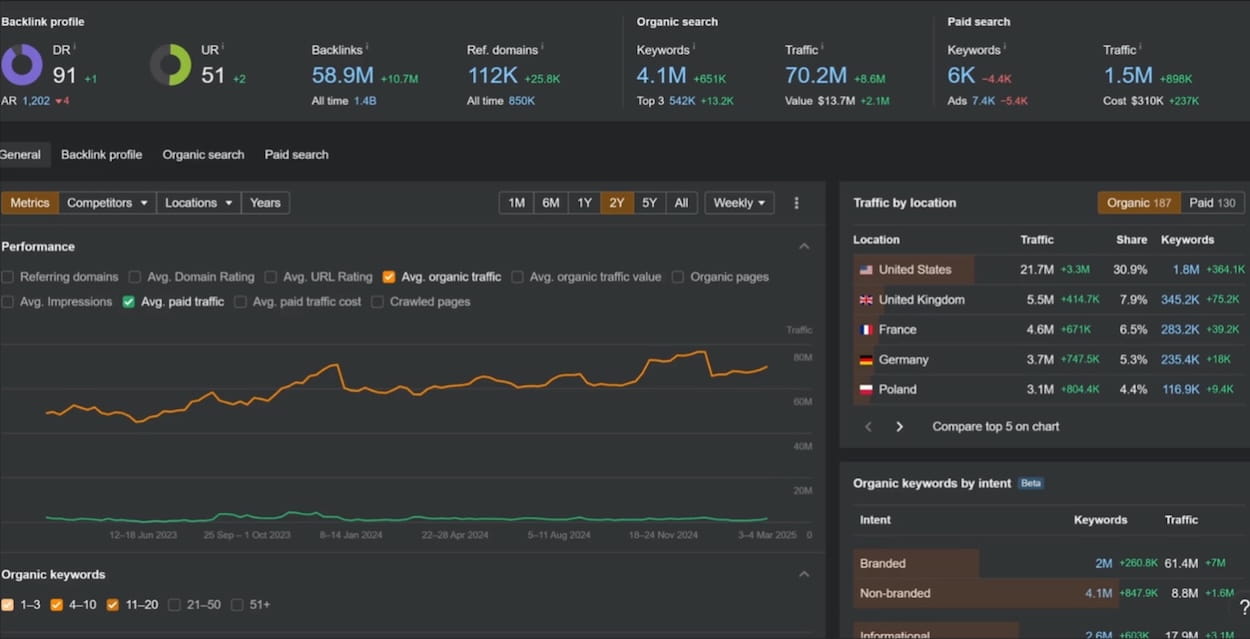
Ahrefs monitors brand visibility and SEO performance. It tracks keyword rankings, brand mentions, and search rankings.
Search visibility increasingly functions as a proxy for brand awareness, since repeated exposure in search environments reinforces recognition and trust.
In AI-driven search environments, users receive direct conversational responses, reducing the need to scroll through pages of blue links. The evolution makes traditional keyword rankings less decisive, so brands must prioritize keyword ownership, track their mentions in AI outputs, and boost discoverability within generative engines.
Compared to traditional keyword ownership, owning a keyword in AI search means being the dominant brand mentioned or cited in the AI-generated answer when a user asks a query related to that topic.
Because AI models often answer questions without sending users to a website, tracking when and how your brand appears in these summaries is critical for reputation management and visibility.
Unlike many other monitoring tools, Ahrefs reveals discoverability in both traditional and AI-driven search environments. Ahrefs visibility data enables marketing teams to research and employ strategies that improve visibility.
Consistent visibility on the first page of search engine results pages (SERPs) and appearing in AI-generated answers increase brand recognition.
Ahrefs SEO and brand visibility tracking platform
How Do Brand Strategy, Testing, Governance, and Marketing Tools Work Together to Build Brand Equity?

Brand strategy, testing, governance, and marketing tools boost brand awareness and, subsequently, brand equity by integrating strategy definition, creative validation, execution control, visibility amplification, and perception monitoring into a single workflow.
The workflow features five distinct processes. Together, these tools operate as a connected branding system rather than independent platforms.
- Define strategy with positioning and equity drivers, and use specific brand strategy tools like Looka and Adobe Color to create assets for future creative efforts.
- Validate assets using Neurons AI for alignment.
- Govern execution via Frontify portals and Marq templates.
- Amplify visibility through marketing channels.
- Monitor perception with Brandwatch and visibility with Ahrefs.
Consider a practical example. An eco-focused startup defines its strategy around sustainability values. Looka and Adobe Color create the logo and palette. Neurons AI tests visuals for strong recall and on-brand impact. Frontify centralizes guidelines for team-wide access. Marq templates allow consistent and fast marketing material creation. Brandwatch listens for social sentiment. Ahrefs tracks search mentions and rankings.
As a result of integrating the full stack, the brand launches validated campaigns, maintains control, scales awareness, and adjusts based on perception data.
Neurons AI anchors the creative validation layer and ensures assets deliver strategic impact before amplification. This removes guesswork and ensures that everything works together effectively and efficiently.
Companies that treat branding as an integrated system rather than isolated activities build stronger memory structures, maintain consistency at scale, and compound brand equity over time.
Explore our complete guide to building and measuring brand equity effectively