
Neurons research report
State of Advertising 2025
The largest neuromarketing study in recent history: what 4,000 people’s eyes and brains reveal about ads that get seen, felt and remembered.
The big picture
Three numbers every advertiser should know
2.2s
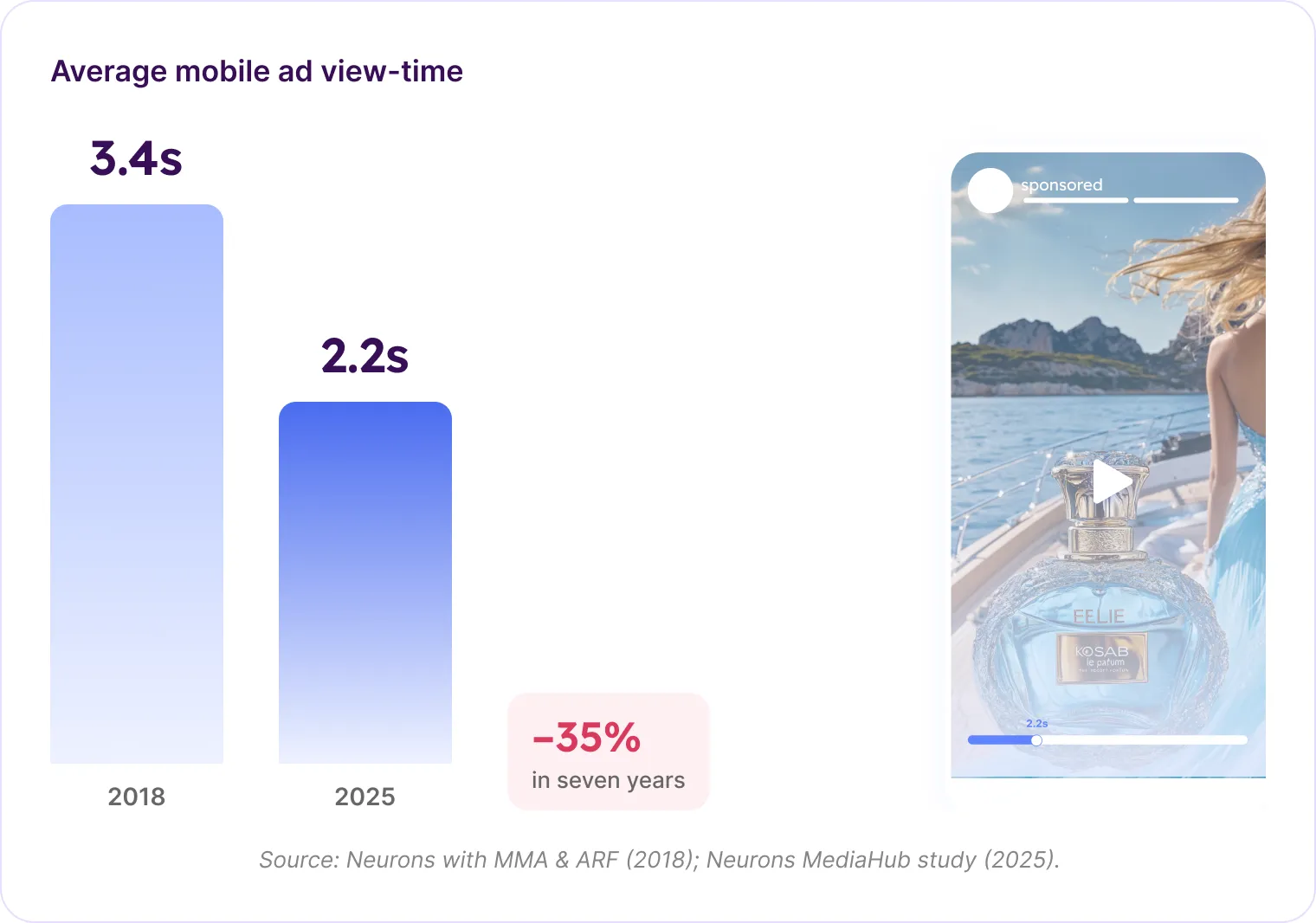
Average time people look at a mobile ad today, down from 3.4s in 2018.
Source: Neurons with MMA & ARF (2018); Neurons MediaHub (2025)
−35%
Drop in attention to mobile ads in just seven years.
Source: Neurons MediaHub study (2025)
0.69
Correlation between attention and ad memory: more attention, more remembered.
Source: Neurons MediaHub study (2025)
In this report
8% read · free preview
Note from our CEO
Welcome to the State of Advertising
People see thousands of ads every day, but only a few leave a lasting impression. Attention spans are shrinking, and most ads go completely unnoticed. In 2018, the average mobile ad was viewed for 3.4 seconds. Today, that number is just 2.2 seconds.
That's a 35% drop in seven years. But there's a silver lining. While platforms and interactions evolve, the way we process what we see remains the same. Human cognition is deeply rooted in our biology. Across cultures, we are drawn to the same visual patterns, cues, and structures.
Advertisers can tap into these universal principles of perception. The right visuals in the right context don't just improve advertising. They help brands create stronger, more meaningful connections with their customers. This report is designed to help you do just that.
Dr. Thomas Z. Ramsøy
Founder, CEO & Chief Science Officer, Neurons
About this report
The State of Advertising Survey
In this report, we draw on insights from our collaborative research projects with major companies, combined with proprietary data from the State of Advertising Survey.
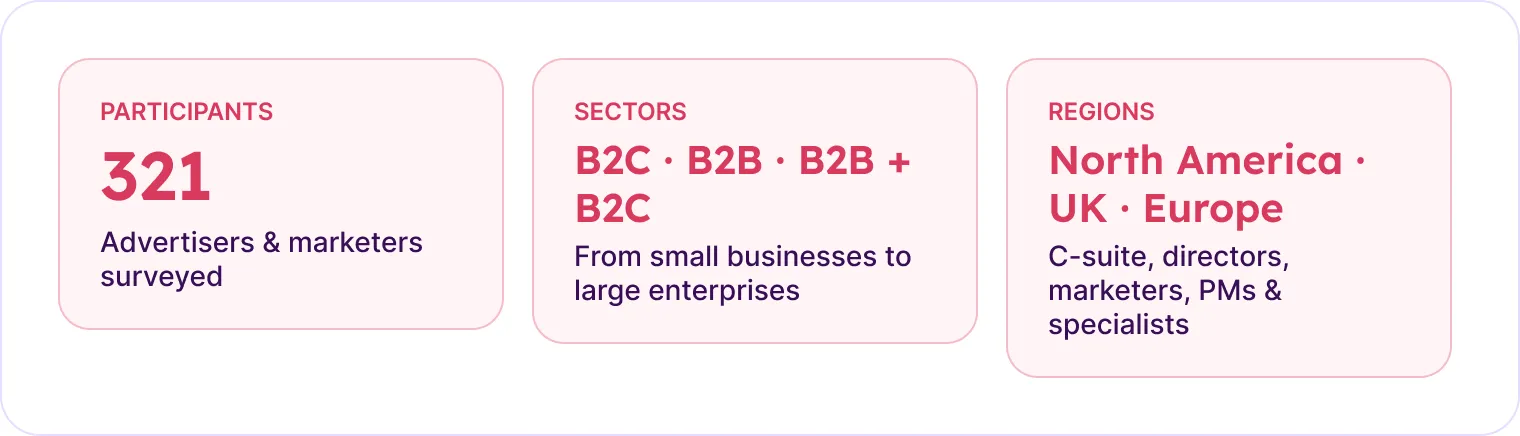
We surveyed 321 global advertisers and marketing professionals in January 2025 to gain insights for this report.
Regions represented include North America, the UK, and Europe. Respondents came from companies of all sizes across B2B, B2C, and B2B + B2C, in roles ranging from C-suite executives and directors to marketers, project managers, consultants, and specialists.
Chapter 01 · Free preview
01
Platforms & ad perception
Chapter summary
Study background
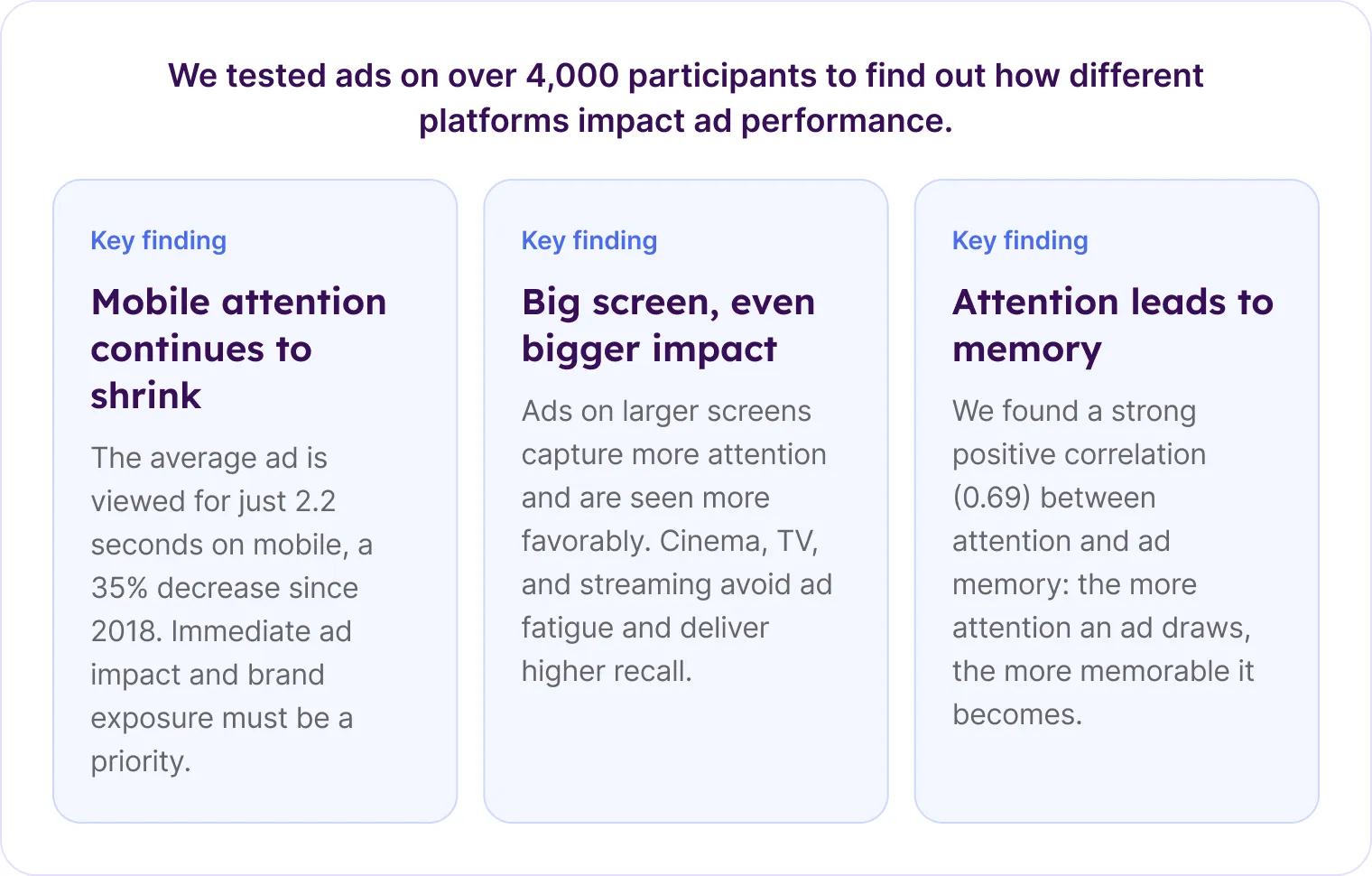
In partnership with Emerge, we've launched one of the largest neuromarketing studies ever conducted, as part of MediaHub. This ongoing, comprehensive research in Norway is designed to help advertisers optimize their content for better in-market performance and advance the industry in the process.
To evaluate the effectiveness of each ad creative, the project combines implicit and explicit response tests, eye-tracking, and artificial intelligence powered by Neurons AI. In the following pages, you'll find our aggregated findings from years of research on platforms, screens, and ad perception.
Mobile attention continues to shrink
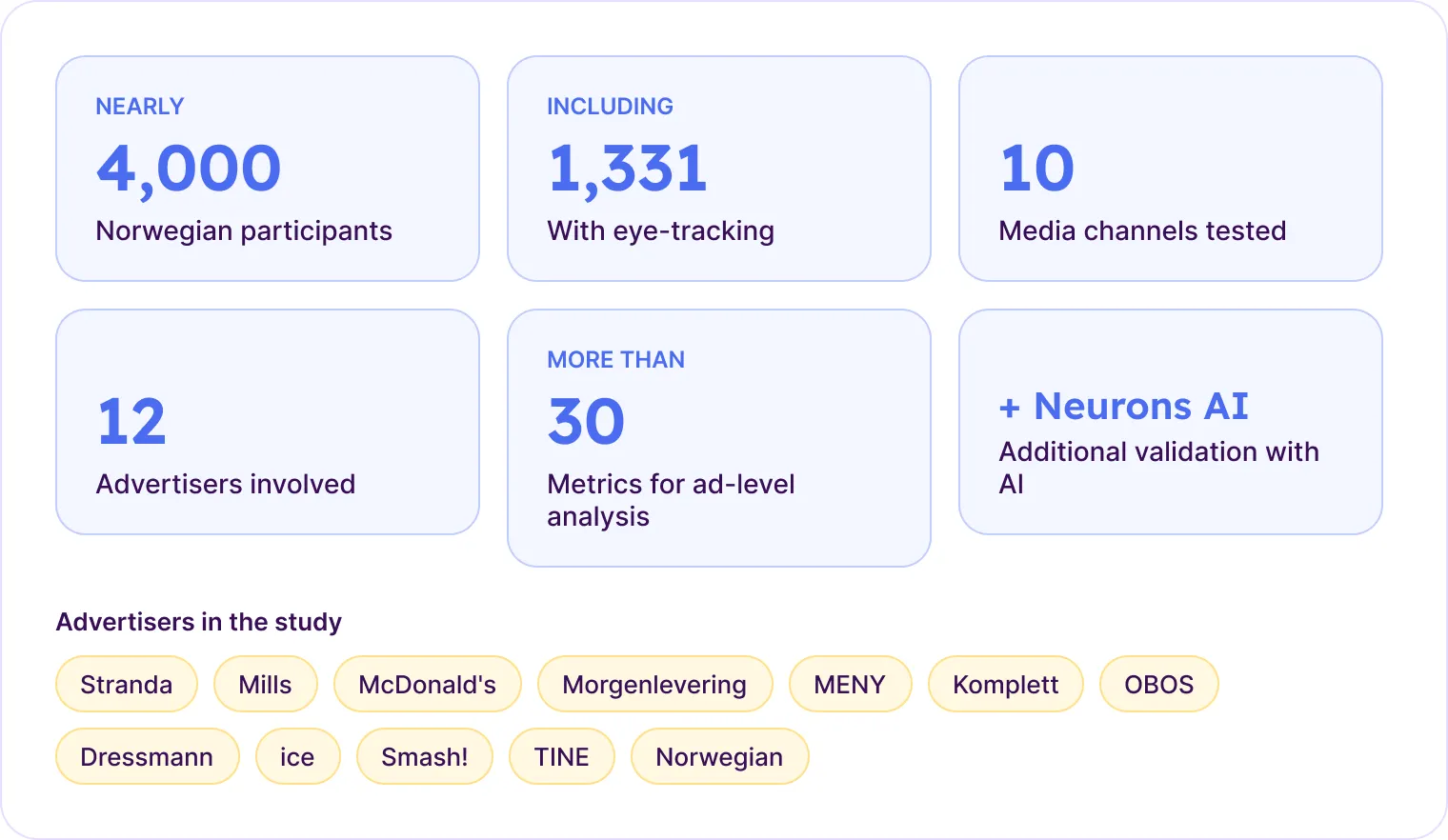
We've long known that mobile ads struggle to capture sustained attention. Back in 2018, our research with MMA (Mobile Marketing Association) and ARF (Advertising Research Foundation) revealed that the average mobile ad was viewed for 3.4 seconds.
Fast forward to today, and that number has dropped significantly. Today, the average real viewing time for mobile ads is just 2.2 seconds. That's a 35% decrease in attention in just seven years.
This sharp decline has major implications for advertisers.
"Time spent viewing ads" is ranked by marketers as the most important factor in measuring ad success. Yet ad platforms misclassify nearly half of all mobile ads as "unviewable," even though a significant portion of them are seen.
This happens because traditional metrics measure device activity, not human attention. The reality is, fewer than 1 in 10 impressions go completely unviewed.
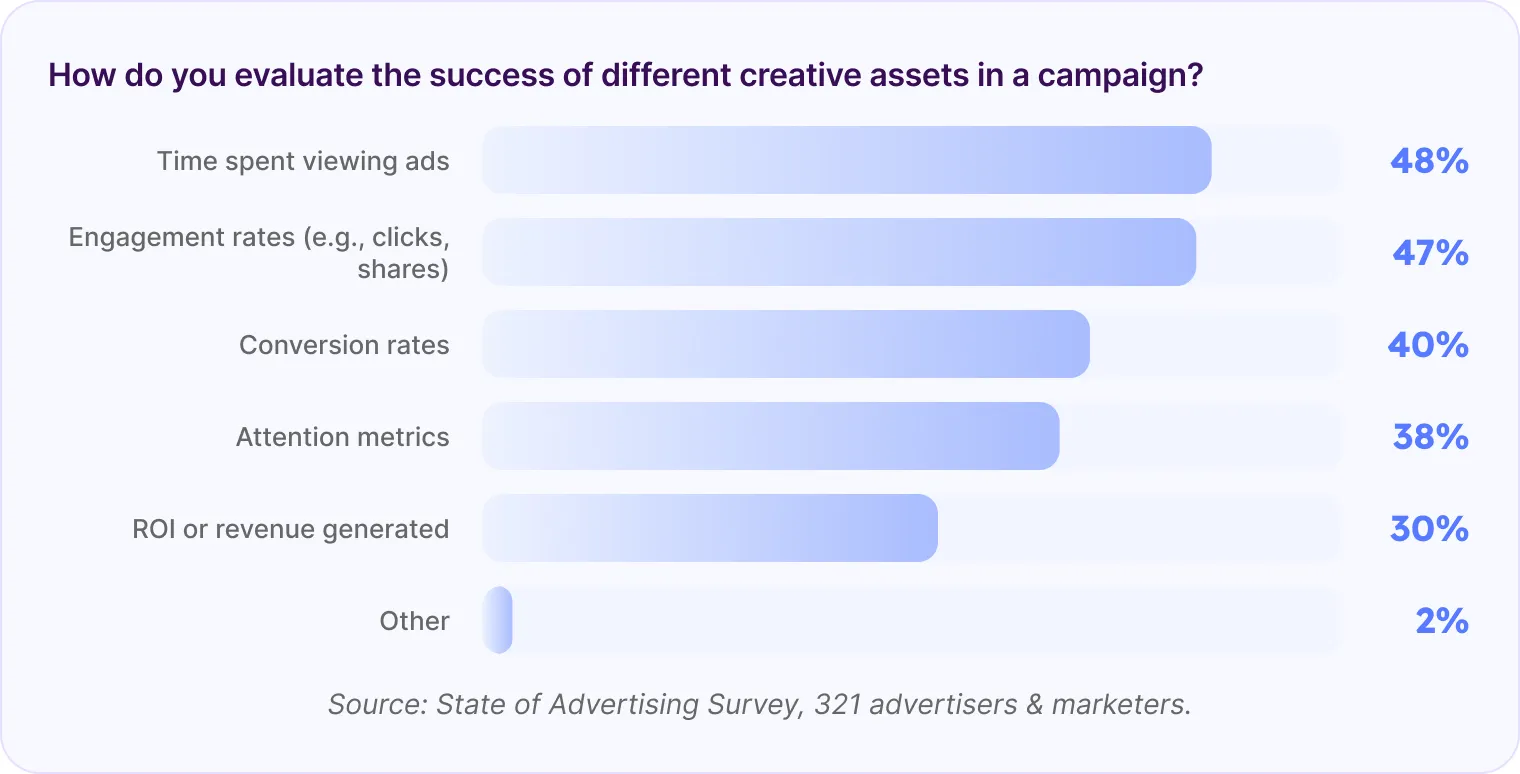
This means that the number one measure of ad success is unreliable, leading to a false understanding of ad performance. For reliable results, using attention as a key metric when measuring ad performance is a superior strategy.
Related eBookAttention is a great predictor of in-market performance. Read the eBook →
Design ads for immediate impact
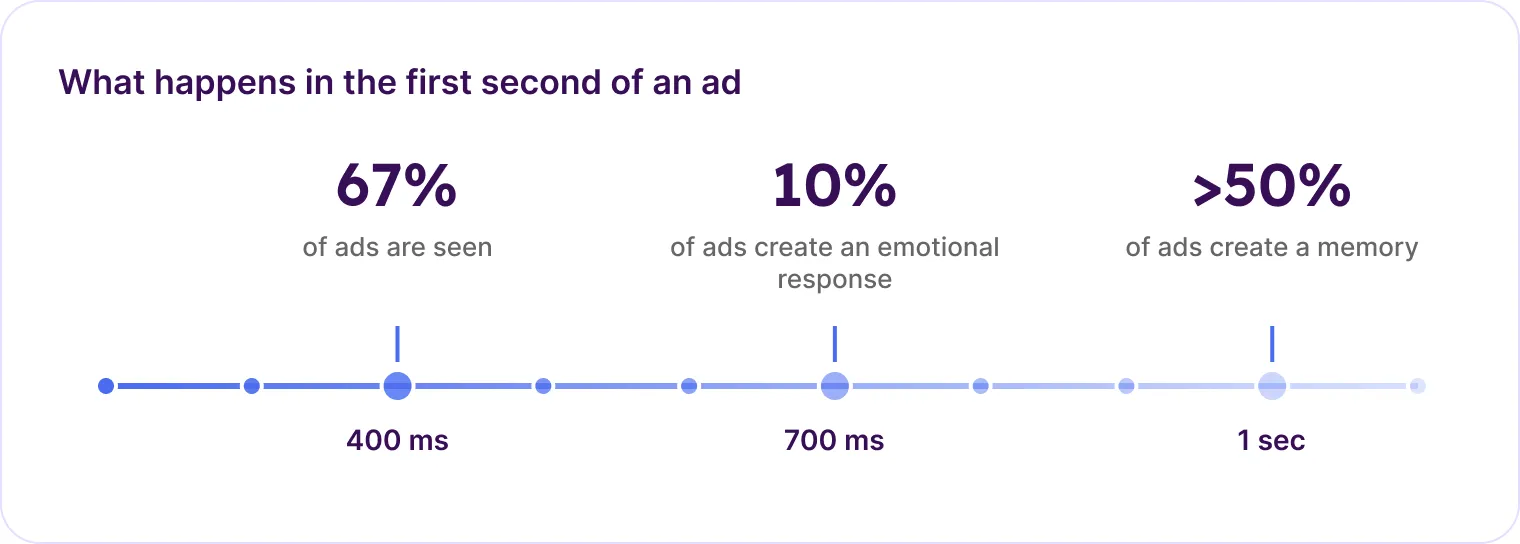
2.2 seconds of watch time seems short, but its impact can be profound. If you use those first moments effectively, ads that aren't watched all the way can still leave a lasting impression. This is where the 1-second strategy comes into play.
In just one second, customers can notice your ad, process its message, feel an emotional response, and form a memory. Designing ads with this brief window in mind can help you stand out and create lasting connections.
Big screen, even bigger impact
Our research shows that Cinema, TV, and streaming platforms significantly outperform social media and other mobile-first platforms in both reported and subconscious associations. These large-screen environments create a sweet spot for generating stronger emotions and motivation.
Cinema and TV ads boast nearly 100% exposure, making them as close to real-world forced exposure as it gets. On average, the same ad shown on large screens is viewed for three times as long as on mobile. Large screens help deliver messages, while mobile ads run the risk of being misunderstood due to their shorter format.
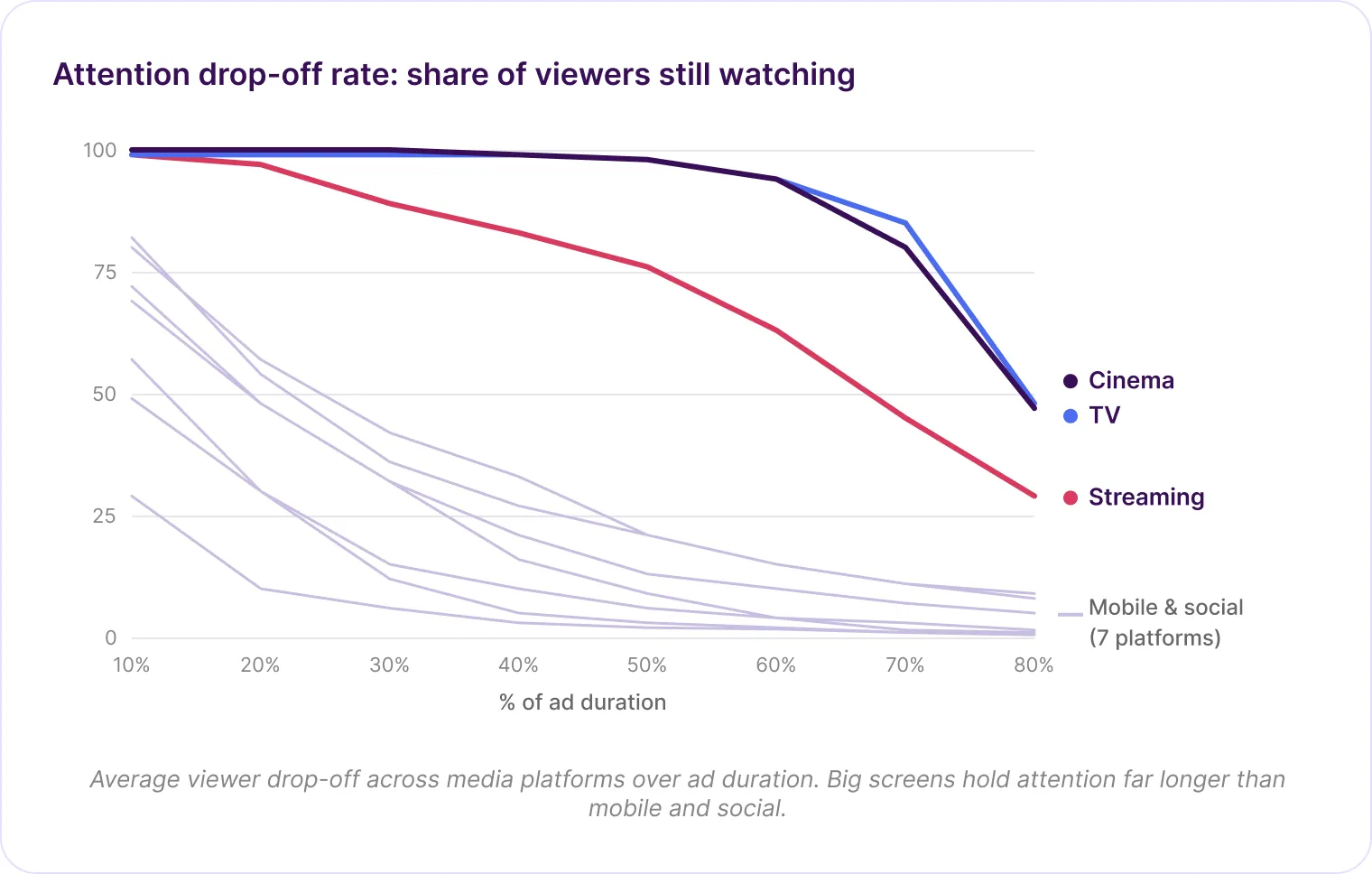
Cinema, TV, and streaming platforms not only avoid consumer ad fatigue but also generate positive audience perceptions and deliver higher recall. As you'll see in the next chapter with Dansk Reklame Film (DRF), cinema may be the ideal platform for building trust in both brands and ads.
The platform isn't everything
While platforms play a key role in customer perceptions, ad performance varies widely within each channel. As you can see below, there's a significant amount of variance in attention on each platform. This is the impact of the ad creatives.
Campaign quality and narrative have a greater influence on emotional and motivational outcomes than the platform itself. Following best practices and testing ads before launch can help maximize impact on any platform. The average mobile ad is viewed for 2.2 seconds, but that doesn't mean you have to settle for the average.
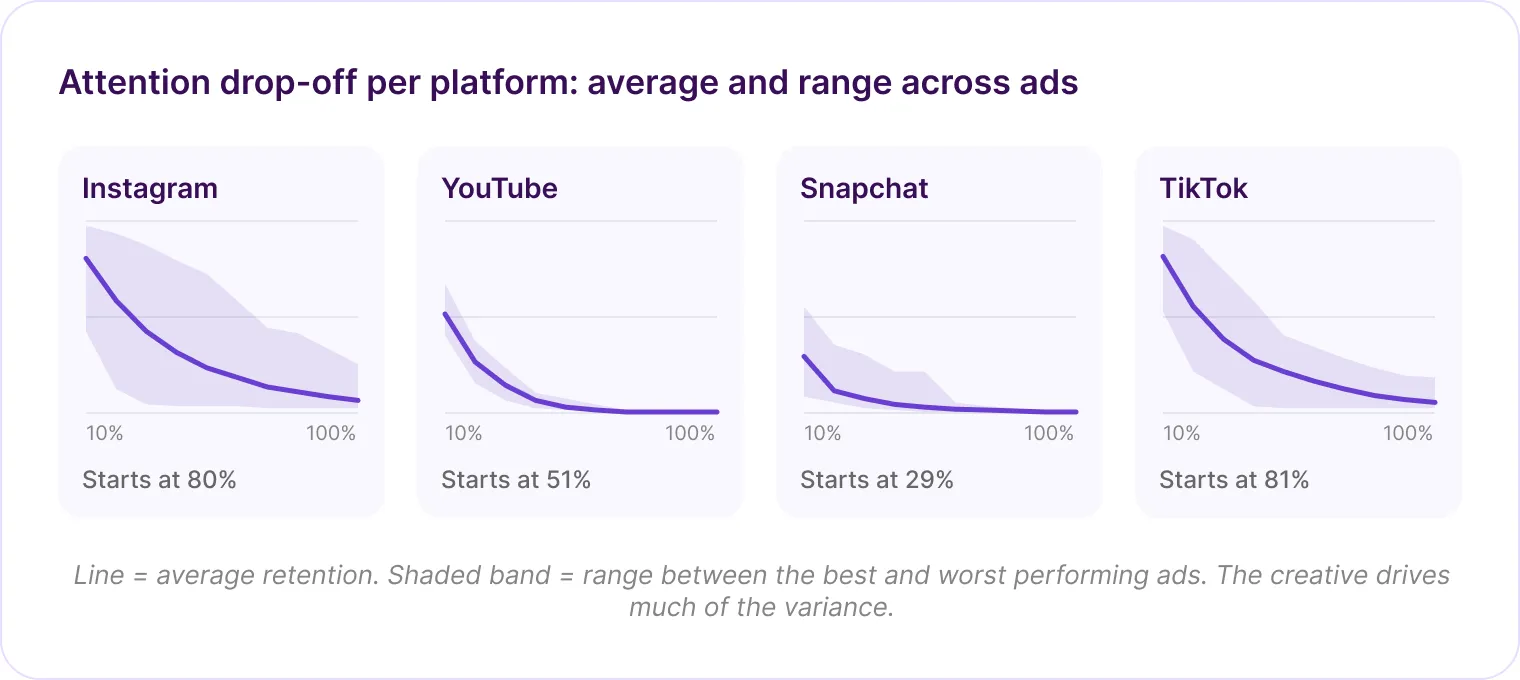
“The creative drives much of the variance in ad attention, particularly on social media and banner ads”
— Dr. Thomas Z. Ramsøy, Founder, CEO & Chief Science Officer, Neurons
Attention leads to memory
Getting people's attention in the right places isn't just about creating an emotional reaction. It also makes a big difference in whether your ad stays with them.
Our studies reveal a strong positive correlation between attention and ad memory, showing that the more attention your ad draws, the higher its chances of being remembered.
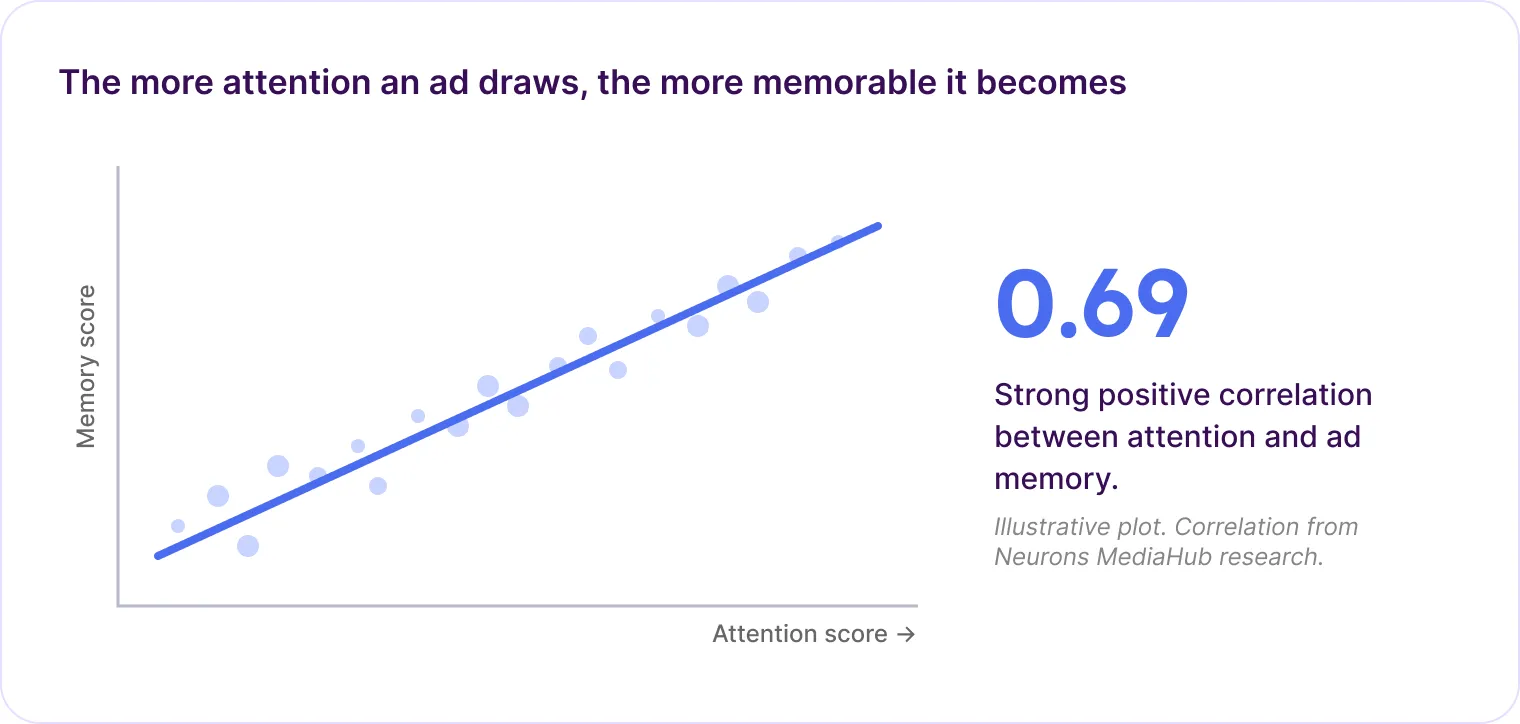
Ads in cinema, TV, and streaming platforms consistently outperform social media and banner ads when it comes to memory retention. These environments keep audiences focused on the content, which makes it easier for them to stay engaged and remember the message.
Mobile banner ads, on the other hand, face challenges like shorter exposure times, fragmented attention, and unclear messaging. As a result, they often struggle to achieve the same level of awareness as ads on larger, more immersive platforms.
Did you know?Neurons AI, the same AI used in this study, lets advertisers measure how their ads capture attention, drive motivation, engage cognition, and create memories. Book a demo →
02
Cinema is still the king of ad perception
Chapter summary
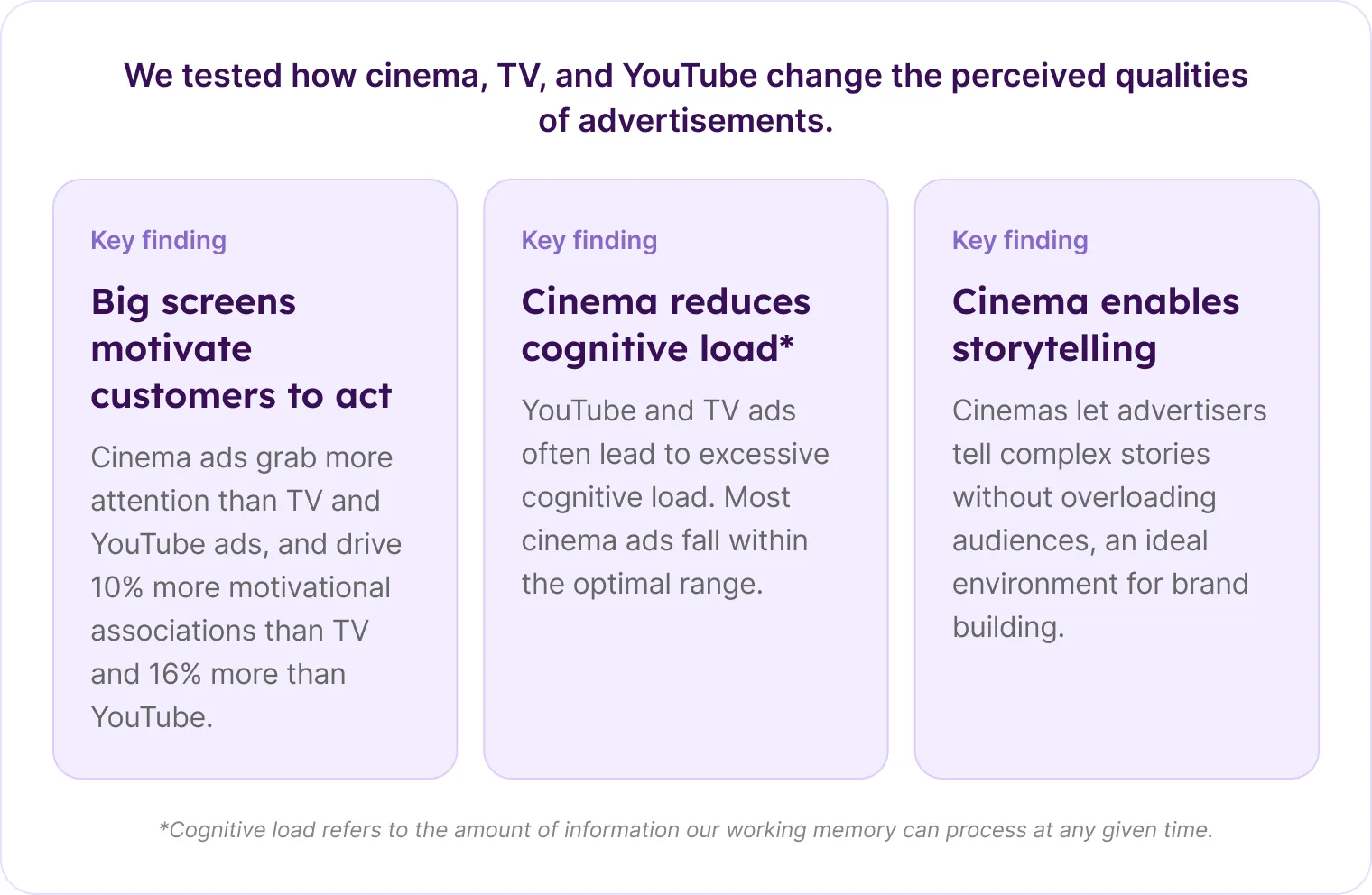
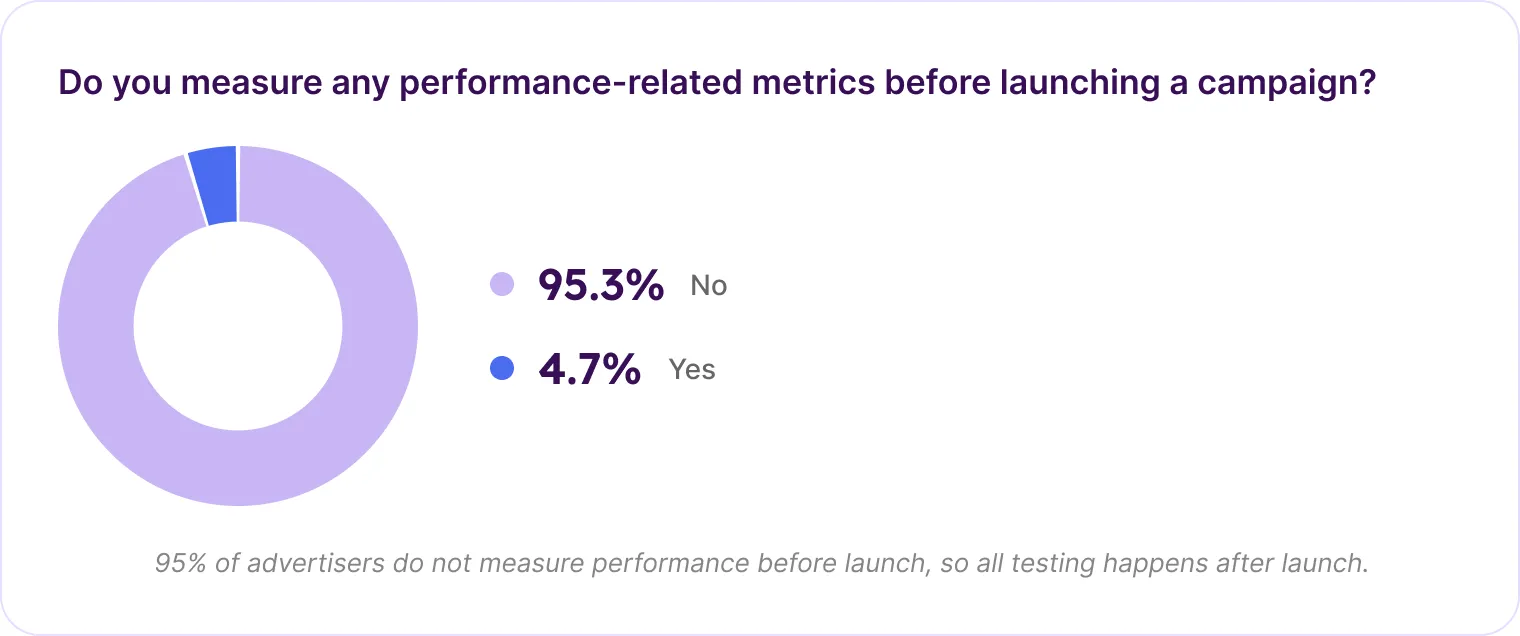
Only 16% of advertisers use cinema ads
In a previous report, we predicted that streaming services would follow Hulu's lead by offering cheaper subscriptions with roll ads. This is because in-stream ads drive value for both the platforms and the advertisers. But streaming is not alone in this respect.
As we covered in the previous chapter, streaming, cinema, and TV ads result in the most positive ad perception and memory. But did you know that only 16% of advertisers include cinema in their advertising strategies?

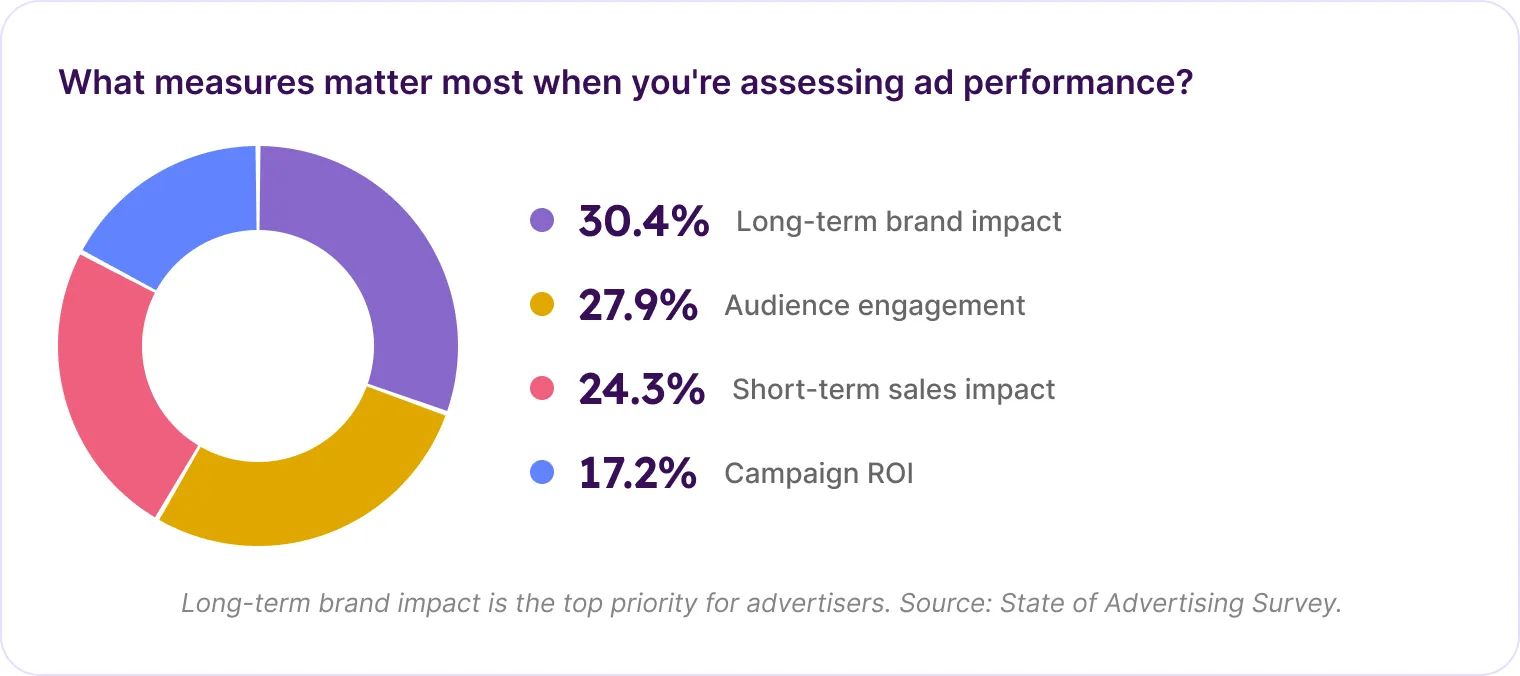
Long-term brand impact is the number one driver for advertisers when assessing the success of their ad campaigns, ahead of engagement, sales impact, or ROI.
We all know that branding is key to long-term commercial success, and cinema might just be the ideal platform to leave the right impressions for optimal brand impact. Although cinema advertising is not for everyone, considering this platform could be the move that sets your brand apart.
Study background
Denmark has a long tradition of cinema advertising. The first commercials were shown on the big screen as early as 1903. Dansk Reklame Film (DRF) wanted to understand how cinema advertising stacks up against other forms of advertising, such as mobile ads and connected TV.
To explore this, Dansk Reklame Film partnered with Publicis and Neurons. The study focused on the four powers of effective advertising: attention, cognitive load, motivation, and memory. We used eye-tracking and EEG to assess how consumers engage with ads across platforms, followed by implicit and explicit association tests and memory assessments.
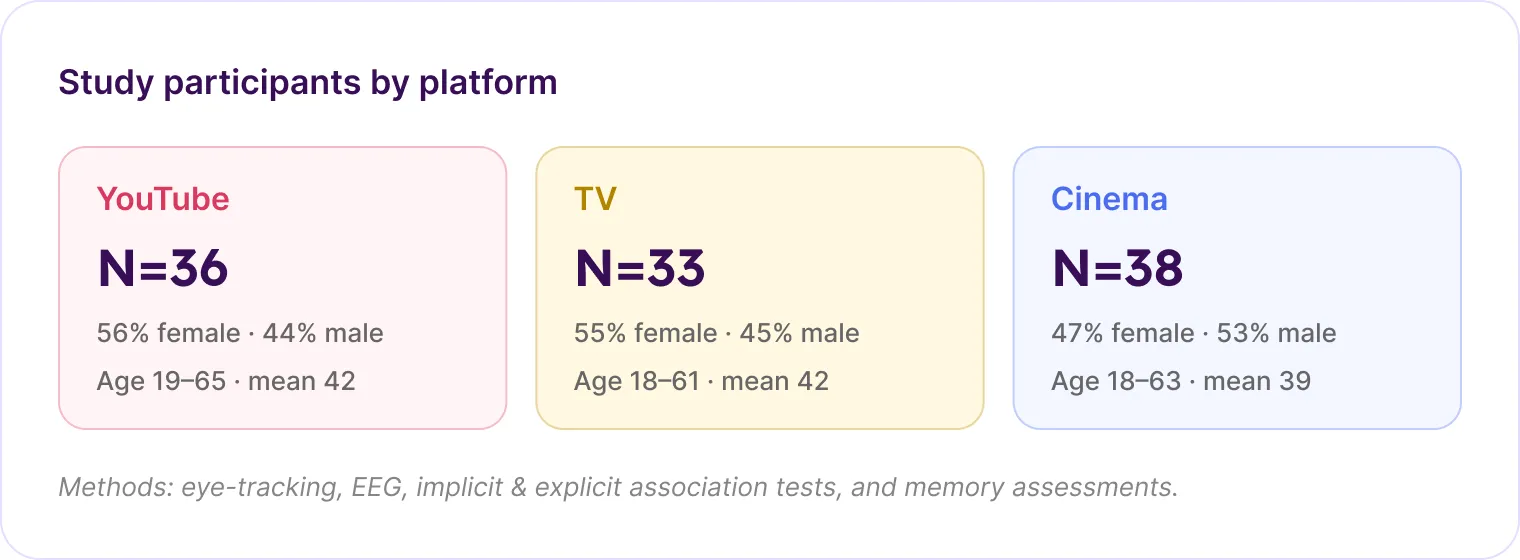
Cinema motivates customers to act
As we mentioned earlier, the cinema screen is the ultimate attention grabber. Ads shown in cinemas achieve higher view percentages, longer viewing times, increased Attention Per Mille (aPM), and more engaged attention compared to TV and YouTube.
But cinema ads deliver more than just attention.
Audiences also perceive ads more favorably in cinemas than on other platforms. Cinema ads drive a 10% increase in motivational associations compared to TV and a 16% increase compared to YouTube ads.

Emotional advertising, a proven method for building admired brands and selling products, is particularly effective on the big screen. Longer ads with narrative storytelling thrive in this environment, making the most of the immersive experience.
“Cinema’s immersive nature makes it a powerful platform for advertisers to tell compelling brand stories.”
— Mike Storm, Chief Operating Officer, Neurons
The big screen helps you tell your story
Cinema offers a unique environment where audiences rarely experience information overload. Unlike YouTube and TV ads, which often lead to excessive cognitive load, cinema ads tend to avoid this issue entirely.
Most cinema ads fall within the optimal range for cognitive load: enough to keep audiences engaged without overwhelming them.
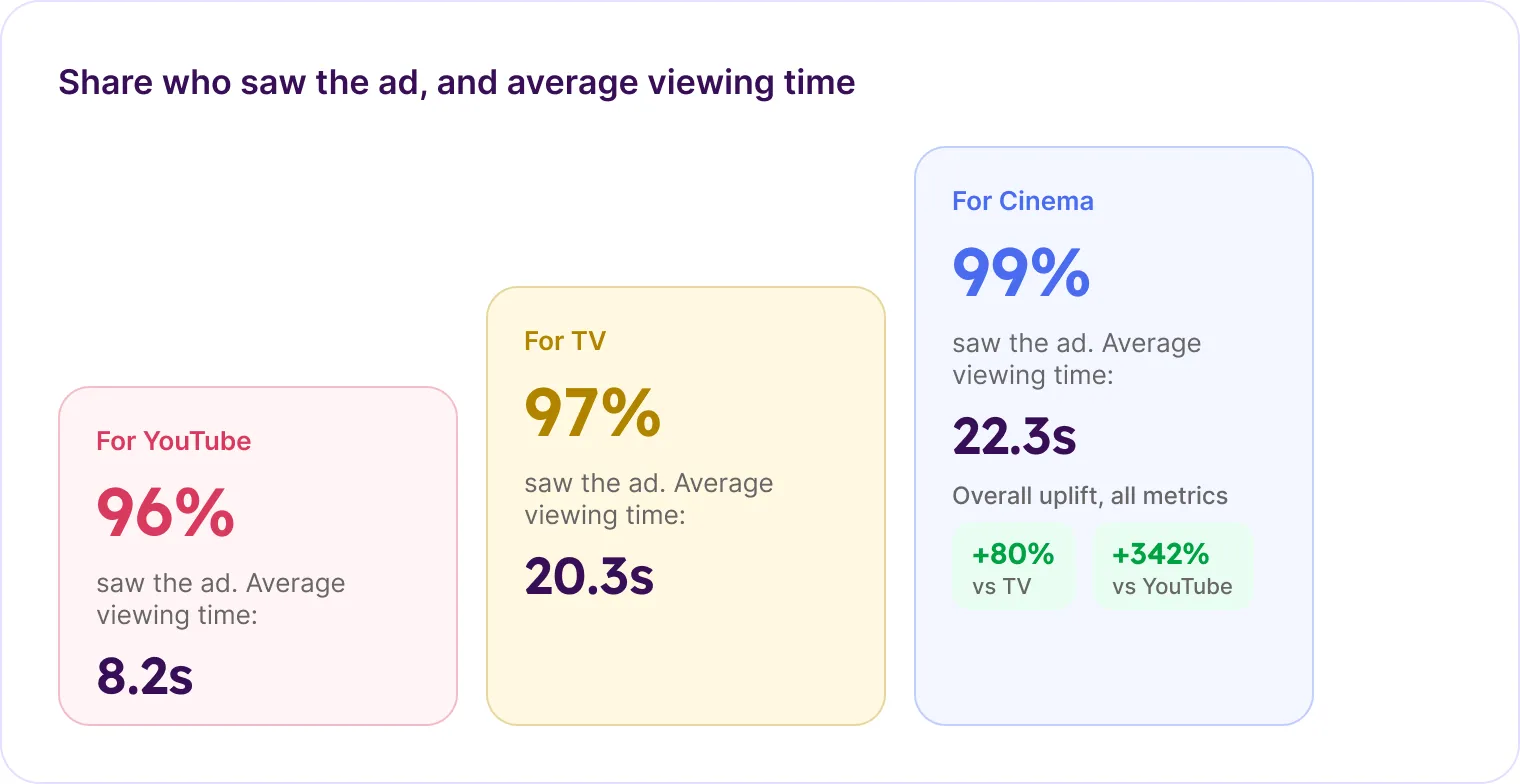
This makes cinema the ideal platform for conveying complex messages and adding depth to your storytelling. Storytelling requires undivided attention, and cinema provides this like no other medium.
Cinema also drives stronger aided and unaided brand recall, both critical for building brand awareness and equity. During our research, cinema ads excelled in overall memorability for both ads and their brands, outperforming other platforms.

03
Choosing the right ad formats
Chapter summary
Everybody wants vertical videos
Short-form vertical videos are everywhere these days. Nearly every platform has adopted this format, which is one of the most immersive and widely used ways to consume content.
TikTok's meteoric rise in 2020 set the standard, popularizing the short-form vertical video format that has since become a core part of how we consume content. Long-form platforms like YouTube adapted it, text-based platforms like X and Threads added it, and even LinkedIn embraced it.

Now, short-form vertical videos are used in most advertising strategies. It's a cornerstone for marketers aiming to connect with their audiences.
But make no mistake. That doesn't mean it should be.
Our research indicates that short-form vertical videos may not be the best choice for every advertising campaign.
Different goals, different ad formats
We asked advertisers whether they used horizontal or vertical ad formats based on campaign goals and storytelling strategies. Interestingly, the type of ad had little to no impact on their choice of format.

So, how do advertisers decide which ad formats to use?
According to our survey, marketers rely on audience preferences rather than platform best practices. Surprisingly, platform guidelines are often less influential than the opinions of stakeholders, such as managers or clients. But this might be a major mistake.

Study background: Schibsted
Our study with Schibsted suggests that storytelling strategy should play a central role in deciding which ad formats to use. We set out to understand how audiences reacted to storytelling ads versus product-focused ads, and how the screen's shape impacts the perceived qualities of an ad.
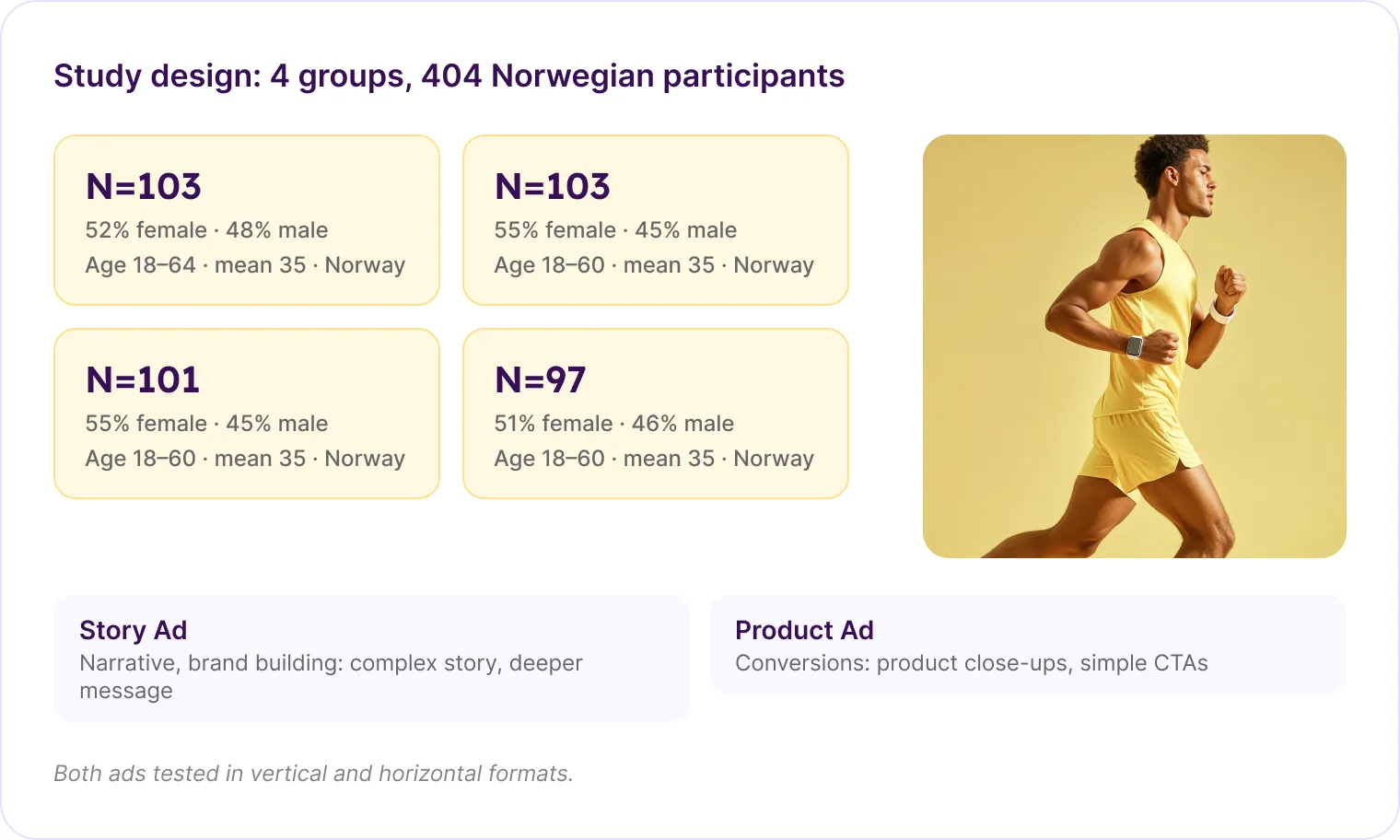
We tested two ad campaigns, a Story Ad focused on narrative and brand building (complex narrative, deeper message) and a Product Ad focused on conversions (product close-ups, simple CTAs), in both vertical and horizontal formats.
Storytelling vs. product focus
Storytelling excels in landscape formats
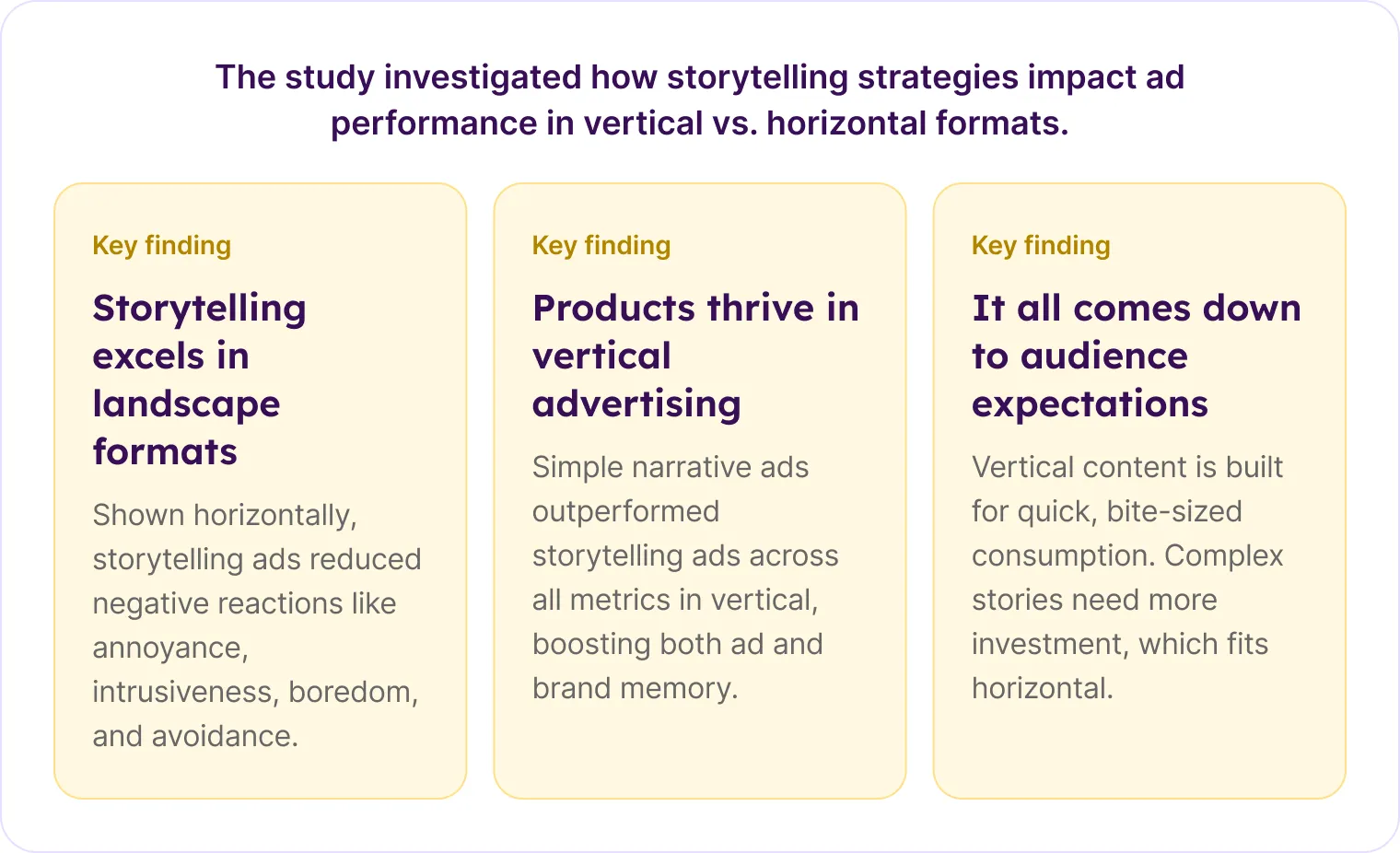
Shown horizontally, the Story Ad significantly reduced negative reactions such as annoyance, boredom, intrusiveness, and avoidance. Even with smaller screen occupancy, it drove intent and enhanced memory retention.
Products thrive in vertical advertising
The Product Ad performed better vertically: more positive emotions, less annoyance and boredom, stronger purchase intent, and much better memory recall. Simple messaging outperformed the Story Ad across all metrics.

Customers expect different content on different platforms
Our findings showed that horizontal formats are superior for brand building and engaging longer attention spans, while product-focused ads excel on short-format vertical videos. Vertical content is designed for quick, bite-sized consumption, where simpler narratives are more effective.
Despite this, nearly half of marketers (47%) still use vertical videos for storytelling ads.
This means many are leaving valuable brand-building opportunities on the table. A simple change in platform or format could unlock significant improvements in campaign results.
InsightWhen planning your storytelling strategy, remember that platform and ad format are just part of the equation. The stage of the customer funnel also influences what audiences need to see. Bottom-funnel audiences often respond better to familiar brand visuals due to existing recognition. Top-funnel audiences need to see what makes your brand unique: highlighting product features can grab their attention and put your brand on the map.
Related eBookHow to Boost CTR on Display Ads Read the eBook →
04
Emotions & brand equity
Chapter summary
What makes a brand strong?
When evaluating campaign performance, long-term brand impact is the top priority for advertisers. This isn't surprising, given that brand building has long been a key focus for social media marketers. A strong brand shapes perception, influences purchase decisions, and builds long-term customer loyalty.
It's not just a logo or a color scheme. A brand is built on emotional associations, thoughts, and memories. As we explored in our eBook Build a Memorable Brand, branding can elevate the perceived value of a product and create lasting connections with consumers.
To explore this further, we partnered with Trigger to study the Norwegian streaming market and compare how Netflix and its competitors perform on reported brand associations, emotions, and motivations.
Study background: Trigger Oslo
Using Fast Response Tests (FRT) and explicit surveys, the study measured the emotional impact of each brand and consumer motivation based on logo exposure.
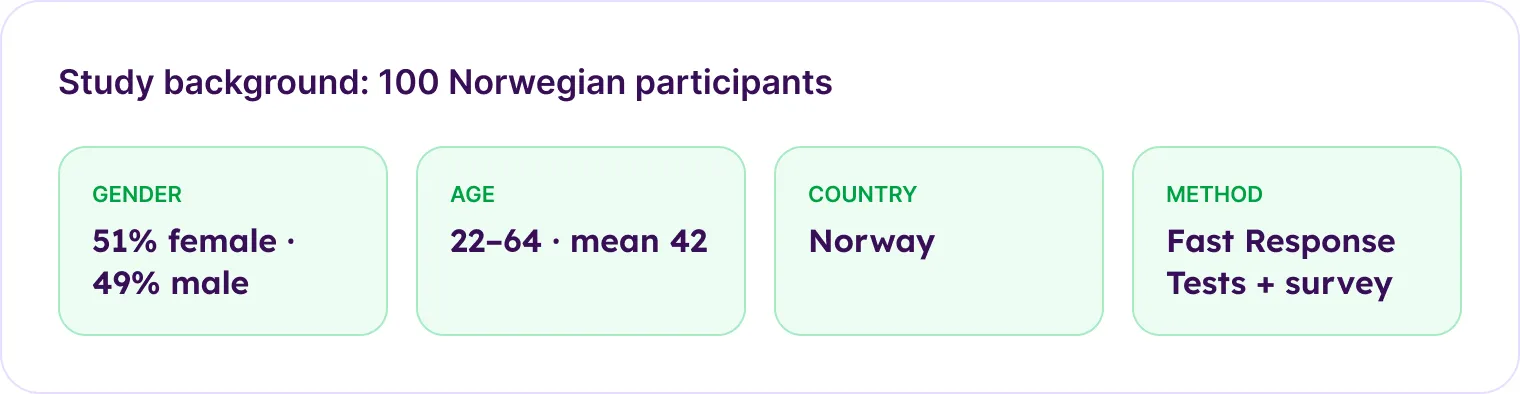
Netflix dominates the Norwegian market
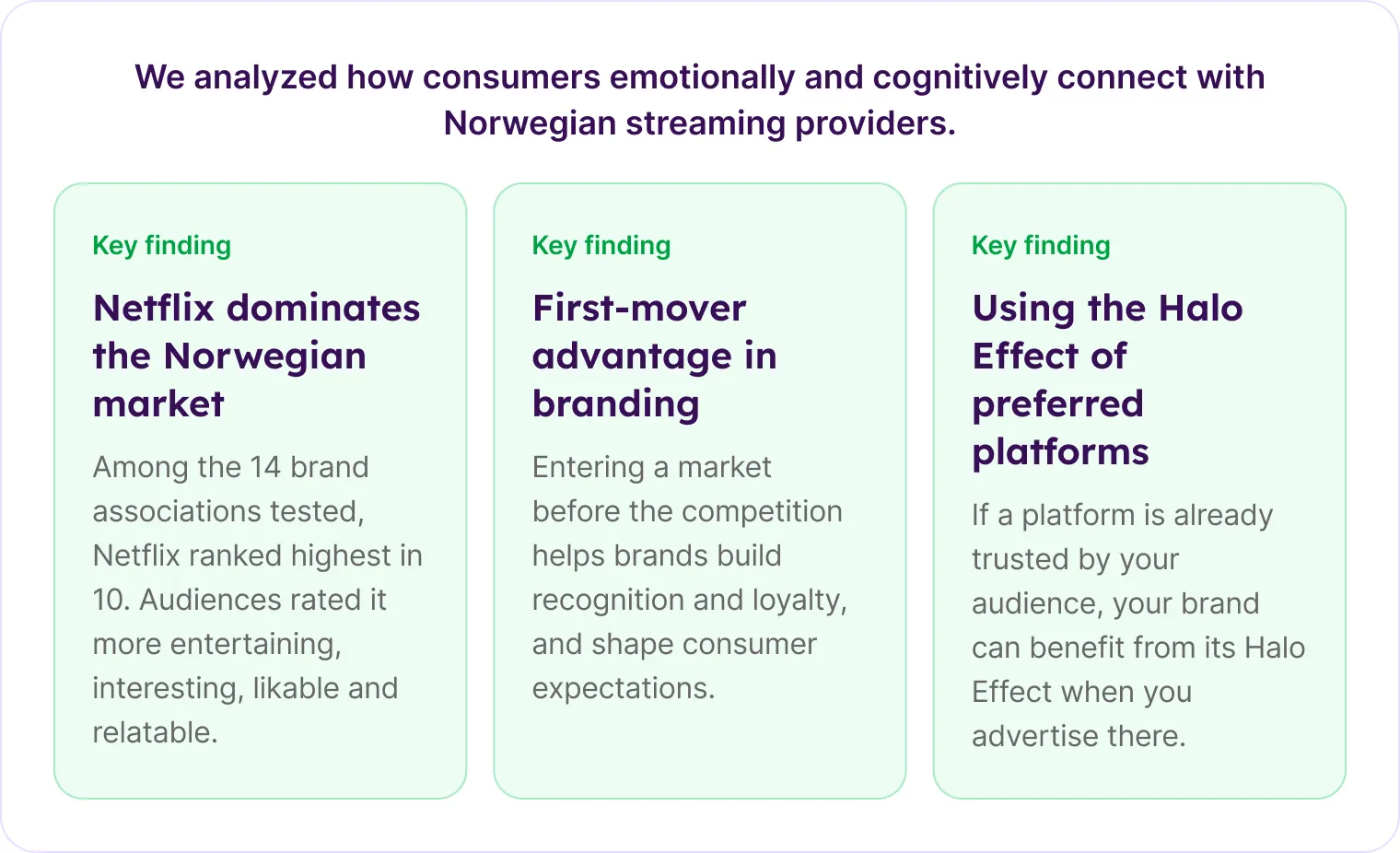
Among the 14 brand associations tested, Netflix ranked highest in 10 categories.
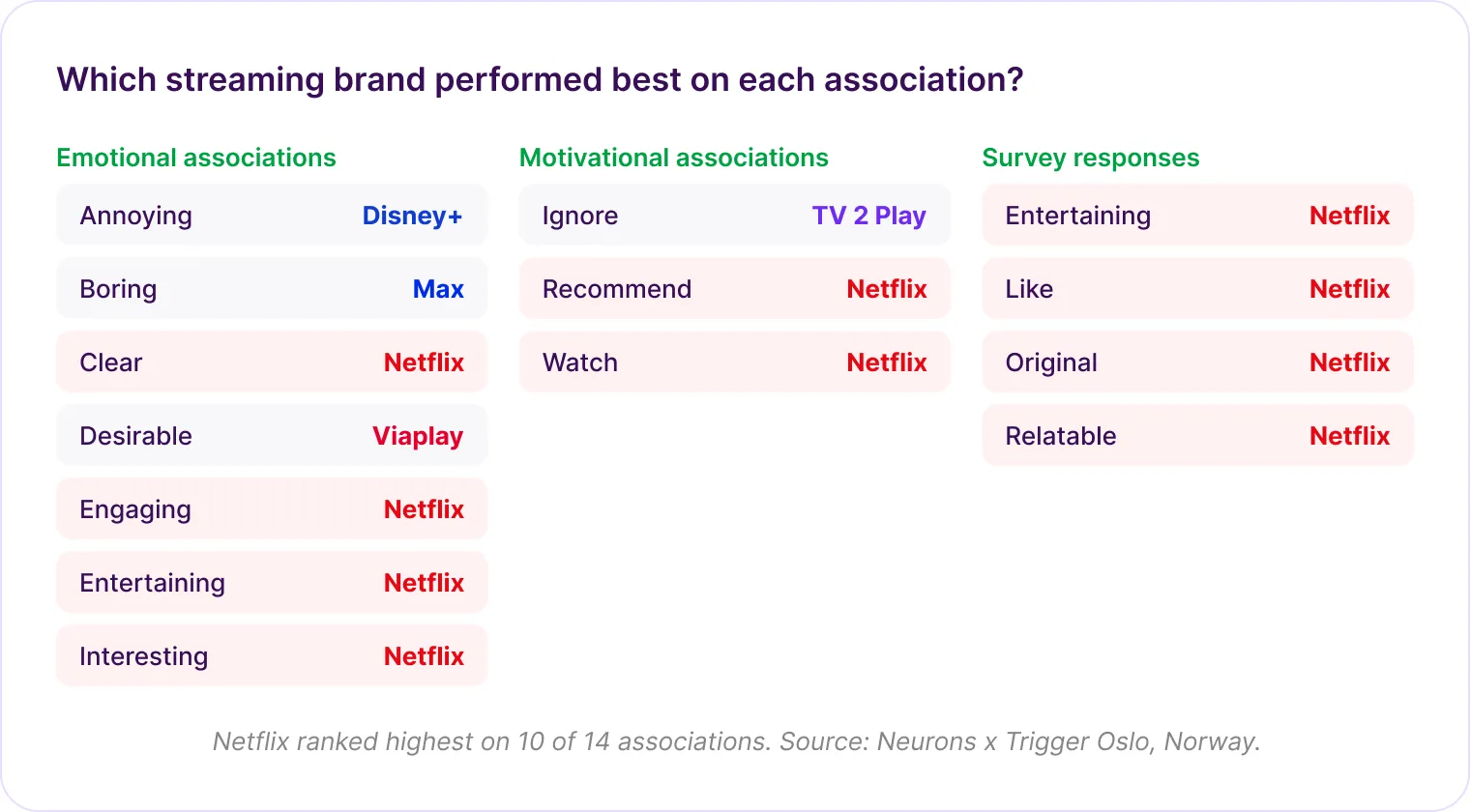
Norwegian audiences consistently rated Netflix as more clear, engaging, entertaining, interesting, likable, original, and relatable than other streaming services. They also showed a higher motivation to recommend and watch Netflix over its competitors.
The only platforms with serious potential to challenge Netflix are Norway's local streaming services, yet even they fall short. Netflix has established itself as a trustworthy and enjoyable streaming brand, giving it a strong competitive edge.
First-mover advantage in branding

First-mover brands often have a significant advantage. Entering a market before the competition allows them to establish strong brand recognition, build customer loyalty, and shape consumer expectations. This is exactly what happened in Norway.
Netflix launched in 2012, securing an early foothold in the streaming market. By leveraging its brand equity and nurturing positive customer relationships, it maintained its dominance even as competitors entered. Familiarity strengthens loyalty, and first movers benefit from word-of-mouth as early adopters share their experiences.
Early adopters reap the benefits
History has shown that first movers who capitalize on new technology early can shape entire industries. We're seeing the same trend play out in AI: ChatGPT, introduced in late 2022, reached 100 million active users by January 2023, making it one of the fastest-growing applications in history.
But first-mover advantages don't just impact businesses. They also benefit early adopters. Advertisers who embraced AI early streamlined workflows, improved efficiency, and unlocked growth before competitors could catch up.
The Halo Effect of streaming platforms
Understanding which streaming platform is most preferred in your target region can help you decide where to advertise. When a platform is already well-established and trusted by your ideal audience, your brand can benefit from its Halo Effect.
Advertising on streaming platforms can create strong emotional associations with your brand and products. It's not just about where you advertise. It's also about who got there first: brands that establish themselves early build long-term trust and familiarity that make it harder for competitors to catch up.
From a previous reportRead more about the Halo Effect in our previous State of Advertising report Read the report →
05
The rise of ethical AI
Chapter summary
AI adoption is not slowing down
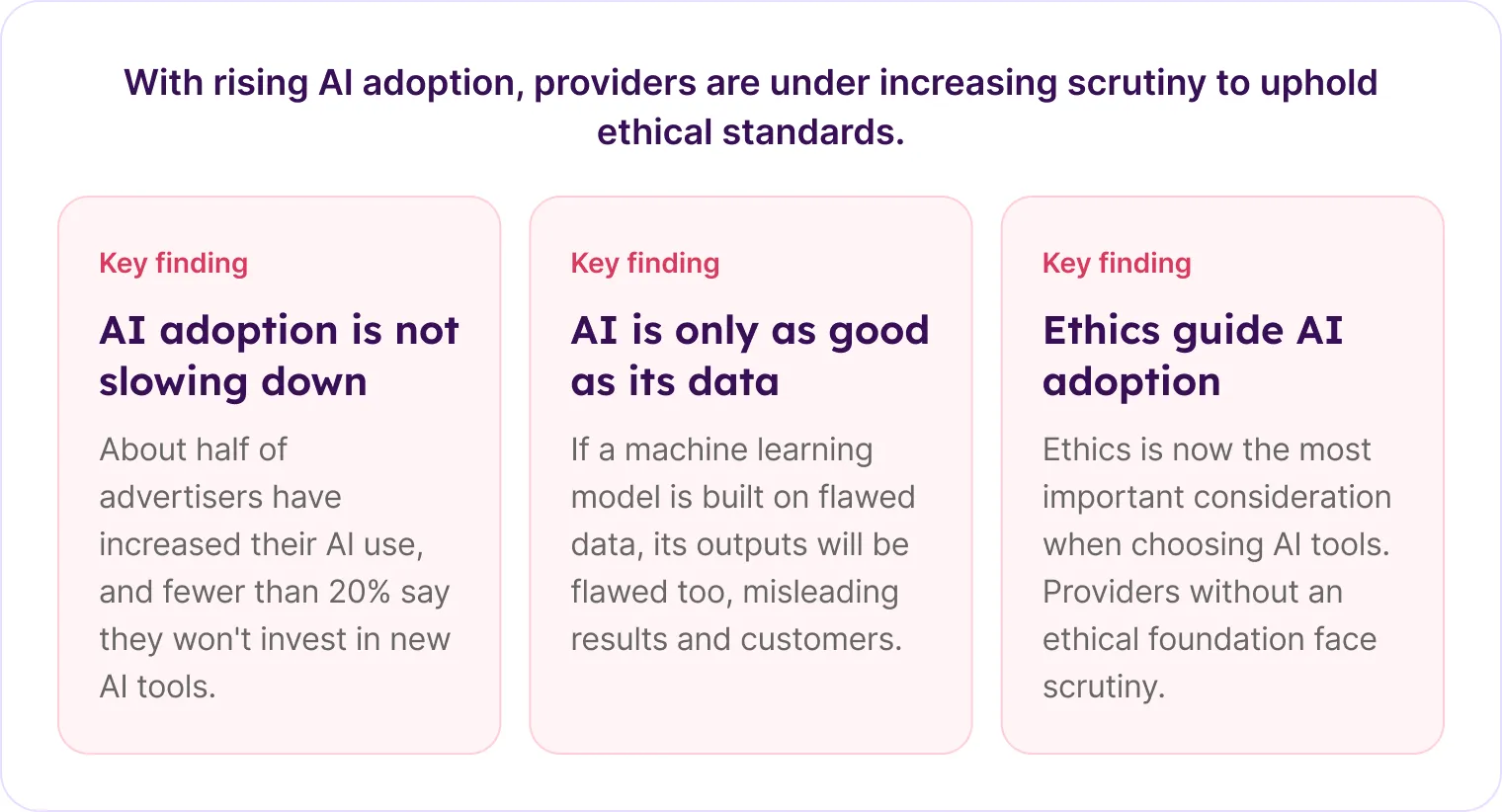
The AI competition is heating up. Video generators like OpenAI's Sora and Google DeepMind's Veo are competing to become the go-to tools for video editors, ChatGPT and Gemini are battling for market share, and tech giants like Apple, Microsoft, and Meta are working relentlessly to establish their foothold.
This fierce competition is driving rapid innovation, leading to an explosion of AI companies in the past two years.
And customers are reaping the benefits.
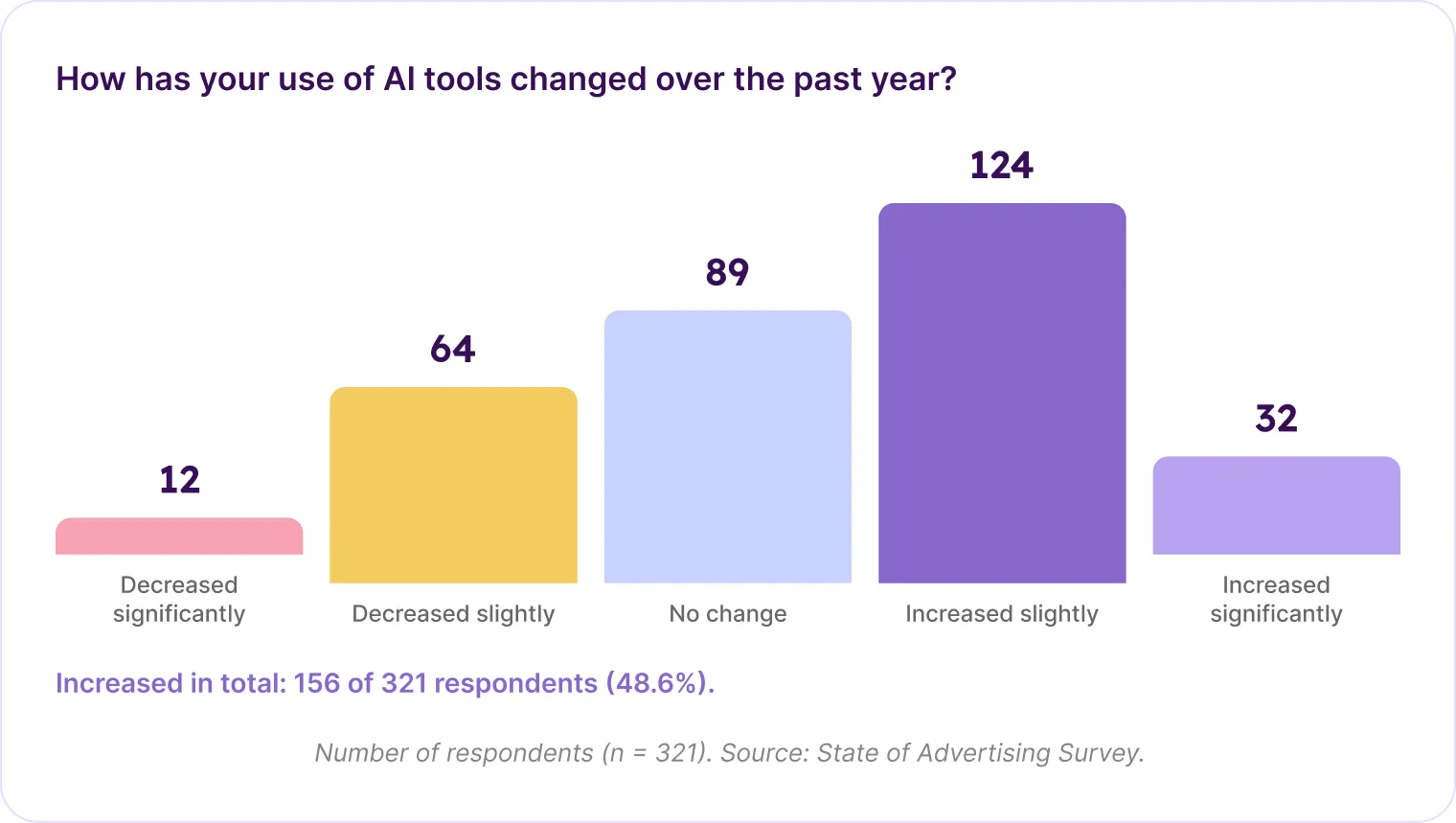
According to our survey, about half of advertisers increased their AI use over the past year, and 52% expect to invest in new AI technologies within the next year, while fewer than 20% say they are unlikely to do so.

Data quality in AI models
With AI exploding onto the scene, there seems to be a new model launching every other day. Machine learning is nothing new, but its rapid commercialization has raised growing concerns about quality and reliability.
Consumers are also realizing that not all AI is created equal.
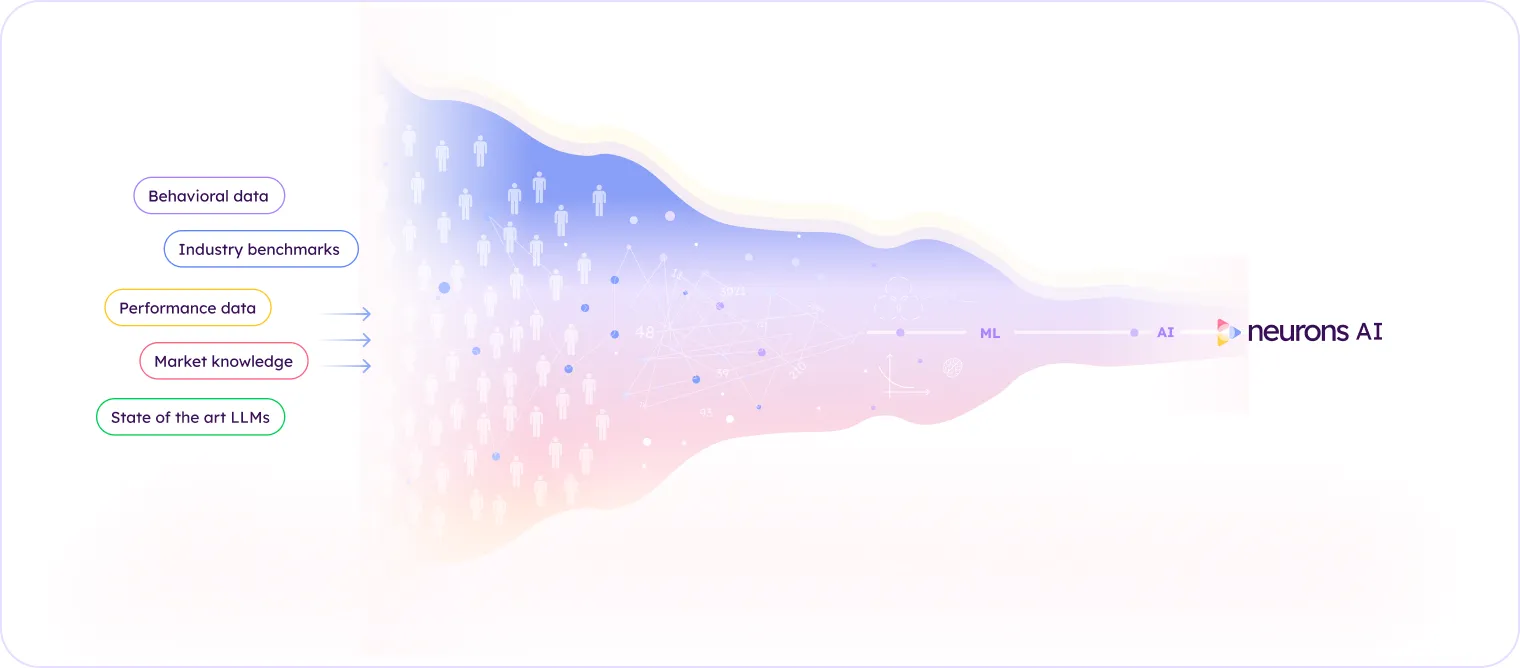
The problem is that most companies lack sufficient data quality in the training sets that machine learning models depend on. In the heat of competition, many AI developers turn to open-source databases and inaccurate datasets, compromising the reliability of their models.
When it comes to AI, faking it till you make it is not a viable option. If a model is built on flawed data, its outputs will be flawed too, leading to misleading results, negative customer impact, and even the spread of misinformation. AI is only as good as the data it's trained on.
“Unfortunately, we’ve seen companies get away with unethical AI practices for a long time. Those days are coming to an end.”
— Dr. Thomas Z. Ramsøy, Founder, CEO & Chief Science Officer, Neurons
Customers demand ethical AI
In a previous report, we anticipated that data quality would become a critical factor for advertisers in selecting AI products. We also expected ethics to take a significant leap in importance. But we didn't foresee just how quickly it would rise to the top.
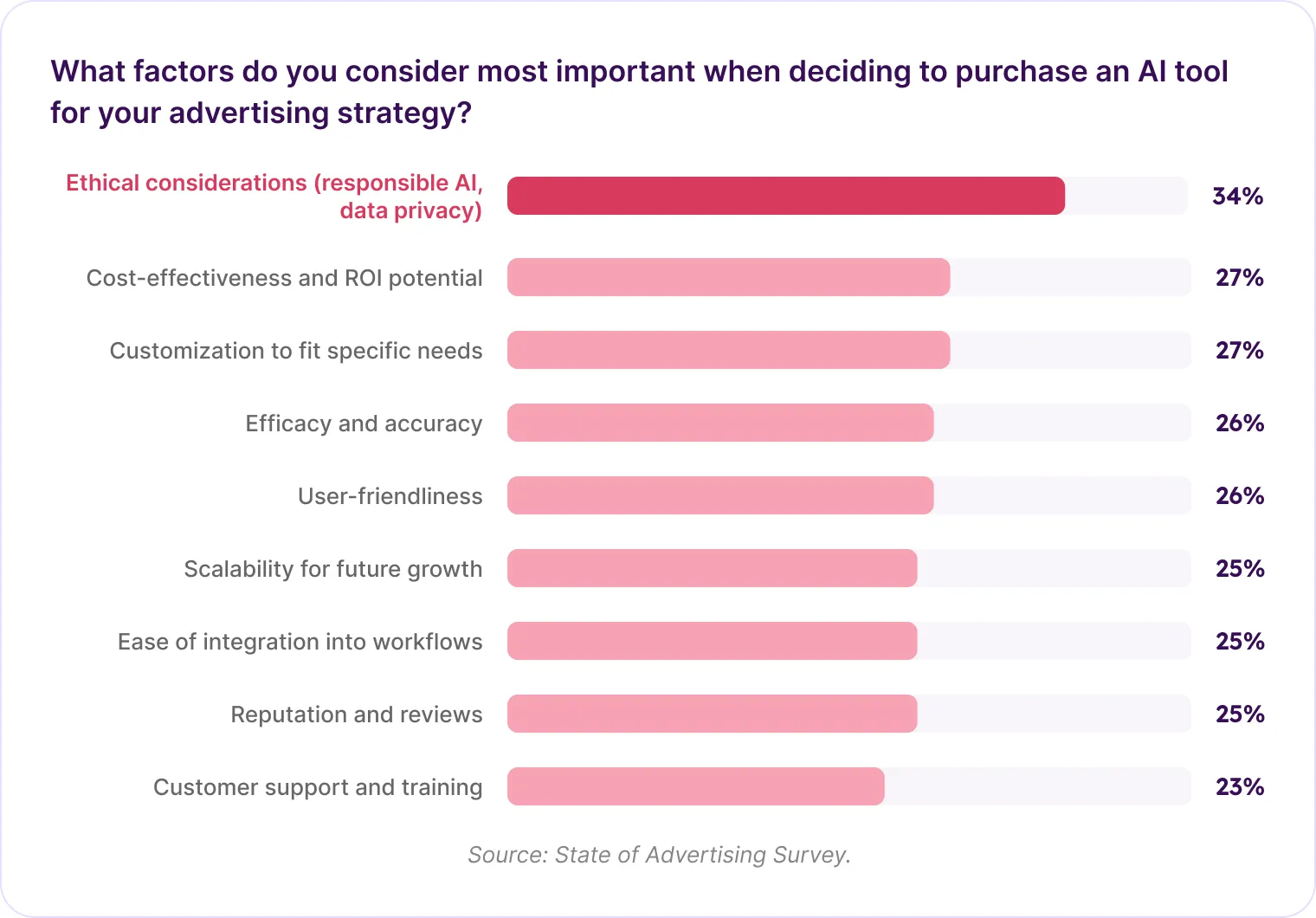
Our survey revealed that ethics is now the most important consideration for advertisers when choosing AI tools.
This is a positive step forward. Ethics must guide innovation, as AI systems have the potential to profoundly affect society and the quality of our lives.
This is why we have an established Ethical Board to help our innovations align with our core mission: enabling people to make better decisions while safeguarding privacy and individuals. AI companies without a strong ethical foundation will face growing scrutiny. Once trust is lost, it's difficult to regain.
Ethics must be at the heart of AI innovation.

You’ve read 8% of the report
Keep reading the full report
The rest of chapter 1 and four more chapters. Instant access, and we’ll email you the PDF.
Still to come · 4 chapters
02
Cinema is still the king of ad perception
How the big screen compares with TV, mobile and social.
🔒
03
Choosing the right ad formats
Which formats earn attention, and how to pick the right one.
🔒
04
Emotions & brand equity
How emotional response turns into memory and brand value.
🔒
05
The rise of ethical AI
How marketers use AI in ads today, and where it’s heading.
🔒
About the study
4,000
participants
1,331
with eye-tracking
10
media channels
12
advertisers, from McDonald’s to TINE
30+
metrics per ad