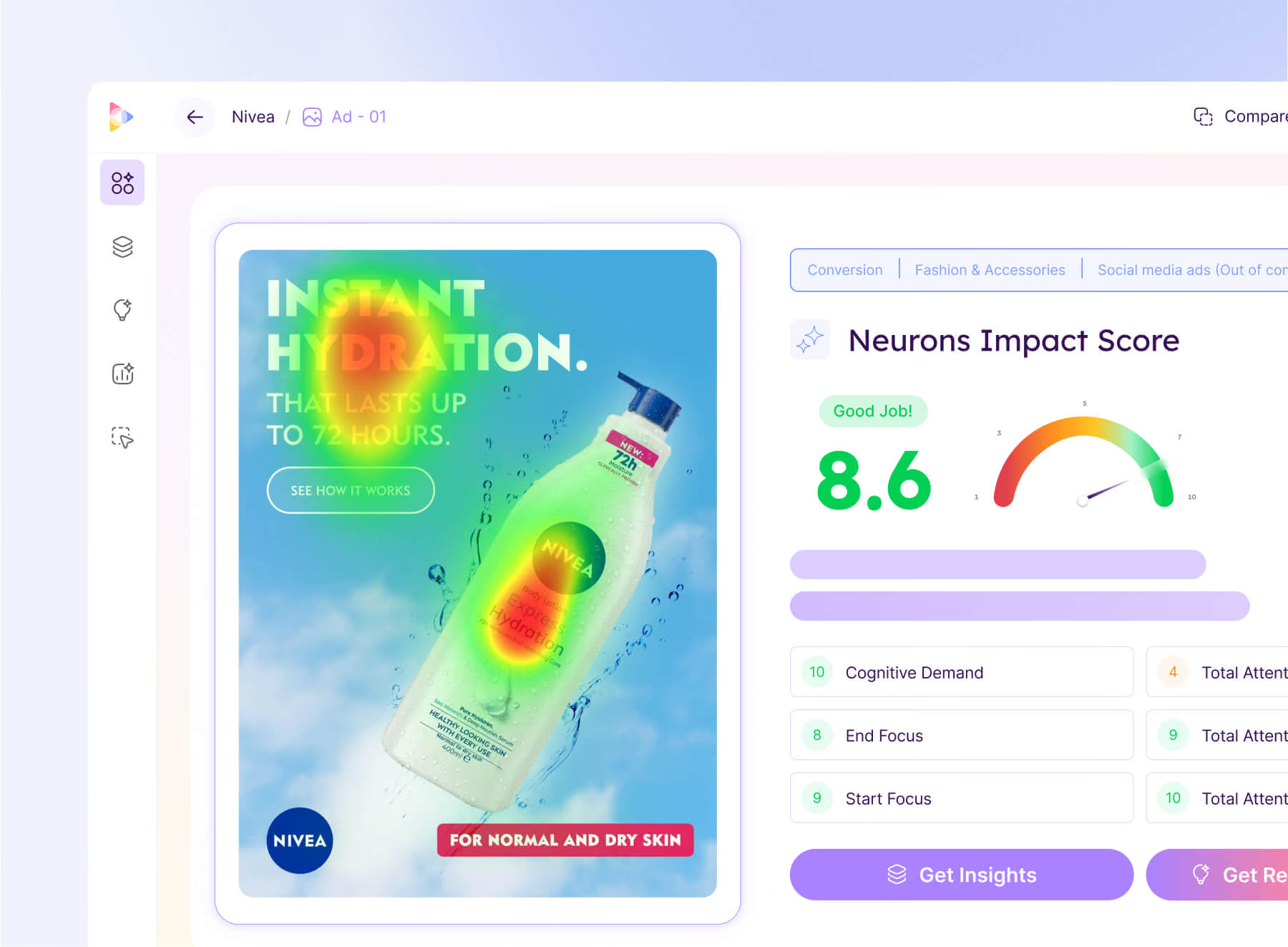


The Ultimate Guide to Attention in Advertising
91% of ads get under one second of attention. Learn neuroscience methods to design ads that get noticed and drive long-term ROI.

Watch the full webinar
Fill in the form and we’ll email you the recording straight away.
In an era where 91% of ads receive less than one second of attention, the default state for your brand is invisibility. Impressions and viewability no longer guarantee that a human brain has actually processed your message.
Dr. Thomas Z. Ramsøy takes a deep dive into the neuroscience of the attention economy, moving beyond vanity metrics to ways of quantifying true impact, such as Attention Per Mille (aPM).
What you'll learn
- How attention measurement drives long-term ROI
- How platform-specific ads unlock higher attention scores
- How Attention Per Mille (aPM) improves your media buying efficiency
Speakers
Dr. Thomas Z. Ramsøy
Thomas is a neuroscientist and the founder of Neurons, which he started in 2013. He has spent more than two decades researching attention, emotion and decision-making, and how they shape the way people respond to ads.


Decades of neuroscience, built into one platform.
Neurons is a consumer neuroscience company founded in 2013 by Dr. Thomas Z. Ramsøy. Neurons AI predicts what people notice, remember and engage with in your creative – built on years of eye-tracking and EEG research.